
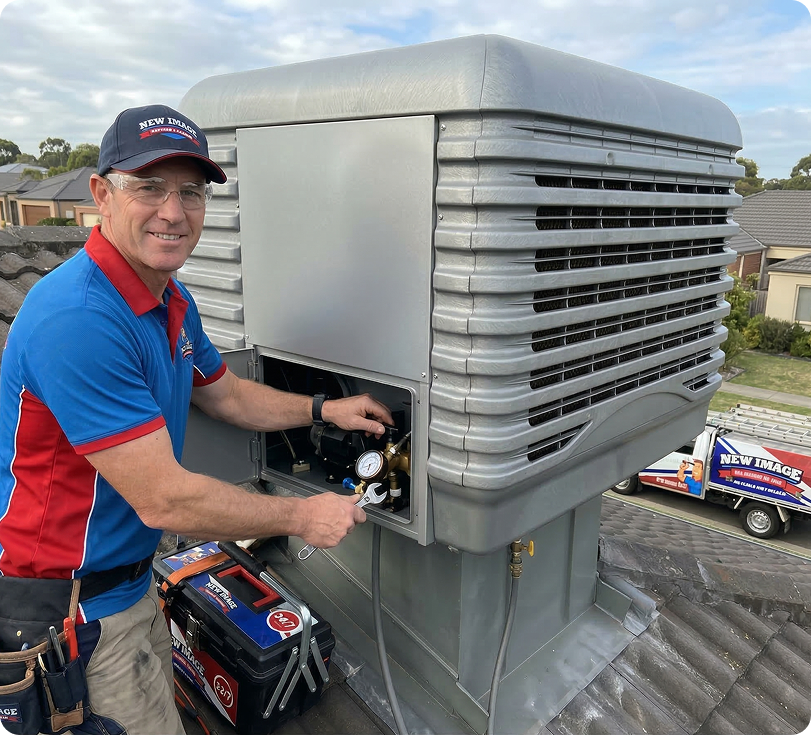
Evaporative cooling is one of the most popular and cost-effective ways to keep a home comfortable during Melbourne’s hot summers, and for good reason. It uses far less energy than refrigerated air conditioning, works best in the dry heat, and delivers fresh, filtered air throughout the home. But when an evaporative cooling system Melton fails to move air properly, it quickly becomes more frustrating than useful.
Poor airflow is one of the most common complaints homeowners make about their evaporative cooling systems. The system may still be running, the motor may be humming, and water may even be flowing through the pads — but the air coming out of the vents feels weak, warm, or barely noticeable. Understanding what causes poor airflow is the first step toward fixing it, and in many cases, the solution is simpler than homeowners expect.
How Evaporative Cooling Airflow Works
Before diagnosing the problem, it helps to understand how air is supposed to move through an evaporative cooler. The system draws warm outside air through water-saturated pads, where evaporation cools the air. That cooled air is then pushed by a fan (blower) through ductwork and out through vents or ceiling outlets into the living areas of the home. The cooled air pushes warm air out through open windows and doors, creating a steady flow of fresh air through the property.
Any blockage, restriction, or failure in that process will reduce the volume of air reaching the rooms. The following sections cover every major cause of poor airflow in evaporative cooling systems, from the most common to the more technical.
Clogged or Deteriorated Evaporative Pads
The cooling pads are the heart of an evaporative system, and they are also the most common cause of restricted airflow. These pads must allow air to pass through them freely while keeping them wet enough to cool that air. When pads become clogged or break down, airflow is dramatically reduced.
- Over time, mineral deposits from the water supply build up inside the pad fibres, reducing the pore size and restricting air passage. In areas with hard water like many parts of western Melbourne, this can happen faster than expected.
- Biological growth including algae, mould, and bacteria can also block pad fibres, particularly in systems that were not properly cleaned and dried at the end of the previous cooling season.
- Pads that have physically collapsed or warped no longer sit flush in their frames, which creates gaps that allow air to bypass the wet media entirely — reducing cooling and airflow distribution at the same time.
- Pads that are over-saturated or waterlogged due to a faulty pump or float valve can become too dense for adequate airflow to pass through, even if they appear to be in reasonable condition visually.
- Most manufacturers recommend replacing evaporative pads at least once per season — and in high-use homes or those with hard water supplies, every year without exception.
A Faulty or Worn Blower Fan
The blower fan (also called the squirrel cage fan or centrifugal fan) is the mechanical component that actually drives air through the system. When the blower is not performing properly, no amount of clean pads or open ducts will restore adequate airflow.
Belt-Driven Fan Issues
Many older evaporative coolers use a belt-driven fan system rather than a direct-drive motor. In these systems, a rubber belt connects the motor to the fan. Belt problems are a very common cause of reduced airflow.
- A worn, cracked, or stretched belt will slip on the pulleys, reducing the rotational speed of the fan and therefore the volume of air it can move. In some cases, the belt may slip intermittently, causing airflow to vary noticeably.
- A loose belt that has not been tensioned correctly will also slip, particularly under load when the system is working hardest on a hot day — exactly when you need maximum airflow.
- Belts should be inspected and tensioned correctly at every annual service and replaced at the first sign of cracking, fraying, or glazing on the inner surface.
Direct-Drive Motor Issues
Direct-drive evaporative coolers connect the motor shaft directly to the fan, which eliminates the belt but introduces different failure modes that also affect airflow.
- Worn bearings in the motor or fan shaft create resistance that slows the fan’s rotational speed, reducing airflow. Worn bearings are often accompanied by a grinding or squealing noise during operation.
- A motor that is running at reduced voltage due to an electrical fault, or that is beginning to fail, may still turn the fan but at insufficient speed to deliver rated airflow.
- Debris — leaves, insects, dust accumulations — can become lodged in the fan blades, adding imbalance and resistance that slows the fan. In some cases this also causes vibration and noise alongside reduced airflow.
Ductwork Blockages and Leaks
Even if the evaporative unit on the roof is performing perfectly, poor ductwork can dramatically reduce the airflow reaching the rooms below. Duct problems are particularly common in older homes across Melton where ducted cooling systems may have been in place for many years without being inspected.
Collapsed or Crushed Flexible Ducting
Flexible duct, while inexpensive and easy to install, is vulnerable to physical damage over its lifespan. Any section of duct that has become kinked, crushed, or compressed severely restricts airflow at that point.
- Collapsed flexible ducting in the roof cavity is a very common cause of a single room or zone receiving little to no airflow even when other areas in the home are receiving adequate cooling.
- Flexible duct that sags significantly between supports also restricts airflow, as pockets of collapsed material reduce the effective internal diameter of the duct.
- In homes that have had roof work, insulation installation, or other tradespeople in the roof space, flexible ductwork is sometimes inadvertently compressed or dislodged without the homeowner realising it.
Disconnected or Leaking Duct Joints
Every joint, connection, and sealed section of the duct system is a potential leak point. When cooled air escapes into the roof cavity rather than reaching the outlet grilles, the result is poor room airflow even when the blower is running at full speed.
- Joints that were sealed with tape or mastic at installation can fail over time due to thermal cycling, vibration, or simply age — releasing cooled air directly into the roof space.
- Disconnected ducts are surprisingly common in roof cavities and can result in an entire zone receiving no airflow at all, as all the cooled air discharges into the roof space rather than the room below.
- A duct inspection is a key part of any comprehensive evaporative cooling service, and it should not be skipped simply because the system appears to be running.
Blocked or Poorly Positioned Outlet Grilles
The outlet grilles where conditioned air enters each room are often overlooked when investigating airflow problems. Yet they are one of the first places to check because they are accessible, visible, and commonly the site of blockages or misalignment.
- Grilles that have been painted over during home renovations are one of the most common causes of reduced airflow in a specific room. Paint bridges across the louvre fins reduce the open area significantly, restricting the volume of air that can pass through.
- Accumulated dust and debris inside ceiling grilles — particularly in homes that have not been serviced for several seasons — can act as a physical filter, blocking a substantial portion of the outlet area.
- Grilles that have been adjusted to the fully closed position (as some homeowners do in winter) and not reopened for summer will obviously deliver no airflow to that room.
- Grilles that have dropped from their mounting due to age or an incomplete installation may hang at an angle that partially blocks the duct outlet, reducing airflow into the room below.
Insufficient Ventilation and Open Windows
Evaporative cooling is fundamentally different from refrigerated air conditioning in one critical way: it requires adequate ventilation to function correctly. An evaporative cooler works by continuously pushing fresh, cooled air into the home while warm air is expelled. If warm air cannot escape, pressure builds up inside the home, restricting the flow of new air from the cooler.
- In a fully sealed home with all windows and doors closed, an evaporative cooler will quickly pressurise the interior and the airflow from the vents will drop to almost nothing. This is one of the most common user-related causes of poor airflow and is easily corrected.
- The general rule for evaporative cooling is to open windows and doors in the rooms you want to cool by approximately 100mm to 150mm — enough to allow warm air out without letting too much uncooled outside air in.
- Opening windows on the opposite side of the home from the cooler creates a natural cross-flow that draws cooled air through the living areas before exhausting it outside — this is the most effective ventilation strategy for evaporative systems.
- Homeowners who have recently installed draught sealing or double-glazed windows throughout their home may find that the house has become too airtight for the existing evaporative system to work as designed — in these cases the system may need to be re-evaluated for the new building envelope.
Water Distribution Problems Affecting Airflow
While water distribution problems are primarily associated with cooling performance rather than airflow, they can contribute to airflow restriction in several ways that are worth understanding.
Over-Saturation of Pads
When the water pump delivers too much water to the pads, or when the float valve is set too high and allows the reservoir to overfill, pads can become waterlogged rather than simply damp.
- Waterlogged pads are significantly denser than correctly moistened pads and present much greater resistance to airflow. A system that appears to be cooling poorly and delivering weak airflow simultaneously may have an over-saturated pad condition rather than a blower problem.
- Checking the float valve adjustment is a simple first step — if water is overflowing from the reservoir tray or running off the pads in sheets rather than trickling evenly, the water supply rate needs to be reduced.
- A faulty pump that pulses or surges can also cause intermittent over-saturation, leading to variable airflow that changes as the pad moisture level fluctuates during operation.
Dry Pads Due to Pump or Distribution Failure
The opposite problem — pads that run dry because the pump has failed or the water distribution system is blocked — does not directly restrict airflow, but it does mean the air passing through is not cooled. Homeowners may interpret this as a ventilation or airflow problem when the real issue is that the cooling process is not occurring at all.
- A failed pump will still allow the fan to run and move air through the system, but that air will be essentially the same temperature as the outside air — making the system feel as if it is providing no benefit, even though airflow is technically present.
- Blocked distribution pipes or spider manifolds can cause some pads to run dry while others remain wet, resulting in uneven cooling and apparent airflow imbalances between different areas of the home.
Undersized System for the Home
In some cases, poor airflow is not a fault to be repaired — it is a design or sizing issue. An evaporative cooler that was adequate when installed may become insufficient as the home is extended, or a system may have been undersized from the outset.
- Evaporative coolers are rated by the volume of air they can move, measured in litres per second (L/s). A system that is too small for the floor area it is trying to cool will never deliver sufficient airflow regardless of how well it is maintained.
- Home extensions, the addition of new rooms, or the conversion of garages and outdoor areas into living spaces can all increase the effective area the cooler must serve — potentially beyond its rated capacity.
- If multiple zones consistently have poor airflow even after servicing and duct inspection, a system sizing assessment may be warranted before investing further in repairs to an undersized unit.
Frequently Asked Questions
Why is my evaporative cooler running but not blowing much air?
The most likely causes are clogged pads restricting airflow through the unit, a worn or slipping fan belt, or a partially blocked duct somewhere between the rooftop unit and the outlet grilles inside the home. Start by checking the pads visually and then have a technician inspect the blower and ductwork if pad replacement does not resolve the issue.
How often should evaporative cooling ducts be inspected?
Ductwork should be visually inspected at every annual service. In older homes, or those that have had tradespeople working in the roof cavity, a more thorough duct inspection every two to three years is advisable to check for collapses, disconnections, and significant leakage that can develop gradually over time.
Conclusion
Poor airflow from an evaporative cooler rarely means the system needs to be replaced. In the vast majority of cases affecting Melton homes, the problem comes down to blocked pads, a worn belt or fan, duct issues, or something as simple as ventilation habits. Identifying the cause early means a straightforward, cost-effective fix rather than an uncomfortable summer and an escalating repair bill.
At New Image Heating and Cooling, we service evaporative cooling systems right across Melton and the western suburbs. If your cooler is running but not delivering the airflow your home needs, our heating and cooling specialists Melton will diagnose the problem accurately and get it sorted fast. Call us on 0468 125 098 or reach out through our online form to book an inspection — we offer free, no-obligation quotes on all services.



