
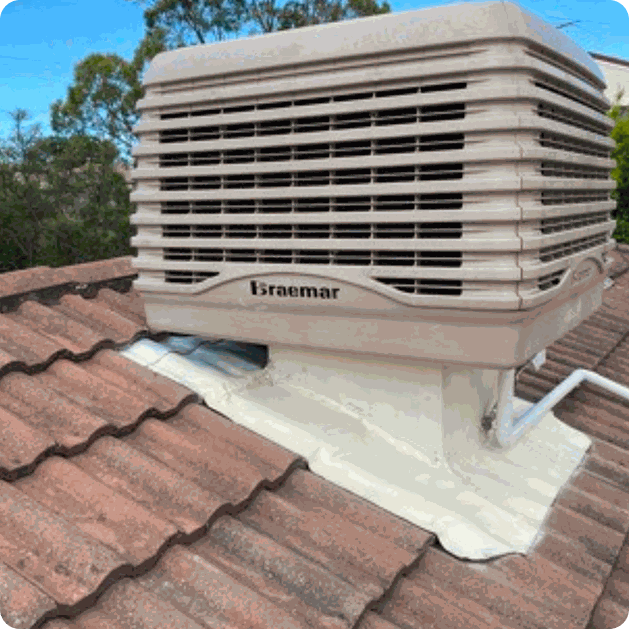
If you’re researching evaporative cooling Melton, you may have come across the terms “direct” and “indirect” evaporative cooling and wondered what the difference actually is. While both systems use the principle of water evaporation to lower air temperature, the way they do it — and the results they deliver — are quite different. Understanding which system suits your home and your climate can save you money and keep your family comfortable through the hottest months of the year. This guide breaks down how each system works, what sets them apart, and how to decide which is the right fit for a home in Melton’s climate.
The Shared Principle: How Evaporative Cooling Works
Both direct and indirect evaporative cooling systems Melton are built on the same fundamental principle: when water evaporates, it absorbs heat from the surrounding air, lowering the air temperature. This is the same natural process that makes you feel cooler when you step out of a pool — the evaporation of water from your skin draws heat away from your body.
Where direct and indirect systems diverge is in how they apply this evaporation process — specifically, whether the evaporation occurs in direct contact with the air being delivered to your home, or whether a heat exchanger separates the two air streams. That distinction has significant practical consequences for humidity, comfort, efficiency, and suitability to different climates.
What Is Direct Evaporative Cooling?
Direct evaporative cooling is the most common form of evaporative cooling in Australian homes. It is the technology that sits behind the ducted rooftop units and wall-mounted coolers found across Melton and the broader western suburbs of Melbourne.
How It Works
In a direct evaporative cooler, warm outdoor air is drawn into the unit and passed directly through water-saturated cooling pads. As the water in those pads evaporates into the moving air, it absorbs sensible heat from the air and converts it into latent heat — in plain terms, the air temperature drops while the moisture content of the air increases. The cooled, more humid air is then blown directly into your home through ducts or vents.
- A fan or blower draws warm air from outside through the water-soaked pads at the sides of the unit.
- The water pump continuously recirculates water over the pads to keep them saturated and ensure consistent evaporation.
- The air delivered to the home is cooler but carries more moisture than the outdoor air — this is the defining characteristic of direct evaporative cooling.
- Cooling pads are typically made from cellulose (similar to thick cardboard) or synthetic materials, with cellulose being the most common in Australian residential systems.
Performance and Efficiency
Direct evaporative coolers are highly effective in hot, dry conditions and are among the most energy-efficient cooling options available for Australian homes in suitable climates.
- Under ideal conditions — hot air with relative humidity below 30 per cent — a direct evaporative cooler can reduce indoor air temperature by up to 10 to 15 degrees Celsius.
- Direct systems achieve what engineers call a “saturation effectiveness” of around 80 to 90 per cent — meaning they cool the air very close to its theoretical maximum (the wet-bulb temperature).
- Energy consumption is a fraction of refrigerative air conditioning — the system runs a fan and a water pump rather than a compressor, resulting in significantly lower electricity bills.
- Because performance is directly tied to the ability of the air to absorb more moisture, effectiveness drops as outdoor humidity rises above 50 per cent.
Pros of Direct Evaporative Cooling
Direct evaporative cooling has earned its place in Australian homes for good reason. The advantages are significant, particularly for the climate conditions experienced across Melton.
- Lower purchase and installation cost compared to both indirect systems and refrigerative air conditioning.
- Very low running costs — uses around 80 to 90 per cent less electricity than a comparable refrigerative system.
- Provides fresh outdoor air rather than recirculating stale indoor air, which many families find more comfortable and healthier.
- Simple mechanical design with fewer complex components means easier and lower-cost servicing and maintenance.
- Adds a small amount of beneficial moisture to the air in dry conditions, which can help reduce respiratory discomfort in very dry climates.
Cons of Direct Evaporative Cooling
Understanding the limitations of direct evaporative cooling helps you make informed decisions about when and how to use it.
- Performance drops significantly as outdoor humidity rises, making the system less effective on muggy summer days.
- Because the system adds moisture to the indoor air, ventilation is essential — windows and doors must be left partially open to allow moist air to exhaust, which prevents the home from being sealed.
- Not suitable for use alongside refrigerative air conditioning — the two systems work against each other as one humidifies while the other dehumidifies.
- In extremely humid conditions (above 70 per cent relative humidity), a direct evaporative cooler offers very little effective temperature reduction.
What Is Indirect Evaporative Cooling?
Indirect evaporative cooling takes the same fundamental principle as direct cooling but adds an additional step — a heat exchanger — that separates the evaporation process from the air stream being delivered into your home. The result is cooler air without the added humidity.
How It Works
In an indirect evaporative system, two separate air streams operate in parallel inside the unit. A “working” air stream is humidified through evaporation — just like in a direct system. This cooled, humidified working air then passes through one side of a heat exchanger. On the other side of that heat exchanger, a separate “supply” air stream absorbs the cooling effect without coming into direct contact with the humidified air. The supply stream is then delivered to the home — cooled, but without the added moisture.
- The working (secondary) air stream absorbs moisture through evaporation across the cooling pads, just as in a direct system.
- A heat exchanger — typically a series of thin plates or tubes — transfers the cooling effect from the humidified working air to the dry supply air, without the two streams mixing.
- The humidified working air is exhausted outside the building; the cooled, dry supply air is delivered indoors.
- Because moisture is never added to the supply air, indoor humidity levels are not raised by the cooling process.
Performance and Efficiency
Indirect evaporative cooling is generally more complex than direct cooling and delivers a different performance profile.
- Indirect systems typically achieve a “wet-bulb effectiveness” of 60 to 80 per cent — lower than direct systems’ 80 to 90 per cent — because the heat exchanger introduces thermal resistance between the evaporative process and the supply air.
- However, because no moisture is added to the supply air, indirect systems can deliver meaningful cooling even in conditions where direct systems struggle.
- Two-stage systems that combine indirect pre-cooling followed by a direct evaporative stage can deliver greater total cooling than either system achieves alone, offering a strong balance of cooling capacity and humidity control.
- Energy consumption is higher than pure direct evaporative systems due to the additional fan and heat exchanger, but still substantially lower than refrigerative air conditioning.
Pros of Indirect Evaporative Cooling
Indirect evaporative cooling offers specific advantages that make it the preferred option in certain scenarios.
- No moisture is added to the indoor air, making it a more comfortable option on days when outdoor humidity is already elevated.
- The home can be operated with less ventilation, as the indoor air is not being humidified — particularly useful in buildings that are difficult to ventilate.
- Suitable for broader climate conditions than direct evaporative cooling, including areas where summer humidity levels are moderate rather than consistently low.
- Can be used in commercial or industrial settings where humidity control is important — such as data centres, warehouses, and healthcare facilities.
- The two-stage (indirect-direct) configuration delivers some of the highest cooling efficiency available from any evaporative technology.
Cons of Indirect Evaporative Cooling
Indirect systems also come with meaningful limitations that are worth considering before choosing this technology.
- Higher purchase and installation cost due to the additional heat exchanger components and greater system complexity.
- More complex maintenance requirements — the heat exchanger surfaces and separate air streams require professional servicing to keep clean and functioning properly.
- Lower saturation effectiveness than direct systems means a smaller temperature drop from the same outdoor conditions — though the delivered air is drier.
- Less common in Australian residential applications, meaning fewer local technician with specific experience in installation and servicing.
Direct vs Indirect: A Side-by-Side Comparison
To make the comparison clearer, here is how the two systems stack up across the key factors that matter to Melton homeowners.
Humidity Added to Indoor Air
- Direct: Yes — the air delivered to your home is more humid than outdoor air, requiring ventilation to exhaust the moisture.
- Indirect: No — the heat exchanger prevents moisture from entering the supply air, keeping indoor humidity levels stable.
Cooling Effectiveness in Dry Conditions
- Direct: Excellent — direct contact between dry air and wet pads delivers maximum evaporative cooling, with temperature drops of up to 15 degrees Celsius possible.
- Indirect: Very good — slightly lower effectiveness due to heat exchanger resistance, but still delivers meaningful cooling with the benefit of dry supply air.
Cooling Effectiveness in Humid Conditions
- Direct: Substantially reduced — as outdoor humidity rises, the air’s capacity to absorb more moisture decreases and with it the cooling effect.
- Indirect: Better than direct — because no moisture is added to the supply air, indirect systems retain more useful cooling capacity in moderately humid conditions.
Purchase and Installation Cost
- Direct: Lower — simpler system design and more widespread availability of components and installer expertise in Australia.
- Indirect: Higher — additional heat exchanger components and greater system complexity increase both equipment and installation costs.
Running Costs
- Direct: Very low — minimal electricity consumption compared to refrigerative systems.
- Indirect: Low to moderate — higher than direct evaporative due to additional components, but still significantly lower than refrigerative air conditioning.
Ventilation Requirements
- Direct: Essential — windows must be partially open for the system to function correctly and to prevent indoor moisture build-up.
- Indirect: Less critical — indoor humidity is not raised, so the home can operate with less open ventilation while still receiving the cooling benefit.
Which System Is Right for Your Home?
For the majority of homes, a direct evaporative cooler Melton remains the most practical and cost-effective choice. The local climate — hot, dry summers with relatively low humidity through most of the season — plays directly to the strengths of direct evaporative technology. The lower upfront cost, very low running costs, and simple maintenance requirements make it an excellent long-term investment for most families.
Indirect evaporative cooling or two-stage systems may be worth considering for households that regularly experience discomfort on humid summer days, for larger homes where humidity management is important across multiple zones, or for commercial and light industrial properties in the area where environmental control requirements are more specific. A heating and cooling specialist Melton can assess your home’s specific layout, usage patterns, and local climate exposure to recommend the most appropriate system.
Frequently Asked Questions
What is a two-stage evaporative cooler?
A two-stage evaporative cooler combines both technologies in series. The first stage uses indirect evaporative cooling to pre-cool and dry the incoming air via a heat exchanger. The second stage then passes that pre-cooled air through a direct evaporative section, achieving a greater total temperature drop than either system could deliver alone. Two-stage systems are more expensive but offer the highest cooling performance of any evaporative technology, making them attractive for large homes or commercial applications.
Does an indirect evaporative cooler work without open windows?
Indirect evaporative systems can function with less ventilation than direct systems because they do not add moisture to the indoor air. However, all evaporative systems benefit from some degree of air movement and fresh air circulation. Completely sealing the home is not recommended for any evaporative cooling system — adequate airflow helps the cooled air distribute effectively and prevents the build-up of carbon dioxide and other indoor air quality concerns.
Conclusion
Choosing between direct and indirect evaporative cooling in Melton comes down to your home’s specific needs, your local climate, and your priorities around upfront cost versus performance in varied conditions. For most homes, a well-installed and properly maintained direct evaporative cooler is the most practical, affordable, and effective solution available.
At New Image Heating and Cooling, we help homeowners navigate these decisions with honest, experience-backed advice. Whether you’re installing a new system, upgrading an existing one, or simply trying to understand what you already have, our team is here to provide clear answers and quality workmanship from start to finish.
Get in touch today for a free quote or to book a consultation. Call us at 0468 125 098 or submit our online form. We’ll help you find the cooling solution that keeps your home comfortable all summer long.



