
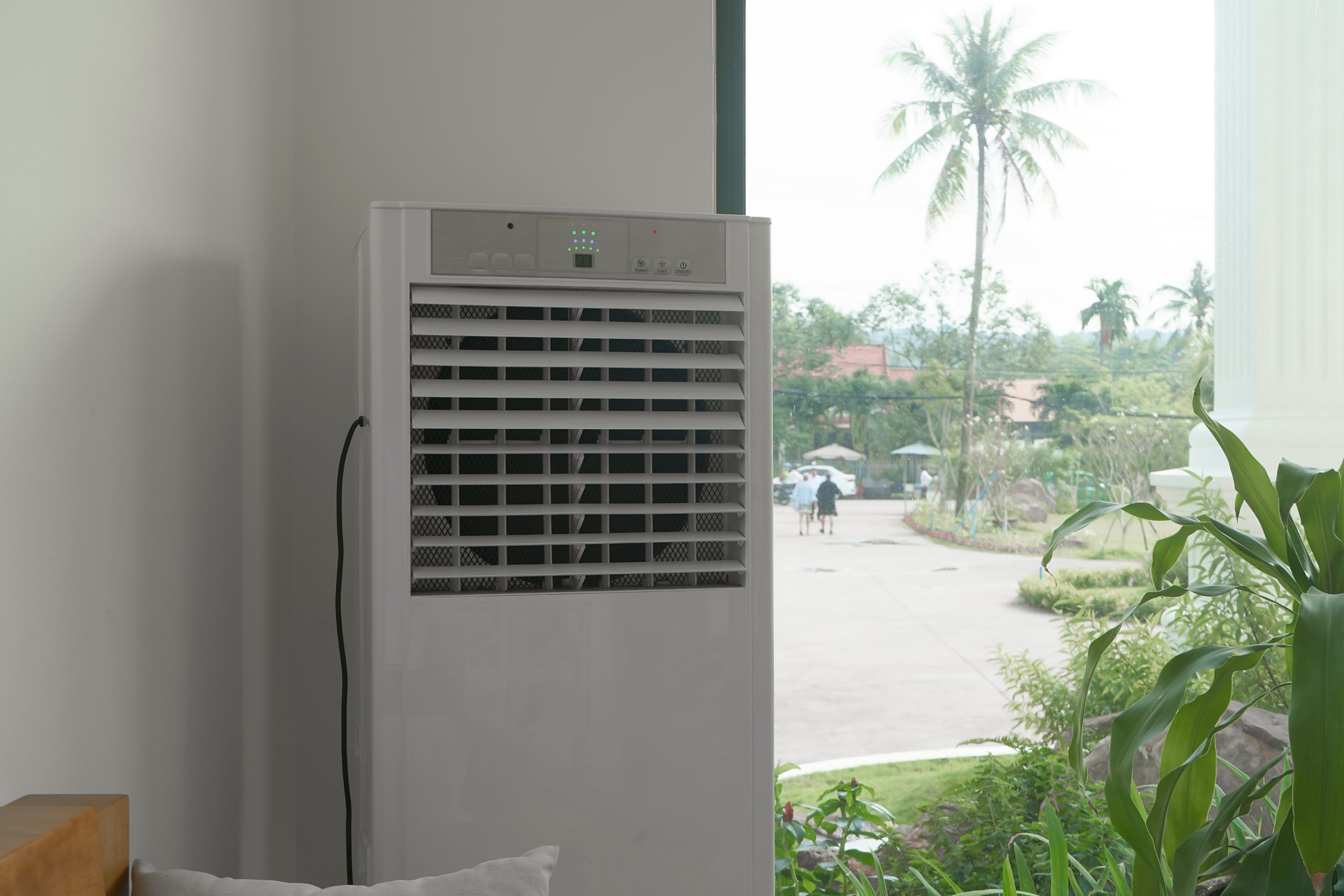
Walk through any hardware store or browse any appliance retailer in the lead-up to summer and you will see portable evaporative coolers Melton prominently displayed, promising refreshing cool air for a fraction of the cost of a split system. For homeowners without ducted cooling, or those looking to supplement an existing system in a particular room, the appeal is obvious. But are they actually worth it for Melbourne’s summer conditions?
The honest answer is: it depends — and it depends on factors specific to your home, your climate, and your expectations. This guide walks through exactly what a portable evaporative cooler can and cannot do, how Melbourne’s summer climate affects performance, what to look for if you do decide to buy one, and when a fixed ducted system is the smarter long-term investment.
How Portable Evaporative Coolers Work
A portable evaporative cooler operates on the same basic principle as a large ducted evaporative system: it draws warm, dry air through water-saturated pads, where evaporation absorbs heat and lowers the air temperature before it is pushed out into the room. Unlike ducted systems that are permanently installed and connected to your mains water supply, portable units are self-contained. They sit on castor wheels, hold a water tank that you fill manually, and require nothing more than a standard power outlet to operate.
That simplicity is both their appeal and their limitation. There is no installation cost, no tradespeople required, and you can move the unit from room to room. But the compromises that come with that simplicity are significant and not always apparent from the product listing or the showroom floor.
When Do Portable Evaporative Coolers Work Best?
Hot, Dry Days with Low Humidity
Evaporative cooling is fundamentally a humidity-dependent technology. On a hot, dry day — the kind Melton regularly experiences during a typical January or February heatwave — the conditions are genuinely favourable for evaporative cooling to work.
- On days when relative humidity is below 30%, a portable evaporative cooler can drop the air temperature by 8 to 12 degrees Celsius in the immediate area around the unit
- Melton’s inland location means it typically has lower ambient humidity than coastal suburbs, which is favourable for evaporative cooling effectiveness
- In a small, well-ventilated room on a genuinely hot, dry day, a quality portable unit can deliver noticeable comfort improvement
Supplementing an Existing System
Portable evaporative coolers can be a practical supplement for areas of your home that are difficult to cool with a ducted system — a garage workshop, a sunroom addition, or a converted shed.
- A portable unit in an uncooled workshop or utility room can make working in those spaces genuinely more bearable on hot days without requiring a permanent installation
- They can also provide spot cooling in a home where the ducted system does not extend to all rooms, such as a recently added extension or a rumpus room at the back of the block
- In these supplementary roles, the relatively modest cooling output of a portable unit is proportionate to the need — you are not relying on it to cool an entire home
You Need Cooling Without Installation
For renters who cannot modify the property, or homeowners who need a solution immediately before a ducted system can be installed, the low barrier to entry is a genuine advantage.
- Entry-level portable evaporative coolers start at around $150 to $300, putting them within reach for households on tight budgets
- No installation means no lead time, no trades booking, and no modification to the property — you buy it and use it the same day
- Running costs are very low — portable evaporative coolers typically consume between 60 and 200 watts, compared to 1,000 to 3,500 watts for a comparable portable air conditioner
When Is a Portable Evaporative Cooler Less Effective?
Humidity Is Too High
Melbourne is famous for variable weather, and that variability includes periods of elevated humidity — particularly during storms and ahead of cool change fronts. On these days, portable evaporative coolers become largely ineffective.
- When relative humidity exceeds 50 to 60%, the evaporation rate from the pads drops significantly, and the unit’s ability to cool the air becomes minimal
- On a 35-degree day with 60% humidity — the type of evening that precedes a Melbourne cool change — a portable evaporative cooler may add more humidity to the room than cooling
- Melbourne summers include multiple such days each season, meaning your portable cooler will have periods where it simply cannot deliver the relief you need
You Need to Cool Multiple Rooms
Portable evaporative coolers are designed to cool the immediate area around the unit, not an entire room, and certainly not an entire home.
- Most portable units are effective over an area of around 15 to 25 square metres — sufficient for a small bedroom or study but not a large open-plan living area
- Because evaporative cooling adds moisture to the air, it requires ventilation — a window or door open — to allow the warmer, more humid air to escape. This means the cool air cannot be trapped in the room the way refrigerative cooling can
- In a large, open living and dining area typical of Melton homes built in the last decade, a portable unit will create a cool zone immediately in front of it but struggle to affect the overall room temperature
What Are the Downsides of Portable Evaporative Coolers?
Ongoing Maintenance and Refilling
Unlike a ducted evaporative system connected to mains water, portable units run from a tank that you fill manually. On hot days when the unit is working hard, this tank may need refilling multiple times.
- Standard portable evaporative cooler tanks hold between 5 and 15 litres. On a 38-degree day, a mid-sized unit can exhaust a 10-litre tank in two to three hours of continuous high-speed operation
- Pads still need to be cleaned regularly and replaced each season to maintain cooling effectiveness — this ongoing maintenance requirement is the same as a ducted system, just on a smaller scale
- Standing water left in the tank for extended periods can develop bacterial growth and unpleasant odours, requiring the tank to be drained and cleaned if the unit has not been used for more than a day or two
Noise Levels
Portable evaporative coolers are not whisper-quiet appliances. At high fan speed — the setting needed for maximum cooling on the hottest days — they produce meaningful background noise.
- Most portable units run at between 50 and 65 decibels on high speed, roughly equivalent to a normal conversation or a moderately loud fan
- For use in a home office or living area during the day this is generally tolerable, but for overnight bedroom use on low settings, the noise can be a factor for light sleepers
- Cheaper units tend to produce more rattling and vibration noise than better-quality models, so this is an area where spending a little more makes a noticeable difference to the user experience
Portable Evaporative Cooler vs Ducted Evaporative System
For Melton homeowners weighing up a portable unit against a permanent ducted evaporative system, the comparison looks like this:
Coverage and Comfort
A ducted evaporative system installed on the roof delivers cooled air through ceiling vents to every room in the home simultaneously, maintaining consistent comfort throughout the house.
- A portable unit cools one zone at a time and requires you to physically move it between rooms if coverage is needed elsewhere
- A well-installed ducted system in a Melton home can maintain a temperature 8 to 15 degrees below the outside temperature throughout the house on a dry summer day
- For a family home where multiple rooms need to be comfortable simultaneously, a portable unit is simply not a practical solution
Cost Over Time
The apparent cost advantage of a portable unit shrinks when you look at total cost over multiple seasons.
- A quality portable evaporative cooler costs $200 to $600 upfront, with replacement pads each season adding $30 to $80 annually
- A ducted evaporative system for a typical Melton home (three to four bedrooms) costs $3,000 to $6,000 installed but delivers whole-home comfort, adds to the property value, and has a service life of 15 to 25 years with proper maintenance
- A portable unit that you replace every three to five years due to wear, failure, or dissatisfaction with performance accumulates cost over time without the investment benefit of a permanent installation
Performance on Extreme Heat
On Melton’s genuine extreme heat days — 40 degrees and above — the performance gap between portable and ducted systems widens considerably.
- A ducted system moves a very large volume of air through the house, creating a consistent breeze effect and maintaining temperatures that remain liveable
- A portable unit on its highest setting delivers a localised cooling effect in the immediate vicinity but cannot overcome the heat load in a larger room or an entire home on an extreme day
- For elderly residents, young children, or anyone with heat-sensitive medical conditions, a portable unit may not provide adequate protection on Melton’s hottest days
Tips for Getting the Most from a Portable Evaporative Cooler
If you do decide a portable unit is right for your situation, these steps will help you get the best possible performance from it through the Melbourne summer:
- Use it on dry days only: Check the Bureau of Meteorology forecast before running the unit. On days with relative humidity above 50%, the unit will add humidity more than it cools
- Position it near a window or doorway: Place the unit near an open window so it draws fresh, dry outside air across the pads rather than re-circulating the same increasingly humid indoor air
- Open an exhaust point across the room: Create airflow by opening a window or door on the far side of the room from the unit so humid air can escape and fresh air can be drawn in continuously
- Pre-cool in the morning: Run the unit from early morning before the heat builds up. Once the room temperature rises significantly it is much harder for the unit to make an impact
- Clean and replace pads each season: Fresh pads maximise evaporation efficiency and prevent the odours associated with degraded or mould-affected pads
- Use ice in the water tank cautiously: Some manufacturers suggest adding ice to the tank to boost cooling. This can provide a brief enhancement on extremely hot days, but it does not substitute for the cooling capacity of a properly maintained pad and pump system
Frequently Asked Questions
How much electricity does a portable evaporative cooler use?
Most portable evaporative coolers consume between 60 and 200 watts, making them very inexpensive to run. At an electricity rate of around 30 cents per kilowatt-hour, running a 150-watt unit for 8 hours costs approximately 36 cents. This compares very favourably with a portable refrigerative air conditioner, which typically consumes 1,000 to 2,500 watts for a similar cooling area.
How often should I clean a portable evaporative cooler?
The water tank should be drained and wiped out any time the unit will not be used for more than 24 to 48 hours to prevent bacterial growth. The pads should be inspected at the start of each season and replaced annually or when they show signs of scale buildup, discolouration, or deterioration. A quick clean of the exterior vents and the inside of the unit at the start of the cooling season will also help maintain airflow and extend the unit’s lifespan.
Conclusion
A portable evaporative cooler can be a reasonable short-term or supplementary cooling solution for Melton households — particularly on the genuinely hot, dry days that make up a significant portion of the local summer. But it is not a substitute for a properly installed ducted evaporative system, and it will not perform on Melbourne’s humid days, its extreme heat events, or in a larger open-plan home where whole-house coverage is needed.
If you are weighing up whether a portable unit will get you through summer or whether the time has come to invest in a permanent solution, the team at New Image Heating and Cooling Melton is happy to walk you through the options. We install and service evaporative cooling systems throughout Melton and western Melbourne, and we can give you an honest assessment of what will actually work for your home and your budget. Call us on 0468 125 098 or reach out through our contact page to arrange a free, no-obligation quote.



