
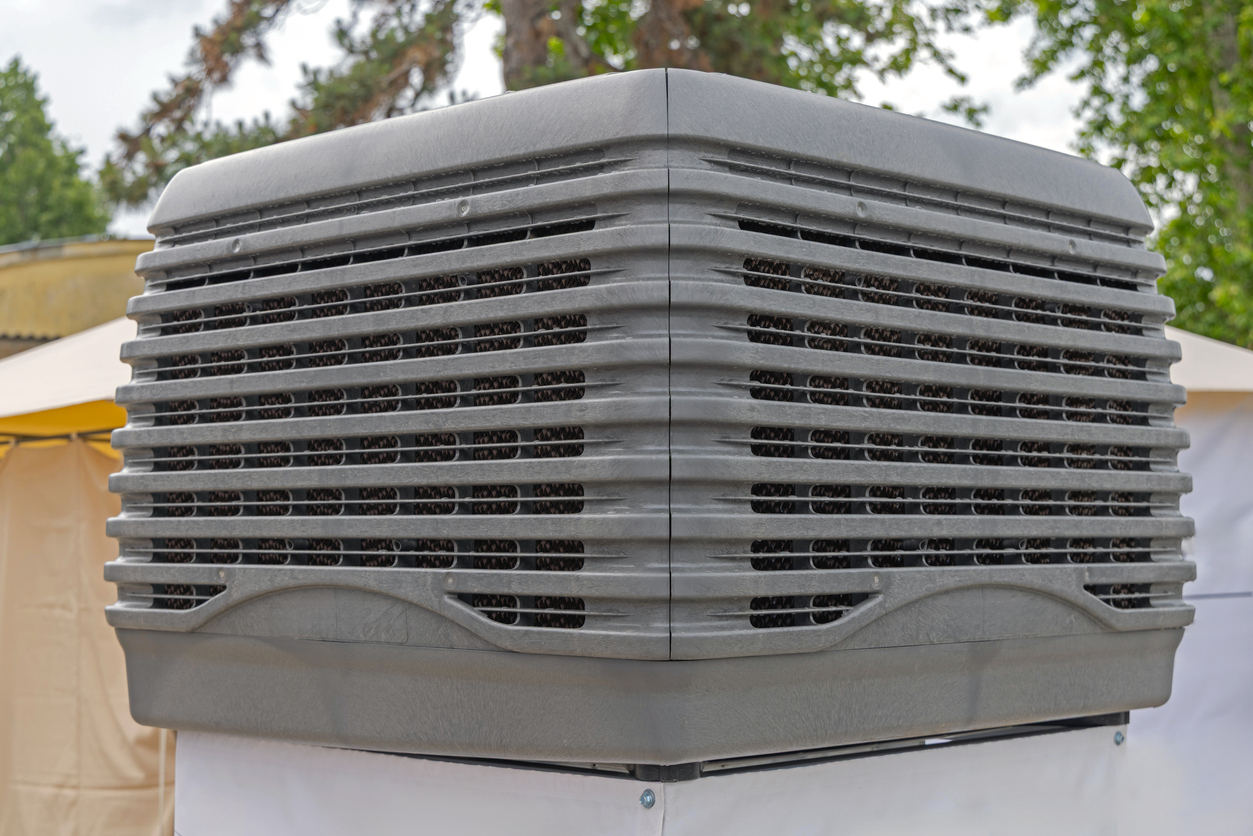
An evaporative cooling Melton that trips the circuit breaker once could be a coincidence. An evaporative cooler that trips it repeatedly is telling you something is wrong, and that message is worth listening to. A circuit breaker’s job is to protect the wiring in your home from damage caused by excess current. When it trips, it means the circuit detected a draw that was outside safe limits. For homeowners who rely on their evaporative cooler through summer, a recurring trip is not just inconvenient, but it is a sign that the system needs professional attention before a nuisance becomes a genuine electrical hazard or a system failure on the hottest day of the year.
How a Circuit Breaker Works and Why It Trips
Before diagnosing the fault, it helps to understand what the breaker is actually responding to. Circuit breakers are rated for a maximum current draw — typically 10 or 15 amps for a household appliance circuit. When the current flowing through the circuit exceeds that rating, the breaker opens the circuit to stop the flow of electricity.
- A breaker that trips immediately when the cooler is switched on suggests a hard electrical fault — a short circuit or a seized motor drawing a locked-rotor current
- A breaker that trips after the unit has been running for some time suggests an overload or a thermal fault — the system draws more current than normal over time until the breaker’s thermal element responds
- A breaker that trips occasionally and inconsistently may point to a loose connection, an intermittent winding fault in a motor, or a breaker that is itself beginning to age and fail
- In all cases, repeatedly resetting the breaker without diagnosing the cause is not a solution — it either fails to hold or risks damage to the wiring or the appliance
What Causes an Evaporative Cooler to Trip the Circuit Breaker?
Evaporative coolers have two main electrical components: the fan motor and the water pump. Either can cause a breaker trip, and so can issues with the wiring connecting them. Here are the most likely causes, from the most common to the less frequent.
Failing or Seized Fan Motor
The fan motor drives the large blower that draws air through the cooling pads and into the duct system. It is the highest-power electrical component in the cooler and the most common source of breaker trips.
- A motor with worn bearings draws progressively more current as friction increases — this is often the cause of breaker trips that develop gradually over a season or between seasons
- A motor with deteriorated winding insulation can develop a partial short circuit, causing it to draw excessive current immediately or after it has warmed up
- A seized motor — one that cannot turn at all — draws locked-rotor current, which can be five to ten times the normal running current and will trip even a healthy breaker within seconds
- Seized motors are more common at the start of the season when a unit has sat dormant through winter, particularly if moisture or corrosion has affected the shaft or bearings
Failed Start or Run Capacitor
Most evaporative cooler fan motors use a capacitor to assist with starting and to keep the motor running efficiently. A failed capacitor is one of the most common causes of electrical problems in evaporative coolers.
- A failed start capacitor prevents the motor from getting up to running speed from a standing start — the motor draws high current trying to start but cannot fully rotate, which trips the breaker
- A failed run capacitor allows the motor to start but causes it to run inefficiently, drawing more current than normal and potentially overheating
- Capacitor failure is especially common on units that are more than 8 to 10 years old, and capacitors can fail due to heat, age, or voltage spikes
- Replacing a capacitor is a relatively inexpensive repair that restores normal motor starting and running performance
Water Pump Fault
The water pump circulates water from the reservoir up to the distribution channels. Although it draws considerably less current than the fan motor, a faulty pump can still contribute to tripping, particularly if there is also a wiring issue.
- A pump with a seized impeller or corroded housing draws abnormally high current as it tries to overcome the obstruction
- A pump with a fault in its motor windings can cause a partial short circuit that trips the breaker when the pump is engaged
- If the unit trips specifically when the pump activates — which you can sometimes identify by the timing relative to switching the cooler to “cool” mode versus “fan only” — the pump is a likely suspect
Water Ingress into Electrical Components
Evaporative coolers combine water and electricity in close proximity. While they are designed to manage this, water can reach electrical components when there is a leak, a blocked drain, or damaged sealing around wiring entries.
- Water on electrical connections or motor terminals causes current to find unintended paths to earth, producing the current imbalance that trips a breaker or RCD
- This is more common after a season of use where a slow water leak has gradually allowed moisture to migrate toward wiring or the motor housing
- Units that have been subjected to heavy rain or water spray from outside — on exposed rooftop installations — are also at risk of water reaching components it should not
- Any evidence of water near the wiring, terminal block, or motor of the unit warrants immediate investigation by a licensed electrician or technician
Loose or Corroded Wiring Connections
Vibration from the fan motor over years of operation can loosen wiring connections inside the unit. Corroded terminals — particularly in the damp environment around the unit — can cause resistance heating at connection points that eventually leads to arcing or a short circuit.
- Loose wiring connections may produce intermittent trips that are difficult to reproduce on demand, making them frustrating to diagnose without a proper inspection
- Corrosion at terminal blocks can create high-resistance connections that heat up under load, potentially causing wiring insulation to degrade and eventually short circuit
- A technician performing an annual service will check connection integrity as part of the electrical inspection — this is one of the reasons regular servicing catches problems before they become emergencies
An Ageing or Undersized Circuit Breaker
It is worth considering whether the problem lies with the breaker itself rather than the cooler. Circuit breakers can degrade over time and begin tripping at lower currents than their rated capacity.
- An older breaker that trips on a circuit it has protected without issue for years may simply be failing internally — the thermal element or the mechanical latch can wear out
- If the cooler is on a shared circuit with other appliances, the combined load may now exceed the breaker’s rating — particularly if other appliances on the circuit have been added or upgraded since the system was installed
- An electrician can test breaker performance and advise whether replacement or a dedicated circuit for the evaporative cooler is warranted
What To Do When Your Evaporative Cooler Trips the Breaker
If your evaporative cooler is tripping the breaker, there is a safe and logical sequence of steps to follow before calling a technician — and some actions you should definitely avoid.
What To Do
- Switch the cooler off at the controller before resetting the breaker — never reset a breaker with the appliance still drawing current
- Note the timing: Does it trip immediately on startup, after a few minutes of running, or after extended use? This information is valuable for diagnosing the fault
- Check for visible water near the wiring or any evidence of leaking inside the unit before restarting — water near electrical components is a reason to stop and call a technician
- Reset the breaker once and attempt to restart the unit — if it trips again immediately, do not attempt further resets and arrange for an inspection
What Not To Do
- Do not repeatedly reset a breaker that keeps tripping — each reset without resolving the underlying fault risks wiring damage and increases fire risk
- Do not replace the breaker with a higher-rated one in an attempt to stop it tripping — the breaker is doing its job; bypassing it by fitting a larger one removes a safety mechanism
- Do not attempt to inspect internal wiring yourself unless you are a licensed electrician — the capacitors in motor circuits can hold charge even after the power is disconnected
How Regular Servicing Prevents Breaker Trips
The majority of electrical faults that cause an evaporative cooler to trip a circuit breaker develop gradually — a bearing that wears slowly, a capacitor that degrades over summer, a connection that corrodes through a winter. An annual service before the cooling season catches most of these developing faults before they become failures.
- Motor inspection: Checking motor bearing condition, measuring motor current draw under load, and confirming the motor starts cleanly from cold
- Capacitor testing: Measuring capacitor value against the manufacturer’s specification — a capacitor that has drifted significantly out of tolerance is replaced before it causes a trip or motor damage
- Electrical connection check: Inspecting and tightening all terminal connections, looking for signs of corrosion or heat damage on terminals and wiring
- Pump inspection: Checking pump current draw and confirming the impeller rotates freely without obstruction
- Water pathway inspection: Confirming no water is reaching areas of the unit where electrical components are located
Frequently Asked Questions
Is it safe to keep resetting the breaker when my evaporative cooler trips it?
No. If the breaker is tripping more than once for the same reason, resetting it repeatedly without identifying and resolving the fault risks wiring damage and, in some cases, fire. Reset it once to see whether the trip was a one-off. If it trips again on restart, switch the unit off and arrange for a technician to inspect it before continuing to use it.
Could the problem be with my switchboard rather than the cooler itself?
Yes, it is possible. An ageing circuit breaker can develop a lower trip threshold than its rated current, causing it to trip on normal loads it would previously have handled. An electrician can test the breaker’s performance and advise whether it needs replacement, or whether a dedicated circuit for the evaporative cooler is appropriate.
My evaporative cooler trips the breaker only on the hottest days. What causes that?
This pattern typically indicates a motor or capacitor fault that becomes apparent only under high load. On very hot days, the motor runs at peak capacity for extended periods, generating heat internally. A motor with worn bearings or a weakened capacitor may handle normal operation but fail under sustained peak load. A technician can test the motor and capacitor under load to confirm this diagnosis.
Conclusion
A circuit breaker trip is never something to ignore, and an evaporative cooler that trips its breaker repeatedly is signalling a fault that will not resolve itself. The most common causes are a failing motor, a degraded capacitor, a faulty pump, or water reaching wiring. These are all diagnosable and repairable with the right inspection. What you want to avoid is reaching the height of summer with an unresolved electrical fault in a system your household depends on for comfort.
The team at New Image Heating and Cooling Melton services and repairs evaporative cooling systems. If your cooler is tripping the breaker, call us on 0468 125 098 or submit an enquiry through our contact page and we will get it sorted before your next heatwave arrives.



