
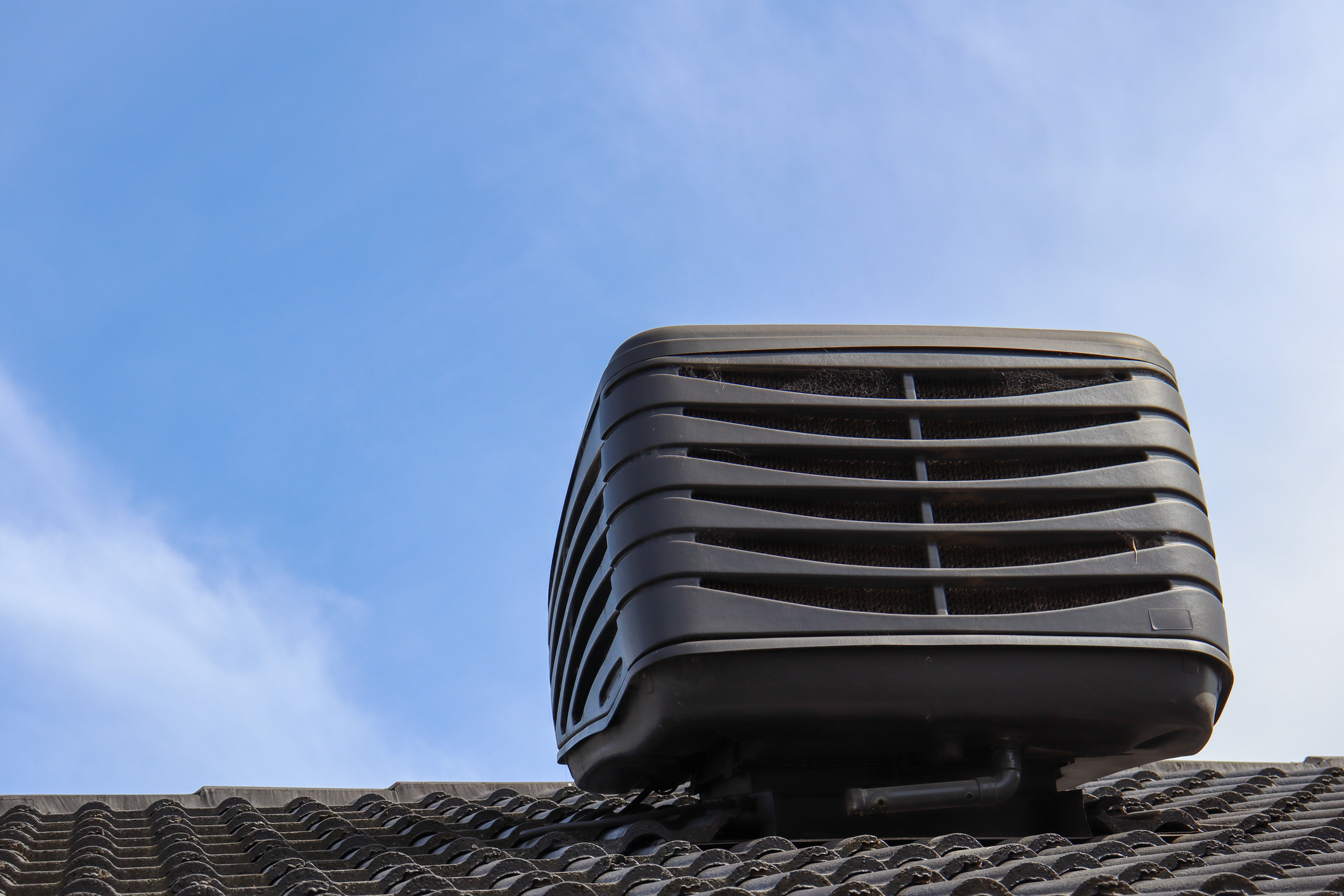
Evaporative cooling in Melton is one of the most popular and cost-effective systems, and it’s been the dominant cooling technology for decades. It suits the dry, hot summers that the region regularly experiences, it runs at a fraction of the cost of refrigerative air conditioning, and it produces fresh, constantly circulating air rather than the recirculated indoor air that sealed refrigerative systems push around. But despite how common these systems are, many homeowners run their evaporative cooler for years without fully understanding how it works or why certain operating habits make it significantly more effective than others. Here’s a complete guide to the technology, the components, the ideal operating conditions, and the maintenance that keeps these systems performing at their best.
The Basic Principle: Heat, Water, and Evaporation
Evaporative cooling works on one of the most fundamental principles in physics: when water evaporates, it absorbs heat energy from the surrounding air, and that absorption lowers the air temperature. This isn’t a new idea. It’s the same process that cools your skin when you step out of a swimming pool on a hot day.
- Hot outside air is drawn into the unit through large fans and passes through water-saturated cooling pads.
- As air passes through the wet pads, water molecules evaporate into the air, absorbing heat energy from the air in the process.
- The air leaving the pads is significantly cooler and slightly more humid than the air that entered the unit.
- No compressor or refrigerant is used. The only mechanical components are a water pump, a fan motor, and the controls. This is why evaporative cooling costs so much less to run than refrigerative air conditioning.
- The added humidity is a genuine benefit in Melbourne’s typically dry summer conditions, where indoor air can become uncomfortably dry under refrigerative cooling.
The critical distinction between evaporative cooling and refrigerative air conditioning is this: evaporative cooling adds fresh outside air to your home continuously. Refrigerative systems seal the home and recirculate the same air. This fundamental difference has significant implications for how each system should be operated, and why evaporative cooling is a particularly good fit for the summer’s climate.
The Main Components and What Each One Does
A rooftop evaporative cooler is a straightforward machine with a small number of components, each of which plays a clear role in the cooling process. Understanding what each part does makes it much easier to identify when something isn’t right and to have an informed conversation with a service technician.
The Cooling Pads
The cooling pads are the heart of the system and the component most directly responsible for how much cooling is produced.
- Typically made from cellulose (wood fibre) or synthetic material engineered to hold a large volume of water while allowing maximum airflow through the pad structure.
- The large surface area of the pad maximises the water-to-air contact, and therefore the evaporation rate and the temperature drop.
- Pads degrade over time. Old, compressed, or broken-down pads lose their ability to hold water evenly across their surface, creating dry patches where no evaporation occurs and wet patches where the airflow is restricted.
- Hard water accelerates pad deterioration. Bacchus Marsh in particular sits in an area with moderately hard water. Mineral scale builds up on cellulose pads and reduces their effectiveness faster than in areas with softer water.
The Water Distribution System
For the pads to work correctly, water must be distributed evenly across their entire surface at all times during operation.
- A pump draws water from the reservoir at the base of the unit and pushes it up to a distribution tray or series of drip tubes at the top of each pad.
- Water trickles down evenly through the pad structure, keeping the entire surface saturated.
- Scale buildup and debris in the distribution system are the most common cause of uneven saturation. When distribution holes block up, sections of the pad dry out and cooling efficiency drops, even though the system appears to be running normally.
- Annual cleaning of the distribution system is part of a thorough pre-season service and is one of the most impactful maintenance tasks for maintaining cooling performance.
The Blower Fan and Motor
The fan and motor are the workhorses of the system, responsible for moving the volume of air that determines how effective the cooling is throughout the home.
- A large centrifugal blower fan draws hot outside air through the saturated pads and pushes the cooled, slightly humidified air through the duct network into the home.
- Fan speed controls allow you to adjust airflow volume. Higher fan speeds deliver more airflow but also slightly warmer air because the air spends less contact time with the saturated pads. Lower fan speeds deliver less air but at a lower temperature.
- The motor is the most expensive component in the system to replace. Motor bearings that are not lubricated as part of annual servicing wear faster, run hotter, draw more current, and can fail completely mid-summer, leaving the household without cooling at the worst possible time.
- Signs of a struggling motor include increased startup noise, a longer time to reach full operating speed, and vibration that wasn’t previously present.
The Water Reservoir and Float Valve
The reservoir is the holding tank that supplies the distribution pump with water during operation.
- The float valve works on the same principle as a toilet cistern: it opens to let water in when the level drops and closes when the level reaches the correct point.
- A stuck or corroded float valve either allows the reservoir to overflow (wasting water and potentially causing roof damage) or allows it to run dry (stopping the pump and leaving the pads unsaturated).
- Sediment and scale in the reservoir are flushed out during servicing. A dirty reservoir can block the pump intake and accelerate wear on the pump impeller.
- The reservoir also includes a dump valve or bleed-off system on many modern units, which periodically replaces reservoir water with fresh mains water to prevent excessive mineral concentration as water evaporates. This is particularly valuable in Bacchus Marsh’s harder water conditions.
The Duct System
The duct system carries cooled air from the rooftop unit through the ceiling space and into each room via ceiling outlets.
- Duct leaks in the ceiling space waste cooled air before it reaches the living areas and reduce delivery to specific rooms.
- Blocked or partially closed outlets create uneven cooling throughout the home. Some rooms may be overcooled while others barely feel any airflow.
- A duct inspection as part of a pre-season service identifies and addresses these issues before the summer begins.
How the System Moves Air Through Your Home
The way evaporative cooling moves air through a home is fundamentally different from refrigerative air conditioning, and understanding this difference is the key to operating the system correctly.
- Evaporative cooling is a flow-through system. Fresh cool air enters from the rooftop unit through ceiling outlets, and warm stale air is pushed out through open windows and doors. The home is constantly ventilated with fresh outdoor air during operation.
- Open windows are not optional with evaporative cooling. Without escape routes for the incoming fresh air, the system pressurises the home slightly and quickly reaches a point where it can no longer move new air through the pads. Cooling stops.
- Window opening controls room temperature. Opening windows wider in a room allows faster airflow but slightly warmer air (because more air is moving, the overall pressure is lower and fan speed is effectively reduced). Closing windows down slows airflow but produces cooler, lower-volume delivery. Most households develop a feel for the right balance across different rooms over a summer or two.
- Air quality benefits are a genuine advantage over refrigerative systems. The air you breathe is freshly drawn from outside, not recirculated indoor air that accumulates dust, allergens, and cooking odours over the course of the day.
- The feel of evaporative-cooled air is different from refrigerative. It’s softer, slightly moist rather than dry, and creates a gentle moving air sensation rather than a sharp temperature contrast. Many people find this more natural and comfortable for extended periods.
Operating Tips for Maximum Effectiveness
Getting the most from an evaporative cooler in Melton and Bacchus Marsh comes down to how you operate it day to day.
- Start early in the day. Run the system before outdoor temperatures peak. Drawing in relatively cooler morning air and pre-cooling the house before the afternoon heat arrives is far more effective than trying to cool a 35-degree interior in the middle of the afternoon.
- Close windows on the hot side of the house. During afternoon westerlies, close west-facing windows and open east-facing ones to avoid drawing hot air back in from the sun-exposed side.
- Use higher fan speeds on the hottest part of the day and lower speeds in the morning and evening when outside air is cooler and you want maximum temperature drop through the pads.
- Turn the pump on first and allow the pads to saturate (usually 2 to 3 minutes) before turning on the fan. Running the fan before the pads are wet simply pushes hot dry air through the home.
- In the evening, when outside air cools below indoor temperature, switch to fan-only mode to draw in cool evening air without the added humidity from the pads.
Conclusion
Understanding how each component contributes to cooling performance makes the case for regular servicing obvious. Every part of the system plays a direct role. When any one of them is underperforming, the system delivers less cooling for the same energy input.
At New Image Heating and Cooling Bacchus Marsh, our pre-summer service covers everything the system needs before the heat arrives: pad inspection and replacement where needed, motor lubrication and bearing check, water distribution cleaning, float valve and pump test, duct condition check, and a full operational test at the correct fan speed settings. We can also assess whether your system is still correctly sized for your home if you’ve carried out renovations or extensions since the original installation.
Call us on 0468 125 098 or submit our online form to book your pre-summer evaporative service. Book early in the season. Our schedule fills quickly once warm weather arrives and everyone realises at the same time that their cooler needs attention before the first 35-degree day.
Frequently Asked Questions
Is evaporative cooling the same as a swamp cooler?
Yes, they are the same technology. Evaporative coolers are sometimes called swamp coolers in North America, though the term is rarely used in Australia. Here, you’ll hear the same system referred to as an evaporative cooler, evaporative air conditioner, ducted evaporative, or simply the evaporative. All of these terms refer to the same water-and-fan technology described in this article.
How much does an evaporative cooler cost to run compared to refrigerative air conditioning?
Evaporative cooling typically costs 50 to 80 percent less to run than a comparable refrigerative system. A ducted refrigerative system cooling a full home might draw 3 to 5 kilowatts of power, while an evaporative system cooling the same home uses primarily just the fan motor, typically 0.5 to 1.5 kilowatts, plus a small pump. Over a Melton or Bacchus Marsh summer, that difference accumulates to a very significant saving on energy bills. Water consumption is the other operating cost, typically 40 to 60 litres per hour during full operation.
Can an evaporative cooler work without windows open?
No. Evaporative cooling is a flow-through ventilation system. Fresh cool air is continuously introduced from outside, and it needs somewhere to exit. Closing all windows stops the airflow, causes the home to pressurise, and the system loses its ability to cool. You need windows or doors open on the side of the home you want to cool toward. Typically, opening windows on the opposite side of the home from where the cool air is entering gives you the best flow-through effect.
Does evaporative cooling work on very hot days?
Yes, and on the hottest, driest days it often performs at its best. When outdoor temperatures reach 40 degrees with 15 to 20 percent relative humidity, which is typical of severe heat events in both Melton and Bacchus Marsh, a well-maintained evaporative cooler can drop incoming air temperature by 10 to 15 degrees before delivering it to the home. The system becomes less effective when humidity rises above 50 to 60 percent, which is less common in Melbourne’s west than in coastal or eastern suburbs.
How long does an evaporative cooler last?
A well-maintained evaporative cooler typically lasts 15 to 20 years. The motor, distribution system, and reservoir are the components most susceptible to deterioration over time. Systems that receive annual pre-season servicing, with pads replaced on schedule, motors lubricated, and distribution components cleaned, reliably reach the upper end of that lifespan. Systems that are neglected commonly fail within 10 to 12 years, usually through motor failure or a corroded water distribution system that goes unaddressed until the system stops cooling effectively.



