
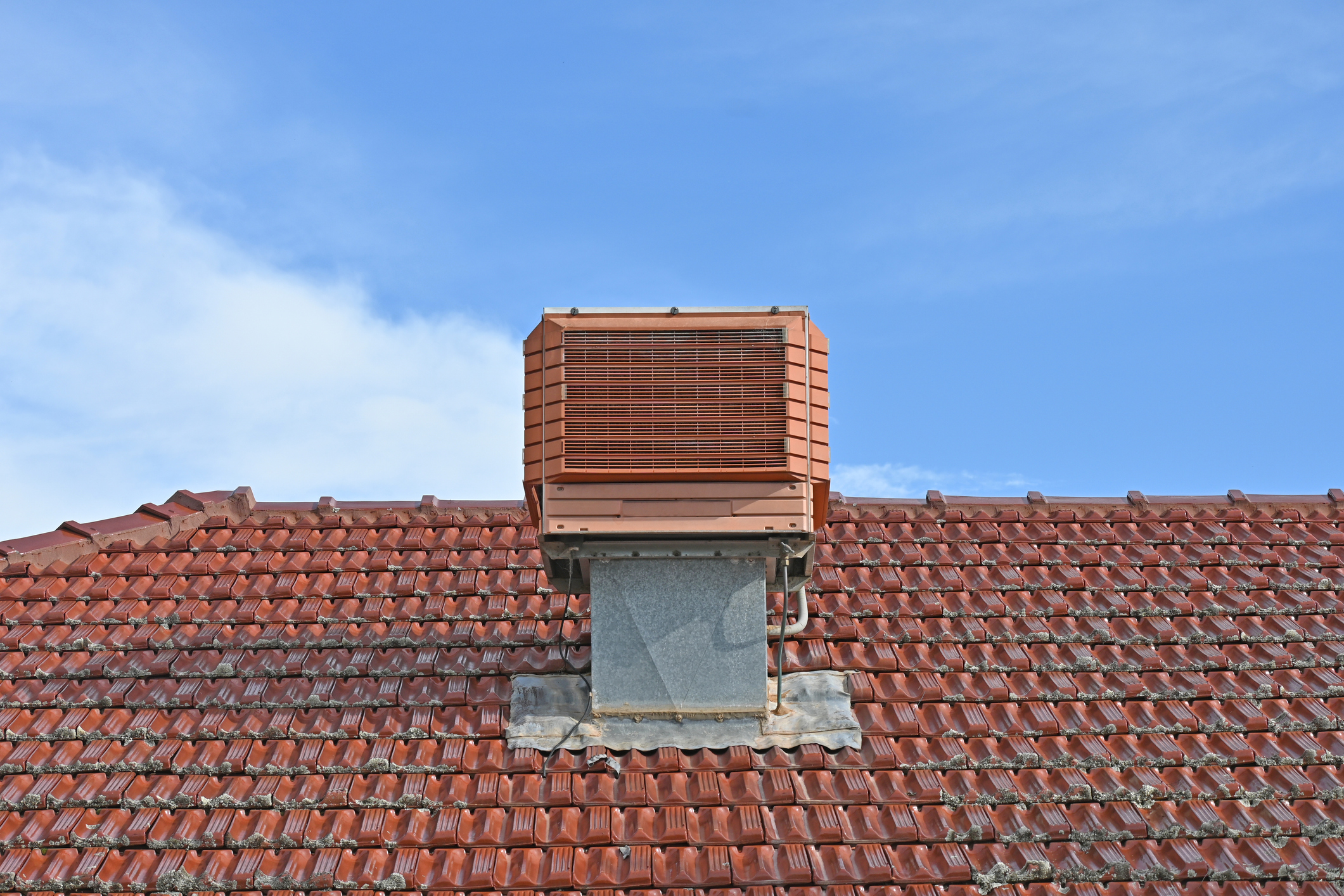
Your evaporative cooler Melton is switched on. The fan is running, water is circulating, but the house just isn’t getting cool. On a 38-degree day, this is genuinely miserable. The good news is that most evaporative cooling performance problems have identifiable causes, and some can be addressed without a service call at all.
This guide works through every common reason an evaporative cooler underperforms, from the simple things you can check yourself right now to the faults that need a technician. Understanding what’s happening inside the system is the fastest way to get your home cool again.
How Evaporative Cooling Actually Works
Before diving into the causes of poor performance, it helps to understand the basic principle. Evaporative cooling works by drawing warm outside air through water-saturated pads. As the air passes through the wet pads, water evaporates and the air temperature drops — typically by 10 to 15 degrees on a dry day. That cooled air is then blown through ceiling ducts and out through vents into each room.
Critically, evaporative cooling requires the house to be ventilated: warm air must be able to escape as cool air enters. When windows and doors are closed, the house becomes increasingly humid and the system’s effectiveness drops rapidly. This is the single most common operating mistake people make with evaporative cooling systems.
Check the Basics First
Before assuming a fault, confirm the basics. These take two minutes and solve the problem more often than you’d expect.
- Is the system in cooling mode? Not fan-only. Fan-only circulates room-temperature air with no evaporation and no cooling. Check the controller confirms cooling mode with water flow active
- Is the water pump running? Listen for the pump, or open the unit and check whether the pads are visibly wet. A dry pad in a running system usually means the pump isn’t running
- Are windows open? Evaporative cooling requires open windows or doors in the rooms you’re trying to cool. Open windows 5 to 10 centimetres — enough to let warm air escape without letting too much heat in. A fully sealed house with evaporative cooling running will become increasingly humid and deliver almost no temperature drop within 30 to 40 minutes
- What’s the outdoor humidity? If it’s a humid day — particularly before a storm or after rain — evaporative cooling will be less effective regardless of system condition. Check the weather before calling for a service
What Are The Most Common Causes of Poor Cooling?
If the basics check out and the system still isn’t cooling properly, one of the following is almost certainly the cause.
1. Worn or Damaged Cooling Pads
The cooling pads are the most common source of reduced performance and the one most often left too long between replacements. The pads are made from a cellulose or synthetic material designed to hold water evenly across their surface. When they work correctly, air passing through is exposed to maximum moisture and experiences the full temperature drop.
- What happens when pads wear out: Old, scale-encrusted, or partially broken-down pads can’t hold water evenly. Dry patches develop across the pad surface — sections of airflow pass through without any evaporation and arrive in the duct system uncooled. The system delivers a mixture of properly cooled and uncooled air, significantly reducing the average temperature drop
- What worn pads look like: Dark brown or black colouration from mineral scale, visible crumbling or missing sections, uneven wet coverage when the pump is running, or sections that feel dry to the touch mid-operation
- Replacement schedule: In Melton and Bacchus Marsh, where summer use is heavy and water hardness accelerates mineral build-up, pads typically need replacing every one to two seasons. If your pads haven’t been replaced in the past two years of regular use, they’re almost certainly due
- What to do: Pad replacement is a standard part of a pre-summer service and is not a major repair. It makes the single biggest difference to evaporative cooling performance of any maintenance task
2. Blocked or Faulty Water Distribution
At the top of the evaporative cooler sits a distribution tray or pipe system that delivers water evenly across all four pads. Scale, algae, and debris can block the distribution outlets over time, creating dry zones in the pads even when the pads themselves are in good condition.
- How to check this yourself: With the system running in cooling mode, observe the pads. If some sections are noticeably drier than others — particularly the upper sections — the distribution outlets above the dry area are blocked
- What to do: Clear the blocked outlets using a thin wire or by running the system at maximum water flow briefly. In more severe cases the distribution tray needs to be removed, flushed, and the outlets manually cleared. This is part of an annual service
- Prevention: Running the cooler’s bleed-off or purge function as recommended by the manufacturer reduces mineral scale build-up in the distribution system over the course of the season
3. Low Water Flow or Pump Fault
If the pump isn’t delivering adequate water flow, the pads will dry out during operation — particularly on hot, dry days when evaporation is fastest. A partly blocked pump impeller or a pump nearing the end of its service life will produce enough flow to wet the pads initially but not enough to keep them saturated during peak demand.
- Signs of a pump fault: Pads that feel warm or dry to the touch during operation, a burning or dusty smell from the ceiling vents, performance that is worse on the hottest days but passable on milder days, or the pump making unusual noise
- What to do: Confirm the pump is running. If it runs but the pads aren’t getting wet, the pump impeller may be blocked with debris from the sump. A technician can inspect and clean the impeller or replace the pump — pump replacement is a relatively straightforward and inexpensive repair
4. Reduced Fan Motor Performance
The blower fan motor drives the airflow through the pads and into the duct system. A motor running below its rated speed — due to bearing wear, a failing capacitor, or belt wear in belt-drive systems — reduces the volume of air moving through the unit. Less airflow means less air cooled per minute and less temperature drop delivered to the rooms.
- Signs of motor performance issues: The system sounds quieter than it used to, airflow from the ceiling vents feels notably weaker than in previous summers, or specific rooms that used to cool well now stay warm
- What to do: A capacitor replacement or bearing service can often restore a motor to full performance. Belt-drive systems need belts inspected and replaced when worn. A failing motor that goes unaddressed will eventually stop working mid-summer — catching it early is far cheaper than an emergency replacement
- Bacchus Marsh note: In homes on the outskirts of Bacchus Marsh where systems are exposed to higher dust loads and run longer seasons, fan motor wear tends to occur earlier than average. Annual inspection is particularly worthwhile
5. Duct Leaks or Blockages
Cooled air travels from the rooftop unit through ceiling ducts to the vents in each room. If those ducts have significant leaks — tears in flexible duct material, disconnected joints, or damaged sections — a large proportion of the cooled air escapes into the ceiling cavity before it ever reaches the room.
- Signs of duct issues: The system runs but airflow from specific vents is weak or absent. Rooms furthest from the unit tend to be worst affected, because longer duct runs mean more surface area for leaks to accumulate
- Common causes in Melton and Bacchus Marsh: Flex duct material deteriorates over 10 to 15 years. Ductwork is also frequently damaged by other trades working in the roof space — solar panel installers, electricians, and plumbers can accidentally crush or dislodge duct sections during their own work
- What to do: A duct inspection is part of a comprehensive service. Sealing or replacing damaged sections is the fix. In severe cases where ductwork is extensively degraded, full duct replacement delivers a dramatic improvement in whole-house performance
6. High Outdoor Humidity
If your cooler has been working well but is underperforming specifically today, check the weather conditions before assuming a fault. Evaporative cooling is a physics-based process: its effectiveness is directly determined by the outdoor humidity level.
- How humidity affects performance: When relative humidity rises above 50 to 60 percent, the outdoor air already contains significant moisture. It has less capacity to absorb additional water through evaporation, which means the temperature drop through the pads is reduced. At 80 percent humidity, evaporative cooling may only produce a 4 to 5 degree temperature drop instead of 12 to 15
- This is not a fault: It’s a known and unavoidable limitation of evaporative cooling technology. Performance will return to normal when humidity drops
- When this happens frequently: Homes in Bacchus Marsh experience more variable humidity than Melton due to proximity to the Lerderderg River and more variable weather patterns. If humidity-related underperformance is a recurring problem, a refrigerant split system for the main living areas may be worth considering as a complement to the evaporative system
7. Undersized System or Changes to the Heat Load
If the system has always struggled to cool the house adequately rather than recently declining, the unit may be undersized for the current cooling load. This is particularly common in homes that have been extended or renovated since the original system was installed.
- Signs of an undersized system: The unit runs continuously on hot days without bringing the temperature down to a comfortable level, regardless of how well-maintained it is. Performance was never significantly better than it is now
- Common causes: Extensions that added floor area, open-plan renovations that joined previously separate rooms, garage conversions, or granny flat additions that weren’t accounted for in the original system design
- What to do: A capacity assessment compares the system’s airflow output against the home’s current heat load. Options include upgrading to a larger unit, adding supplementary split systems to specific high-demand areas, or improving the home’s thermal performance through insulation and window treatments
Conclusion
Most evaporative cooling performance problems have a clear cause and a straightforward fix. The frustrating part is identifying which cause applies to your specific system — and that’s where professional diagnosis makes the difference. Guessing at the cause and replacing parts that don’t need replacing wastes money and leaves the real problem unaddressed.
At New Image Heating and Cooling Melton, our technicians carry out a systematic assessment covering pads, pump, distribution, fan motor, ductwork, and system capacity, so you get a clear answer on exactly what’s wrong and what it will cost to fix. We don’t guess. We diagnose.
Call us on 0468 125 098 or submit our online form to book. Same-day service is available when you book before noon. Don’t wait until the next 40-degree day to find out your cooler isn’t up to the task.
Frequently Asked Questions
Why does my evaporative cooler work well some days but poorly on others?
The most likely explanation is humidity variation. Evaporative cooling is significantly less effective on humid days — when storms are approaching, after heavy rain, or during periods of higher atmospheric humidity. If the system works well on clear, hot, dry days but underperforms when humidity rises, this is normal behaviour and not a fault. If it underperforms consistently regardless of humidity conditions, there is a maintenance issue that needs attention — most likely worn pads, a distribution blockage, or reduced pump or motor performance.
How do I know if my evaporative cooling pads need replacing?
Pads that need replacing are typically visibly degraded: dark brown or black from heavy mineral scale, crumbling or missing sections, or uneven wet coverage when the pump is running. New pads are noticeably lighter in colour, more uniform in texture, and hold water evenly across their entire surface. If your pads haven’t been replaced in two or more years of regular seasonal use, they’re almost certainly due for replacement. Your technician will assess pad condition and advise during any service visit.
My evaporative cooler used to cool the house to 22 degrees but now only gets to 28. What’s wrong?
A noticeable decline in cooling capacity from what the system used to achieve almost always points to maintenance-related causes: worn and scale-encrusted pads, a partially blocked distribution system, reduced pump output, or a fan motor running below its rated speed. All of these are standard findings at a service and are straightforward to address. In some cases the combination of all four factors accumulating gradually explains a large performance gap. Book a service before the peak of the next summer season to restore the system to its original output.
Why is my evaporative cooler only cooling some rooms and not others?
Uneven cooling between rooms is most often caused by duct leaks delivering cooled air into the ceiling cavity before it reaches the room vents, partially blocked or incorrectly adjusted zone dampers, or an imbalance in the duct system’s airflow distribution. Rooms furthest from the unit, or rooms at the end of longer duct branches, are most commonly affected. A duct inspection during a service can identify the specific cause and, in most cases, sealing leaks or adjusting dampers resolves the imbalance without major duct replacement.
Can I clean the evaporative cooling pads myself?
You can rinse pads with a garden hose to remove loose surface debris and some light scale, and this is worth doing mid-season to extend pad life. However, heavy mineral scale and biological growth that has penetrated into the pad material cannot be cleaned out effectively — once the pad structure is degraded, water distribution becomes uneven regardless of how clean the surface appears. Pads that have deteriorated beyond light surface cleaning need replacing. Pad replacement is a standard, inexpensive part of an annual service that makes the biggest single difference to evaporative cooling performance.



