
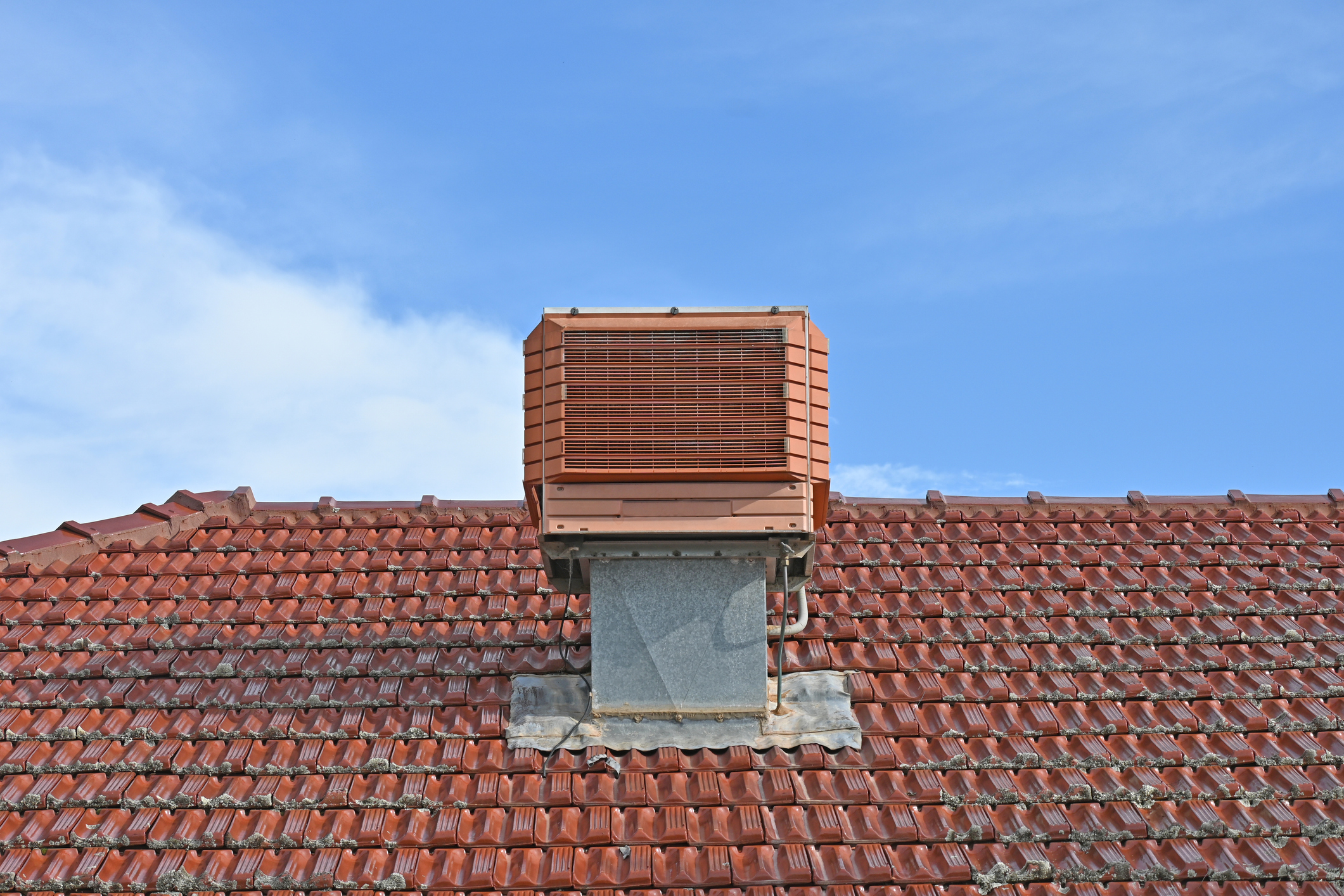
Evaporative cooling Melton is one of the most cost-effective ways to cool a home. The running costs are low, the fresh-air ventilation is genuinely pleasant, and for most of the summer the performance is excellent. But it’s not the right choice for every situation. The technology has real limitations, and understanding them before you invest in installation or replacement will save you from a system that disappoints on the days you need it most.
How Evaporative Cooling Works
Before weighing up whether it suits your home, it helps to understand the basic principle. Evaporative cooling uses a large fan to draw hot outside air through water-saturated pads. As the air passes through the wet pads, some of the water evaporates, absorbing heat from the air in the process. The result is cooler, moistened air that is pushed into the home through ceiling outlets.
- Cooling effect: On a hot, dry day, a well-sized evaporative system can drop incoming air temperature by 10 to 15 degrees. On a 40-degree day with low humidity, this produces genuinely comfortable indoor temperatures.
- Humidity dependence: The critical factor is ambient humidity. Evaporation works by moving moisture into dry air. When the air is already humid, it cannot absorb more moisture efficiently and the cooling effect drops sharply.
- Continuous fresh air: Unlike refrigerative systems that recirculate indoor air, evaporative cooling continuously introduces fresh outside air and pushes stale indoor air out through open windows and doors. The air in the home turns over every few minutes during operation.
- Whole-home coverage: A single rooftop unit with ductwork can cool an entire house. This whole-home coverage from one unit is a significant cost and practicality advantage over multiple refrigerative split systems.
Where Evaporative Cooling Excels
The Climate Profile of Melbourne’s West
Melbourne’s western suburbs, including Melton and Bacchus Marsh, have a climate that is genuinely well suited to evaporative cooling. The area is inland, drier than coastal Melbourne, and experiences the kind of hot, low-humidity summer days that are evaporative cooling’s sweet spot.
- Low summer humidity: On the extreme heat days that matter most, relative humidity across this region is often 10 to 20 percent. This is ideal for evaporative cooling, allowing maximum temperature reduction through the evaporation process.
- Dry northerly winds: The hot northerly winds that bring Melbourne’s worst summer heat days typically originate from the dry interior and carry very low moisture content. These are exactly the conditions where evaporative cooling performs best.
- Established presence: Many homes built across this corridor from the 1970s through the early 2000s were fitted with ducted evaporative systems as standard. If your home already has one, replacing it like-for-like when it reaches end of life is almost always the most practical and cost-effective choice.
Larger Homes and Open-Plan Layouts
A ducted evaporative system is genuinely efficient at whole-home cooling in a way that refrigerative alternatives struggle to match at the same cost.
- Running costs: A ducted evaporative system uses significantly less electricity than ducted reverse-cycle refrigerative cooling. The motor that drives the fan and the small pump that circulates water are the only power consumers. There’s no compressor drawing heavy current. For a large home running the system daily through summer, the difference in electricity bills is substantial.
- Single unit, whole home: One rooftop unit connects to all bedrooms and living areas through a ducted system. Achieving the same whole-home coverage with refrigerative split systems requires multiple units, multiple outdoor compressors, and significantly higher installation cost.
- Open-plan suitability: Evaporative cooling’s high airflow volume works well in large open-plan spaces where getting air moving throughout the room is as important as the temperature drop itself.
Households That Value Fresh Air and Air Quality
The continuous fresh-air ventilation of evaporative cooling is a genuine comfort advantage for many households, not just a technical difference.
- Air turnover rate: The air volume in an evaporatively cooled home turns over completely every few minutes during operation. Stale air, cooking odours, and indoor air pollutants are continuously flushed out.
- No recirculated air: Refrigerative systems recirculate the same indoor air through a closed loop. In a sealed home with multiple occupants, indoor air quality gradually degrades through the day. Evaporative cooling avoids this entirely.
- Respiratory comfort: Households with members who find recirculated air stuffy, or who have respiratory sensitivities to indoor air quality, often find evaporative cooling significantly more comfortable than refrigerative alternatives.
- Moving air feel: Evaporative cooling moves a much higher volume of air through the home than a split system. The sensation of moving air is itself cooling, and many people find the gentle airflow more comfortable than the still cold air of a sealed refrigerative system.
Cost-Conscious Households
Across installation cost, running cost, and servicing cost, evaporative cooling is the more affordable option for whole-home cooling in this climate.
- Lower installation cost: A ducted evaporative system is generally less expensive to install than an equivalent ducted reverse-cycle refrigerative system, particularly for larger homes where the cost differential is most significant.
- Significantly lower running cost: This is the most compelling financial advantage for households that run their system regularly through summer.
- Straightforward servicing: Annual evaporative cooling service involves cleaning the unit, replacing cooling pads as needed, and checking the pump and distribution system. It’s a simpler and less expensive service than refrigerative systems.
Where Evaporative Cooling Has Limitations
Humid Days
This is the most significant limitation and the one most likely to affect your experience on specific days through the summer.
- The humidity threshold: When relative humidity rises above 50 to 60 percent, evaporative cooling’s effectiveness drops noticeably. Above 70 percent humidity, the system provides minimal cooling benefit beyond air movement.
- When this occurs: Melbourne’s humid days typically occur ahead of summer storm fronts and during periods of northerly change. In the western suburbs, this happens several times through a typical summer season.
- What you experience: On a humid day, the system still runs and moves air, which provides some relief. But the dramatic temperature drops of a dry heat day are not achievable. The home may feel stuffy rather than cool.
- The hybrid solution: Many households in the area run ducted evaporative cooling as their primary system and install one reverse-cycle split system in the main living area for the occasional humid days. This combination covers all scenarios at a reasonable combined cost.
Homes That Need to Stay Sealed
Evaporative cooling requires open windows and doors during operation. This is not a design flaw, it’s a fundamental requirement of how the system works. Fresh air in means warm air must have somewhere to exit.
- Severe pollen allergies: If anyone in the household has severe hay fever or asthma triggered by outdoor pollen, the requirement to keep windows open during the high-pollen spring and early summer period can be problematic. Refrigerative systems with good filtration can cool with the home completely sealed.
- Dusty or smoky environments: Properties adjacent to active construction, unsealed roads, or in areas prone to bushfire smoke during summer may find the open-window requirement introduces outdoor air quality issues.
- Noise: Households near busy roads or with young children who sleep through the day may prefer the sealed environment of a refrigerative system.
Properties in High-Humidity Locations
Not all Melbourne locations have the same climate profile. While the western suburbs are generally well suited, there are situations where consistent humidity makes evaporative cooling a poor primary choice.
- Coastal and bayside properties: Homes closer to Port Phillip Bay experience higher summer humidity than inland western suburbs. Evaporative cooling is less effective in these locations.
- Properties near dams or lakes: The area around Bacchus Marsh and the Lerderderg River valley can experience locally higher humidity on still summer days. This is not a major limitation but worth noting.
- Eastern suburbs: Further east into Melbourne, humidity levels tend to be higher and evaporative cooling performs less reliably as a primary system.
Units, Apartments, or Homes Without Roof Access
Ducted evaporative cooling requires a rooftop unit and ceiling ductwork running through a ceiling cavity. This limits where it can be practically installed.
- Unsuitable property types: Units and apartments, homes with flat concrete roofs and no ceiling cavity, and some low-set homes may not be suitable for ducted evaporative installation.
- Structural requirements: The rooftop unit requires structural support. A technician assessing suitability will check whether the roof structure can support the unit’s weight.
- Alternatives for these properties: Split systems are the practical alternative for properties where ducted evaporative installation isn’t feasible.
Evaporative vs Refrigerative: Making the Decision
For most freestanding homes in the western suburbs, evaporative cooling is the right primary cooling solution. The climate suits it, the whole-home coverage at low running cost is difficult to match, and the majority of hot summer days are exactly the dry conditions where it excels.
- Choose evaporative if: You have a freestanding home with roof access, want whole-home cooling at low running cost, live in an inland western suburb with dry summer heat, and are comfortable with open windows during operation.
- Choose refrigerative if: You need reliable cooling on humid days, require a sealed home for allergy or noise reasons, are cooling a single room or apartment, or want heating and cooling from a single system.
- Consider both: The most comfortable and flexible arrangement for many households is ducted evaporative for whole-home summer cooling combined with one reverse-cycle split system in the main living area. This handles all scenarios and is often more cost-effective than full ducted reverse-cycle refrigerative.
Conclusion
There’s no universal answer to whether evaporative cooling is right for your home. It depends on your property type, your household’s needs, where you live, and how you plan to use the system. What’s clear is that for the majority of freestanding homes in Melbourne’s western suburbs, evaporative cooling delivers excellent whole-home comfort through the typical dry summer at a running cost that refrigerative alternatives simply can’t match. The limitations are real but manageable, particularly with a single split system as backup for humid days.
New Image Heating and Cooling Melton installs and services both evaporative and refrigerative systems. We’ll give you an honest assessment based on your home and your situation. We won’t recommend the more expensive option when the simpler one will serve you better. Call 0468 125 098 for a free consultation, or book online to get started.
Frequently Asked Questions
Is evaporative cooling better than air conditioning?
For most freestanding homes in Melbourne’s western suburbs, evaporative cooling is the more cost-effective primary cooling solution. The dry inland summer climate suits it well, running costs are a fraction of refrigerative alternatives, and the fresh-air ventilation is a genuine comfort advantage. Refrigerative air conditioning handles humid days better, works in a sealed home, and provides both heating and cooling. The honest answer for many homes is that a combination of both, ducted evaporative for whole-home summer cooling and one reverse-cycle split system for humid days or winter heating, gives the best outcome overall.
Does evaporative cooling work in a two-storey home?
Yes, but it requires careful system design. Upper floors in two-storey homes are typically significantly hotter than ground floors on extreme summer days because of heat gain through the roof and reduced airflow. A single rooftop unit with well-designed ductwork can serve both floors if the capacity is sized for the full house volume and the duct layout is balanced. Alternatively, separate units for each level provide independent control. The key is getting the design right from the start. An undersized or poorly balanced system will cool the ground floor comfortably but leave the upper floor too warm.
Can I use evaporative cooling and a split system together?
Yes, and this combination is common and practical. The evaporative system handles whole-home cooling through the typical dry summer days, which is the majority of Melbourne’s summer season. The split system in the main living area covers the occasional humid days when evaporative performance drops, and can provide heating through winter. The two systems don’t conflict if operated correctly. The main thing to avoid is running them simultaneously in the same space, which works against each other. Switch between them based on conditions: evaporative on dry days, split system on humid or overcast days.
Is evaporative cooling suitable for allergy sufferers?
It depends on the type of allergy. Evaporative cooling continuously brings fresh outside air into the home and pushes indoor air out, which is beneficial for indoor air quality generally. For people sensitive to indoor allergens like dust mites or pet dander, the continuous ventilation actually helps by reducing concentrations of indoor pollutants. However, the requirement to keep windows open means outdoor pollen and dust also enter the home. For people with severe seasonal hay fever or asthma triggered by outdoor pollen, refrigerative cooling in a sealed home with a good filter is the better choice during high-pollen periods. A combination system gives allergy sufferers flexibility to choose based on current conditions.



