
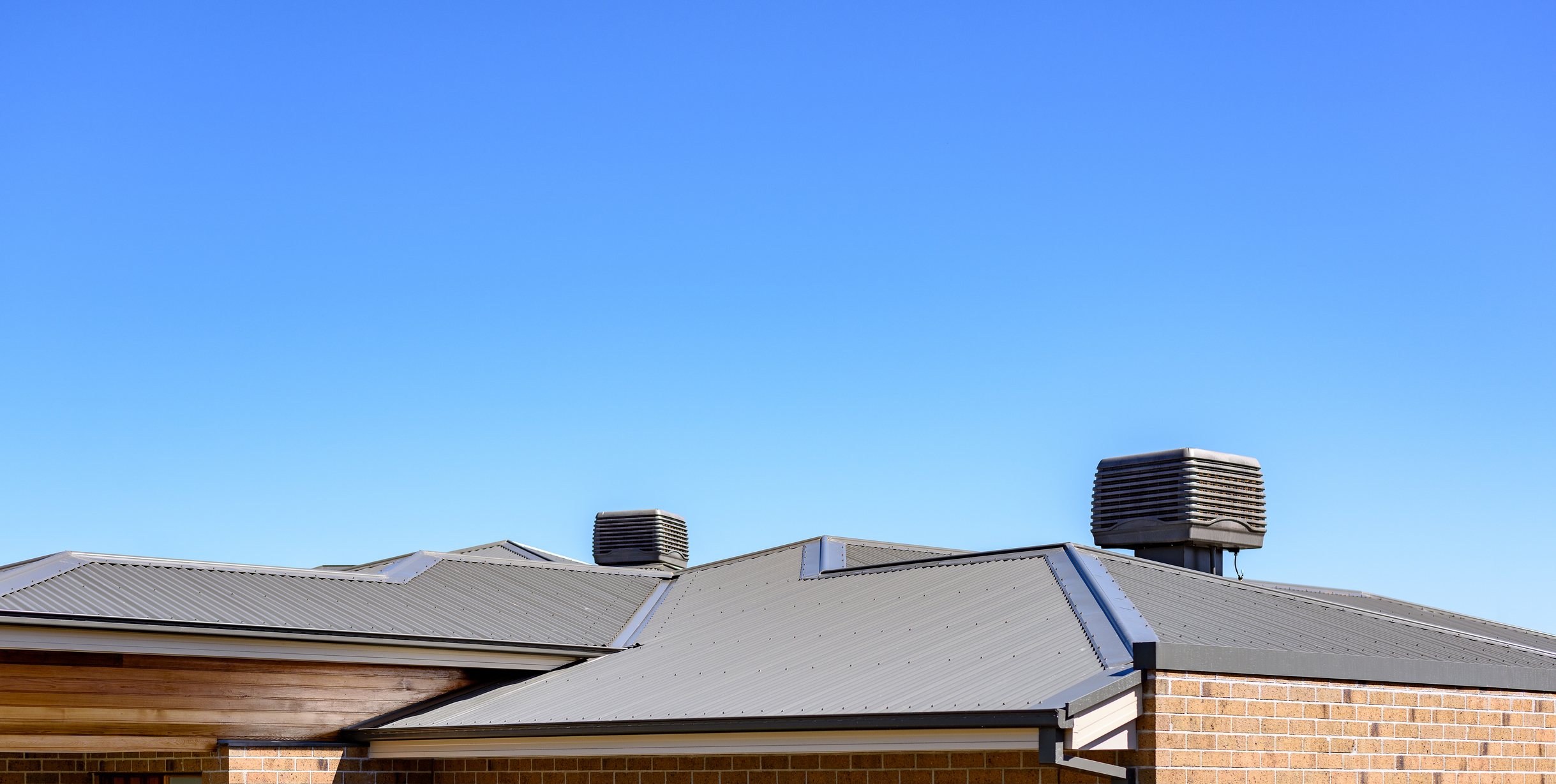
You have switched the evaporative cooler on, the fan is running, but the air coming through the ceiling vents is warm. Not cool, barely refreshing, and nothing like what the system normally delivers. On a hot day, this is a very uncomfortable situation and one that needs a clear answer fast. The good news is that warm air from an evaporative cooler Melton almost always comes down to one of a handful of specific, identifiable causes. Some you can resolve yourself in minutes. Others require a technician. This guide walks through every common reason your system is blowing warm air, what to check yourself right now, and when to call for professional help.
How Evaporative Cooling Works
Before diving into the faults, it helps to understand the basic principle so you can diagnose what is going wrong. Evaporative cooling draws warm outside air through water-saturated pads. As that air passes through the wet pads, water evaporates and the air temperature drops, typically by 10 to 15 degrees Celsius on a dry day. That cooled air is then blown through ceiling ducts and out through the vents in each room.
For this process to work, three things must happen simultaneously: water must be delivered to the pads, the pads must hold that water evenly across their surface, and the fan must move adequate air volume through the wet pads. If any one of those three steps fails, the result is warm or inadequately cooled air at the vents. Understanding which step is failing is the key to diagnosing the problem.
What You Should Do First: Check the Mode Setting
Before assuming a fault, spend thirty seconds on the controller. Many evaporative coolers have a fan-only mode that circulates air without activating the water pump. Fan-only mode delivers air at or near the current room temperature. If your system was accidentally left on fan-only after winter, or if someone switched it to that setting, the air will be warm regardless of how hard the fan is working. This is the most straightforward explanation and the one to rule out first.
Switch to cooling mode and confirm the water pump activates. You should hear the pump start within a few seconds, and the pads should become visibly wet within one to two minutes. If the system is in cooling mode, the pads are wet, but the air is still warm, the cause is elsewhere on this list.
What Are The Most Common Causes of Warm Air from an Evaporative Cooler?
1. Dry Pads: No Water Reaching the Pad Surface
This is the single most common cause of warm air and the first thing to confirm once you have ruled out the mode setting. If the pads are running dry, the fan is simply pushing warm outside air through dry media and into your home without any evaporation taking place at all.
- What causes dry pads: The pump has failed, the water supply to the unit has been turned off or not turned back on after winter, the float valve is stuck closed and not letting water into the reservoir, or the distribution tray outlets are blocked and water is not reaching the pad surface
- How to check: Confirm the water supply tap to the unit is open. Listen for the pump. Open the unit access panel and look at the pads one to two minutes after the pump activates. They should be visibly wet across the entire surface. Dry or only partially wet pads confirm the issue
- What to do: If the water supply was off, turn it on and retest. If the pump runs but pads stay dry, the distribution outlets are blocked and need clearing. If the pump does not start at all, it has likely failed and needs replacement
- Local note for Melton and Bacchus Marsh: Many households turn the water supply off at the end of summer and forget to reopen it the following season. This is the most common avoidable cause of a system appearing to run but delivering no cooling at start of summer
2. Failed or Failing Water Pump
The pump draws water from the reservoir and sends it up to the distribution system that feeds the pads. If the pump has seized, burned out, or simply lost enough output due to wear that it can no longer supply adequate water flow, the pads will not stay wet. You may hear the motor running but no water moving, or the pump may not activate at all.
- Signs of pump failure: The pump makes noise but the pads remain dry, the pump activates then immediately cuts out, there is an unusual grinding or humming sound from the unit when the pump should be running, or no pump sound at all in cooling mode
- What to do: Pump replacement is a straightforward repair for a technician. It is not a homeowner repair, as it involves working inside the unit. A failed pump is one of the most common single-component failures in evaporative systems and is relatively inexpensive to fix when caught early
- Prevention: Annual servicing includes inspection of pump output and condition. Pumps that are approaching failure often show reduced flow before they stop entirely, and a technician can identify this during a service before a complete failure on a hot day
3. Blocked Distribution Outlets and Uneven Pad Wetting
At the top of the evaporative unit sits a distribution tray or pipe system that delivers water evenly across all four pads. Over time, mineral scale from hard water, algae, and debris can block the individual distribution outlets. When this happens, water flows to some sections of the pads but not others, leaving dry zones where no evaporative cooling takes place. The air passing through those dry zones enters the duct system warm and unmixed.
- How to identify this: With the system running in cooling mode, observe the pad surface. If some sections are visibly wetter than others, particularly if the upper corners or entire sections are dry while the rest is wet, the distribution outlets serving those areas are blocked
- Why Melton and Bacchus Marsh homes are particularly affected: Water hardness in these areas accelerates mineral scale build-up in distribution systems. Homes that do not run the bleed-off or purge function regularly will accumulate scale much faster than the system manufacturer anticipates
- What to do: Minor blockages can sometimes be cleared by running the system at maximum water flow briefly. Persistent blockages require the distribution tray to be removed, flushed, and the outlets manually cleared. This is part of a proper annual service
4. Worn, Scaled, or Deteriorated Cooling Pads
The cooling pads are the component that does the actual work of evaporation. They are made from a cellulose or synthetic material designed to hold water evenly across their surface. Over time and with repeated seasonal use, pads become encrusted with mineral deposits, structurally break down, and lose their ability to hold water evenly. Old pads that are saturated with mineral deposits have a fraction of the evaporative surface area of new pads, which means even when wet they deliver minimal temperature drop.
- What worn pads look like: Dark brown or black discolouration from mineral scale, visible crumbling or missing sections, uneven wet coverage when the pump is running, sections that feel dry to the touch during operation despite water being delivered
- Replacement schedule: In Melton and Bacchus Marsh, where summer use is heavy and water hardness accelerates mineral build-up, pads typically need replacing every one to two seasons. If your pads have not been replaced in the past two years of regular summer use, they are almost certainly due
- What to do: Pad replacement is a standard part of a pre-summer service. It makes the single biggest difference to evaporative cooling performance of any maintenance task. A system with fresh pads on a hot, dry day will outperform the same system with two-year-old scaled pads dramatically
5. Very High Outdoor Humidity
Evaporative cooling works by transferring heat from air into water vapour through the process of evaporation. When the outside air already contains high levels of moisture, its physical capacity to absorb more through evaporation is reduced. On very humid days, particularly when Melbourne’s west is experiencing a storm front building or after heavy rain, the temperature drop from evaporation is minimal. The air at the vents may feel only marginally cooler than the outside temperature. This is not a fault. It is a physical limitation of the technology on humid days.
- How to tell if humidity is the cause: Check the weather app for the current relative humidity reading. If the outdoor humidity is above 60 to 65 percent, evaporative cooling performance will be noticeably reduced. Above 70 percent, cooling effect becomes minimal regardless of system condition
- When to be concerned: If the warm air issue is confined to obviously humid days and the system performs well on dry days, humidity is the full explanation. If the system delivers barely cool air even on low-humidity days, there is a maintenance or equipment issue that needs attention
- Managing humid days: On high-humidity days, running the system in fan-only mode at night to move air can still provide some comfort. The meaningful cooling benefit returns when humidity drops, typically after a storm passes
6. Bypass Air Around Degraded Pad Frames
If the pads are not seated correctly in the frame, or if the frame itself has warped or corroded to the point where there are gaps around the pad edges, a significant portion of the airflow can bypass the wet pad surface entirely. This unfiltered, uncooled air enters the duct system warm, mixes with the cooled air from the pad, and raises the average temperature of what reaches the vents. The result is noticeably warmer air than the pad condition would otherwise produce.
- Who this affects most: Older units where the steel frame has rusted, units that have had repeated pad replacements where the fit has become loose over time, or units that have experienced physical impact or storm damage
- How to check: With the system off, inspect the pad frames from outside the unit. Look for visible gaps between the pad and the surrounding frame. Gaps wider than a few millimetres represent meaningful bypass air
- What to do: Frame sealing or frame replacement depending on the extent of the issue. A technician checks pad seating and frame condition during a full service. Addressing this can restore meaningful cooling performance even before pads are replaced
7. Reduced Fan Motor Performance
The blower fan inside the evaporative unit drives air through the wet pads and into the duct system. If the fan motor is running at reduced speed due to bearing wear, a failing capacitor, or belt wear in belt-drive systems, the volume of air moving through the pads drops. Less airflow means less air cooled per minute and a weaker temperature drop delivered to the rooms. On hot days in Melton and Bacchus Marsh where temperatures regularly reach 38 to 42 degrees in summer, reduced fan output can make the difference between a comfortable home and one that barely cools down.
- Signs of reduced fan performance: The system sounds quieter than it used to, airflow from the ceiling vents feels weaker than in previous summers, rooms that used to cool down quickly now take significantly longer, or the system runs for extended periods without the home reaching a comfortable temperature
- What to do: A capacitor replacement or bearing service can often restore a motor to full performance. Belt-drive systems need belts inspected and replaced when worn. A failing motor left unaddressed will eventually stop working mid-summer, turning a straightforward repair into a much more urgent situation
- Prevention: Annual servicing includes motor inspection and performance assessment. Catching motor issues during a service, before peak summer, gives time to order and fit parts without the urgency of a failed unit on a 40-degree day
What to Check Yourself Before Calling a Technician
Work through this checklist before making the call. Many warm air problems are resolved by homeowners in five minutes without a service visit.
- Confirm the controller is set to cooling mode, not fan-only
- Check that the water supply tap to the unit is fully open
- Listen for the pump activating within a few seconds of switching to cooling mode
- Check the pad surface two minutes after the pump activates. They should be uniformly wet
- Check today’s outdoor humidity on a weather app. Anything above 60 to 65 percent will noticeably reduce cooling performance
- Check whether the issue is consistent across all days or only on obviously humid or overcast days
If you have confirmed: the system is in cooling mode, the water supply is on, the pump is running, the pads are wet, and today is a dry day, but the air at the vents is still warm or only marginally cooler than room temperature, there is an issue with the pads, the distribution system, the fan motor, or bypass air that needs a technician to diagnose properly.
How to Prevent Warm Air Issues Before Summer Starts
The most reliable way to avoid warm air problems on a hot day is a pre-summer service carried out in September or October, before the heat arrives. A proper evaporative cooler service covers pad inspection and replacement, distribution system flush and clear, pump inspection and output test, fan motor inspection, frame and pad seating check, and a full operational test under load. Any faults found at that point can be repaired before the cooling season begins, with no urgency and no emergency callout fees.
In Melton and Bacchus Marsh, where summer temperatures regularly exceed 38 degrees and the system is needed most on the hottest days of the year, a system that has not been serviced is a system that may fail exactly when you need it most.
Conclusion
If your evaporative cooler is blowing warm air and the basic checks have not resolved it, New Image Heating and Cooling Melton can diagnose and fix the issue for homeowners.. We carry the most common replacement parts, diagnose the actual cause rather than guessing, and give you an upfront quote before starting any work. No surprises, no pressure, just the fix you need to get your home cool again.
Call 0468 125 098 or submit our online form today. Book before noon for guaranteed same-day service availability. With over 491 five-star Google reviews, families in West Melbourne trust New Image Heating & Cooling to get it done right the first time.
Frequently Asked Questions
My evaporative cooler was working fine yesterday and is blowing warm air today. What changed?
The most likely explanations are a pump that has failed overnight, the water supply being accidentally turned off, a float valve that has stuck closed and left the reservoir empty, or a shift in weather bringing higher outdoor humidity. Check the pump and water supply first. If today is significantly more humid than yesterday, the change in weather may explain the reduced performance without any fault in the system itself.
How long should it take for an evaporative cooler to produce cool air after starting?
A properly functioning evaporative cooler should produce noticeably cooler air within three to five minutes of starting in cooling mode, once the pump has thoroughly wet the pads. If you are still feeling warm or barely cool air after ten minutes with the pads wet and the system running, the system is underperforming and should be assessed by a technician.
Can I test whether the problem is the pump or the pads?
Yes. Switch the system to cooling mode and after two minutes, look at or gently touch the pad surface through the louvres on the side of the unit. The pads should be thoroughly and evenly wet. If they are dry, the pump or water supply is the issue. If they are wet but the air is still barely cool, the problem is with evaporation efficiency: either the pads are worn, outdoor humidity is too high, or there is bypass air around degraded pad frames.
Does the time of day affect how well an evaporative cooler works?
Yes, significantly. Evaporative cooling is most effective in the morning and early evening when outside temperatures are moderate and humidity is lower. On extreme summer days in Melton and Bacchus Marsh, when temperatures reach 40 degrees or above in the afternoon, running the system from early morning to pre-cool the house before the heat peaks uses less energy and delivers far better results than trying to cool a heat-soaked home in the mid-afternoon. Starting early is the most practical tip for getting the best from an evaporative system on extreme days.
My evaporative cooler pumps water but only cools slightly. Is this a refrigerant issue?
No. Evaporative coolers do not use refrigerant. There is no compressor or refrigerant circuit in an evaporative system. If the system is pumping water and the pads are wet but cooling is minimal, the cause is one of the following: the pads are past their useful life and cannot evaporate efficiently, outdoor humidity is too high for effective cooling, there is bypass air around degraded pad frames, or the fan motor is not achieving the airflow needed for adequate performance. All of these are maintenance issues a technician can diagnose and resolve.



