
Most homeowners know their evaporative cooling system in Melton and Bacchus Marsh needs servicing. What fewer people know is exactly how often, what a proper service should actually cover, and what happens to the system when it goes without attention for a season or two. Getting this right matters, particularly in the western suburbs, where evaporative coolers often run hard from October through to April, and where the combination of hot, dry summers and the local water supply creates specific challenges for system maintenance.
This guide covers the service frequency that actually protects your system, the specific conditions in West Melbourne that affect how often you should book a technician, and what a genuine pre-summer service should include from start to finish.
The Baseline: Once a Year, Before Summer
A professional evaporative cooler service once a year is the minimum standard for most Melton and Bacchus Marsh households. The right time is spring, September or October, before the heat arrives. The logic is straightforward: you want to know the system is in good condition before you need it most, not when you’re three days into a November heatwave and the pads are scaled solid.
Why Spring Is the Right Time
- A system that’s been idle through winter accumulates dust, and biological growth can develop in the water distribution system and reservoir during months of disuse.
- Components that were borderline at the end of the previous summer have now sat unused for six months — springs the time to find out if they’re still serviceable.
- Technicians are more available in September and October than in November and December, when every other homeowner is booking urgent pre-heatwave calls.
- Any parts that need replacing (pads, pump, float valve) can be sourced and installed before the cooling season begins, rather than during it when delays can leave you without cooling for days.
Think of it the same way you’d approach servicing a car before a long road trip. You want to know everything is working before you need it, not when you’re stranded on the side of the road in 40-degree heat.
When You Should Service More Frequently Than Once a Year
For many Melton and Bacchus Marsh homes, annual servicing is the right cadence. But there are specific situations where twice-yearly servicing — or at minimum a mid-season inspection — is worthwhile. Knowing whether your situation falls into these categories can save you from a mid-summer breakdown.
Heavy Use Through a Long Season
- In Melton and Bacchus Marsh, where heat days are common from October through to late March, some households run their evaporative cooler for five to six months continuously.
- Systems that run most of the day through the warmer months accumulate wear on every moving component — pump, motor, belt (where applicable) — at a faster rate than systems used lightly.
- For systems over five years old running heavily, pre-summer and mid-season (January) servicing is worth the investment.
- A January inspection specifically checks pad condition, distribution system performance, and pump operation after the system has been under load for several months.
High Dust Environments
- Properties near active construction sites, unsealed roads, exposed paddocks, or with significant tree and vegetation debris nearby accumulate far more airborne particles than established suburban properties.
- In Melton’s growth corridor, where new estates are under constant development, homes in adjacent streets are often dealing with construction dust for years at a time.
- This dust enters the system through the pad faces, clogs distribution outlets, and accelerates wear on the pump impeller.
- In these environments, pad inspections and distribution system checks every six months rather than annually are genuinely worthwhile.
Hard Water Scale Buildup
- The water supply in Melton and Bacchus Marsh contains moderate mineral content — primarily calcium and magnesium carbonates — which deposit as scale when water evaporates, which is exactly what evaporative cooling involves all day long.
- Scale accumulates on pads, in the distribution tray outlets, in the reservoir, and on the float valve assembly over the course of a season.
- Heavy scale on pads reduces their ability to absorb and evaporate water effectively, which directly reduces the temperature drop the system can achieve.
- In areas or during periods when water hardness is higher, more frequent descaling of the distribution system and reservoir is needed to maintain performance.
Older Systems (Over Ten Years)
- A system over ten years old has components approaching real wear thresholds. Blower motor bearings, pump impellers, and distribution system components all have finite service lives.
- More frequent inspection of older systems catches developing issues — a pump impeller that’s beginning to show wear, bearings that need lubrication more often — before they become failures.
- Annual servicing on an older system also gives you an ongoing professional assessment of whether the system is worth continued maintenance investment or approaching end-of-life replacement.
What a Thorough Evaporative Service Should Cover
This is where homeowners can often assess whether they’re getting genuine value from a service call. A proper pre-summer service of a ducted evaporative cooler is not a 20-minute visit. A technician who arrives, checks the pads briefly, runs the system for a minute, and leaves has not performed a thorough service. Here’s what should actually be covered.
Full Pre-Summer Service Checklist
- Pad inspection and replacement: Pads are inspected for physical condition, mineral scale buildup, and saturation uniformity. Worn, scaled, or deteriorated pads are replaced. This is the single most important maintenance item for evaporative cooling performance.
- Distribution tray cleaning and outlet clearing: The water distribution system carries water from the pump to the tops of the pads via a tray and drip outlets. Blocked outlets cause dry patches on the pads, which dramatically reduces cooling efficiency.
- Pump inspection and operation test: The pump is inspected for wear, checked for correct output pressure, and tested through a full operating cycle. Pump impeller wear reduces water flow gradually — catching it early avoids a mid-summer pump failure.
- Float valve inspection and adjustment: The float valve controls the water level in the reservoir. A stuck or incorrectly set float valve causes the reservoir to overfill or run dry, both of which affect system performance.
- Reservoir cleaning and descaling: Scale and sediment accumulate in the reservoir over winter and through the cooling season. A clean reservoir reduces the risk of blocked pump inlets and distribution outlets.
- Blower motor inspection and lubrication: Motor bearings require lubrication on a schedule. Bearings that aren’t lubricated wear progressively and eventually seize, requiring motor replacement. This is a straightforward annual maintenance step that directly extends motor life.
- Belt condition check and tension adjustment: Belt-drive systems require the belt to be tensioned correctly and inspected for cracking or wear. A snapped belt in the middle of summer stops the system entirely.
- Duct condition inspection: Accessible ductwork is checked for condition, particularly at joints and connections where leaks can develop. Air loss through ductwork reduces flow to the rooms the system is meant to cool.
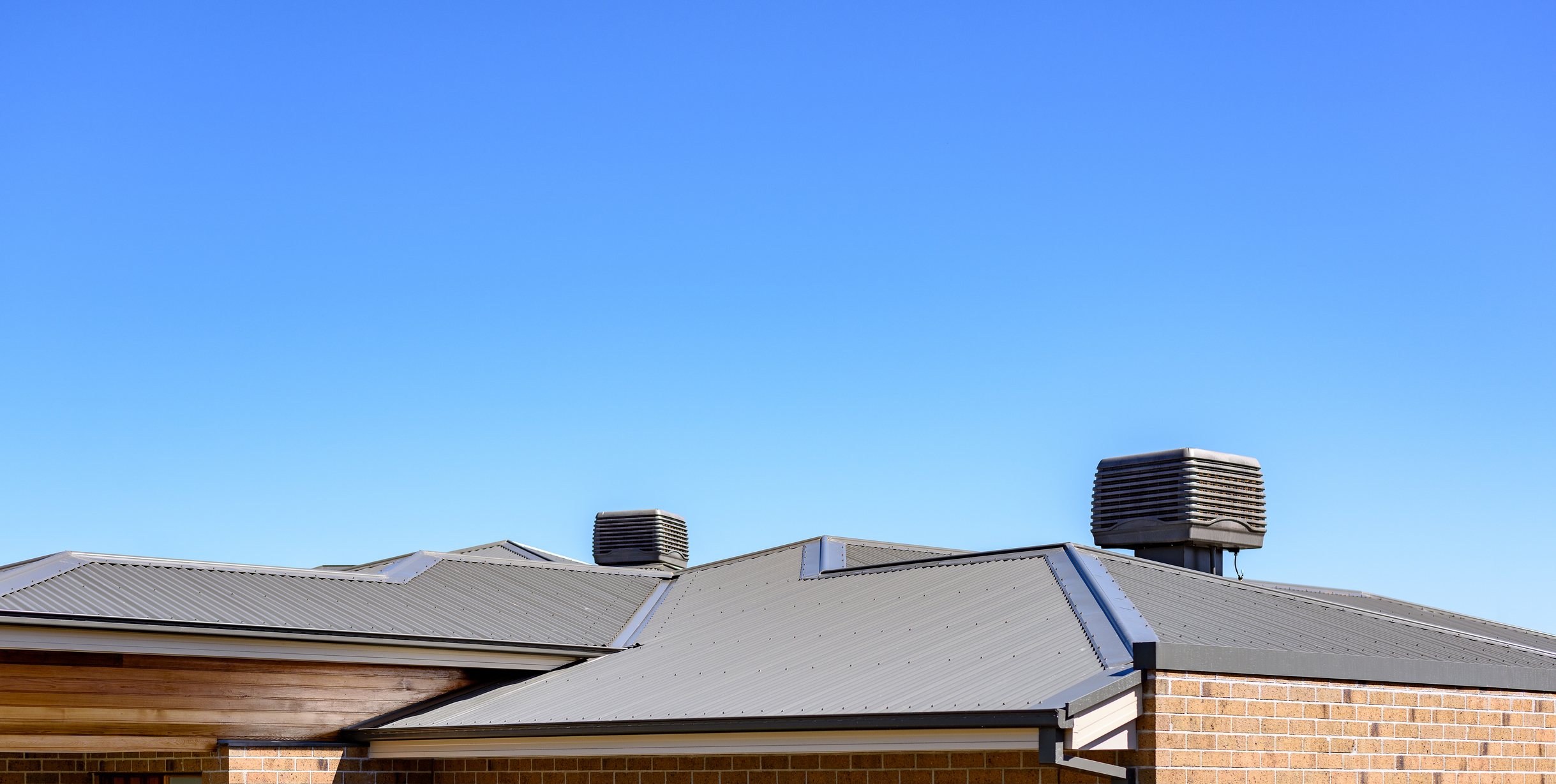
- Roof unit casing and louvre inspection: The external housing is checked for physical damage, corrosion, and the condition of the louvres that allow airflow into the unit.
- Full operational test: The system is run at all speed settings to confirm correct operation, check for unusual noises or vibrations, and verify water distribution is even across all pads.
Motor bearing lubrication deserves particular mention because it has the most direct impact on component longevity. Bearings that are lubricated annually last significantly longer than those that are ignored — and a blower motor replacement is an entirely avoidable cost for a properly maintained system.
What Homeowners Can Do Between Services
Professional servicing handles the technical maintenance, but there are practical steps Melton and Bacchus Marsh homeowners can take between annual service calls to keep the system running well through a long cooling season.
Check Pad Condition Mid-Season
- If you’re running the system heavily from October through February, a visual pad check in January is worthwhile.
- Look for visible deterioration (dark patches, crumbling edges, uneven texture), significant scale buildup that gives the pads a white crusty appearance, or uneven saturation where some areas of the pad appear dry while water flows to others.
- If pads are clearly degraded mid-season, booking a technician to replace them will restore performance for the remainder of summer rather than struggling through with compromised pads.
Keep the Roof Unit Area Clear
- Leaves, debris, and vegetation that accumulate on or around the rooftop unit restrict airflow and can enter the water distribution system, blocking outlets.
- A periodic check — particularly after windy days or following storms — and clearing any debris from the unit area keeps airflow unrestricted.
- Don’t allow creeping vegetation to grow onto or around the unit.
Operate the System Correctly
- Run the pump for 3–5 minutes before switching to fan mode to allow the pads to fully saturate. Starting on fan-only with dry pads produces warm air, not cool air.
- Keep windows partially open during operation. Evaporative cooling requires air movement — a tightly sealed house creates positive pressure that prevents fresh cooled air from entering and warm air from escaping.
- At the end of the cooling season, follow proper winterisation procedures: drain the water, shut off the water supply to the unit, and cover or close the roof vents to prevent heat loss through winter. Your technician can advise on the correct procedure for your specific unit.
What Happens If You Skip Annual Servicing?
The economics of evaporative cooler servicing are straightforward when you lay them out clearly. An annual professional service costs a fraction of the repairs that follow from neglect — and the pattern of neglect is consistent and predictable.
What Neglect Typically Costs
- Worn pads left in service: Performance drops gradually, so gradually that many Melton homeowners don’t realise how much the system has deteriorated until a technician shows them the state of the pads. The system runs longer cycles to achieve less, increasing both water and electricity costs for the rest of the season.
- Unlubricated motor bearings: Bearings wear progressively until they seize, requiring motor replacement. A bearing lubrication is a minor annual maintenance step. A blower motor replacement is a significant unplanned expense.
- Blocked distribution outlets: Partial pad coverage means the system doesn’t cool as effectively, which means the system runs longer, which means more scale accumulates faster, which means outlets block more quickly — a compounding problem that a simple annual clean prevents.
- Pump wear left undetected: A pump that’s gradually losing pressure from impeller wear reduces water delivery to the pads so slowly that the decline in cooling output is almost invisible day-to-day. By the time the pump fails entirely, summer is underway and repair bookings are backed up.
A well-maintained evaporative cooler should last 15 to 20 years in Melton and Bacchus Marsh conditions. Systems that miss regular servicing often require significant component replacement by year 8 to 10, and full replacement by year 12 to 15. The difference in total cost of ownership over the life of the property is substantial.
Conclusion
If your evaporative cooler hasn’t been professionally serviced this year, now is the time to book. At New Image Heating and Cooling Melton, our pre-summer evaporative service covers every item on the checklist above, is priced upfront with no hidden charges, and is carried out by technicians who genuinely know these systems. We’ll tell you honestly if your pads need replacing, if the pump is showing wear that’s worth addressing now, or if the system overall is approaching end-of-life and you’d be better investing in a replacement than another season of patching. No upselling. Just the right answer for your system and your budget. Call 0468 125 098 to book your service or submit our online form. Book before noon for same-day availability.
Frequently Asked Questions
How long does an evaporative cooler service take?
A thorough pre-summer service on a standard ducted evaporative cooler typically takes 60 to 90 minutes on site. This covers all inspection, cleaning, lubrication, and operational testing. Systems with significant scale buildup, components requiring replacement, or access complications on unusual roof configurations may take longer. Your technician will advise if additional time or a follow-up visit is needed.
Does the evaporative cooler need to be closed down for winter?
Yes, and this step is often skipped with real consequences. Proper winterisation involves draining the water from the reservoir, turning off the water supply to the unit at the roof or at the tap below, and closing or covering the roof vents to prevent cold air loss through winter — which can add meaningfully to heating costs. Some systems have dedicated winter damper plates for the ceiling vents. Your technician can walk you through the correct winterisation procedure for your specific unit at the end of the cooling season.
Can I service my evaporative cooler myself?
Homeowners can safely perform basic checks: visually inspecting pad condition, gently rinsing accessible pads with a hose if they’re lightly dusty, clearing debris from around the rooftop unit, and confirming the pump is running and water is flowing evenly across the pads during operation. Pad replacement, blower motor bearing lubrication, belt tension adjustment, float valve servicing, and reservoir descaling require a technician with the correct tools, lubricants, and familiarity with the specific unit model.
How do I know if my pads need replacing?
Pads should be replaced when they are visibly dark, brittle, or crumbling at the edges; show significant white mineral scale that doesn’t rinse off with water; are uneven in texture or thickness; or are saturating unevenly with dry patches visible during operation. Well-functioning pads are relatively light in colour, uniform in texture, and saturate evenly across the full face. As a rough guide, pads in heavily used Melton and Bacchus Marsh systems often need replacement every 2–3 seasons, while lightly used systems may go 3–5 seasons before pads need replacing.
What month should I book my evaporative cooler service?
September or October is ideal for Melton and Bacchus Marsh. This window allows time to identify and address any issues before the first serious heat of November and December, and technician availability is better than during the peak November-January period. If you want to secure a specific appointment time and a technician you know, booking in August is worthwhile. Leaving it until November risks limited availability and a longer wait if parts need to be ordered.
My evaporative cooler isn’t cooling as well as it used to. Is this a sign it needs servicing or replacement?
Reduced cooling performance is almost always a servicing issue before it becomes a replacement issue. The most common causes are degraded pads that need replacing, blocked distribution outlets causing uneven pad saturation, a pump producing less pressure than it should due to impeller wear, or significant scale buildup in the system. A proper service will restore performance in the majority of cases. If performance is still poor after a thorough service with new pads, the technician can assess whether the system itself is approaching end-of-life or whether there’s a more specific component fault to address.



