Bonnie Brook is one of Melbourne’s newest residential estates, sitting in the outer western growth corridor adjacent to Rockbank and Melton. The homes here are modern — built to current construction standards with higher ceilings, open-plan living, and large windows — but they also present specific air conditioning challenges that homeowners benefit from understanding early. Getting the most from your air conditioner in Bonnie Brook is partly about the system itself and partly about how you use and manage the home around it.
Why New Bonnie Brook Homes Need Smart Air Conditioning Management
The Climate Is Demanding
Bonnie Brook’s location puts it in one of the hottest parts of greater Melbourne during summer. The outer western growth corridor regularly records temperatures well above the Bureau of Meteorology’s average for greater Melbourne, driven by its distance from the moderating effect of Port Phillip Bay and the broad, open landscape that doesn’t buffer heat the way established suburbs with tree canopy and vegetation do. Extreme heat days in Bonnie Brook can push temperatures into the high 30s and low 40s, sustained for multiple consecutive days.
New Homes Heat Up Quickly
Modern homes with large north and west-facing windows, brick veneer construction, and high ceilings absorb heat quickly from morning sun and radiate it through the afternoon. The thermal mass that helps older brick homes stabilise temperature can work against newer homes if the solar gains are not managed. A Bonnie Brook home that sat closed and unshaded through a hot day can reach 38 degrees inside before the air conditioning has a chance to respond. Managing the home proactively is as important as the air conditioning system itself.
Air Conditioning Tips Specific to Bonnie Brook Homes
Pre-Cool Before the Heat Peaks
In Bonnie Brook, afternoon temperatures typically peak between 2pm and 5pm on hot days. Starting the air conditioning at noon to bring the house to temperature before peak heat arrives uses significantly less energy than switching it on at 3pm when the house has been absorbing heat for hours. A house at 23 degrees at noon is far easier to maintain at 24 to 25 degrees through the afternoon than a house at 35 degrees that needs to be brought down 10 degrees under peak load conditions.
Use External Shading on West-Facing Windows
Many Bonnie Brook homes have large west-facing windows that catch full afternoon sun. Without external shading — roller shutters, awnings, or shade cloth — these windows admit enormous solar heat load through the afternoon that the air conditioning system has to work against constantly. Installing external shading on west-facing windows is one of the highest-return investments for comfort and energy efficiency in Bonnie Brook, and it should be considered as soon as possible after moving in if not already installed.
Even heavy curtains or thermal blinds closed before the sun reaches the glass make a meaningful difference. Close them before the afternoon sun hits the window, not after the room has already heated up.
Set the Thermostat Sensibly
For cooling, set the thermostat to 24 to 26 degrees rather than pushing it to 20 or 21 degrees. Every degree lower costs more to maintain, and in Bonnie Brook’s extreme heat, running the system at 20 degrees on a 42-degree day puts extreme sustained load on the compressor. Use ceiling fans running anticlockwise in summer alongside the air conditioning — this allows you to feel comfortable at 25 or 26 degrees rather than 22 degrees, reducing the system’s workload meaningfully.
Use Zoning to Condition What You’re Using
For ducted systems with zone control, only condition the zones that are occupied. Conditioning four bedrooms that won’t be occupied until evening while the family is in the living area wastes a significant proportion of the system’s output and adds directly to running costs. Open bedroom zones 30 to 45 minutes before bedtime to bring them to sleeping temperature.
Keep the Outdoor Unit Clear
In Bonnie Brook’s newer estates where gardens are still establishing, grass clippings, dust, and garden debris accumulate around and on outdoor units faster than in mature suburbs. Keep at least one metre of clear space on all sides of the outdoor condenser. Rinse the condenser fins gently with a garden hose seasonally. A unit covered in debris operates less efficiently and is more likely to trigger high-temperature safety shutdowns on extreme heat days — exactly when you need it most.
Clean Filters Regularly
Construction activity and unsealed soil across Bonnie Brook’s still-developing estates means airborne dust levels are higher than in established suburbs. Split system and ducted system filters clog faster than average. Check and clean filters every four to six weeks during active use, not every two to three months. A clogged filter on a 42-degree day can cause the system to shut down via safety protection at the exact moment you need it most.
Service Annually
Book a pre-summer service in September or October. For Bonnie Brook homes running air conditioning heavily from November through March, annual professional servicing covers the components a homeowner can’t check: refrigerant levels, coil condition, electrical connections, and system performance under load. A clean, serviced system is a significantly more efficient system.
Conclusion
Keeping your home comfortable throughout the year starts with using your air conditioner in West Melbourne efficiently and staying on top of regular maintenance. Small changes to how you use your system can improve comfort and support better energy efficiency.
New Image Heating & Cooling services homes across Bonnie Brook and the western growth corridor. Call 0468 125 098 to book. Book before noon for guaranteed same-day service.
Frequently Asked Questions
Why does my new Bonnie Brook home heat up so quickly despite having modern construction?
Modern homes are well-sealed, which is good for energy efficiency but also means solar heat gain through large windows accumulates quickly. Without external shading on north and west-facing windows, the interior temperature can climb rapidly through morning and early afternoon. Managing window shading and pre-cooling before peak heat are the most effective responses.
What size split system do I need for an open-plan living area in a Bonnie Brook home?
For a 45 to 65 sqm open-plan kitchen, dining, and living area with high ceilings and west-facing windows — typical in Bonnie Brook estates — a system in the 7 to 9kW range is generally appropriate. Add 15 to 25 percent to standard floor-area calculations to account for Bonnie Brook’s extreme heat days and west-facing solar load. Always have a qualified installer assess the specific space before purchasing.
Should I get ducted or split systems for my Bonnie Brook home?
For larger four and five-bedroom Bonnie Brook homes, ducted reverse-cycle is generally the most cost-effective whole-home solution. For smaller homes or where budget constraints apply, split systems in the main living area and master bedroom cover the two most-used spaces at a lower upfront cost. Your installer can model both options for your specific home.
How often should I clean my air conditioning filter in Bonnie Brook?
Every four to six weeks during active use. Bonnie Brook’s ongoing construction activity and unsealed soils create higher than average dust loads. More frequent filter checking prevents the clogging that reduces performance and can trigger safety shutdowns on hot days.
Can I use evaporative cooling in my Bonnie Brook home?
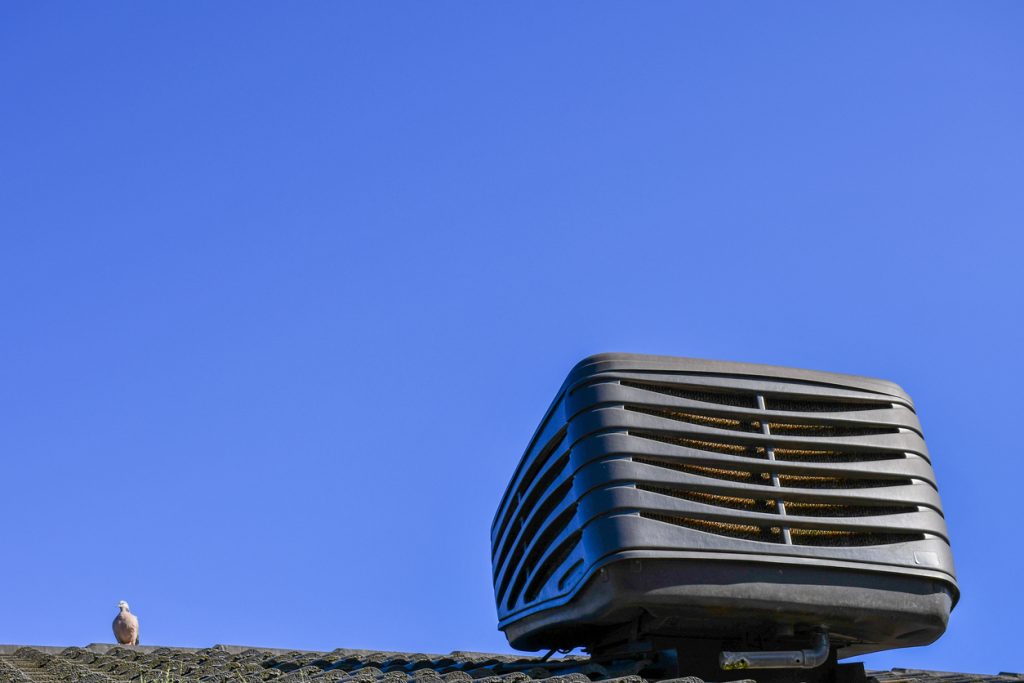
Evaporative cooling works well in Bonnie Brook on dry summer days, which are the majority of hot days. It performs less effectively on humid days ahead of storm fronts. Many Bonnie Brook households opt for ducted evaporative for whole-home cooling on most days, with a split system in the main living area for the occasional humid day and for winter heating. This combination is economical and covers all conditions.