
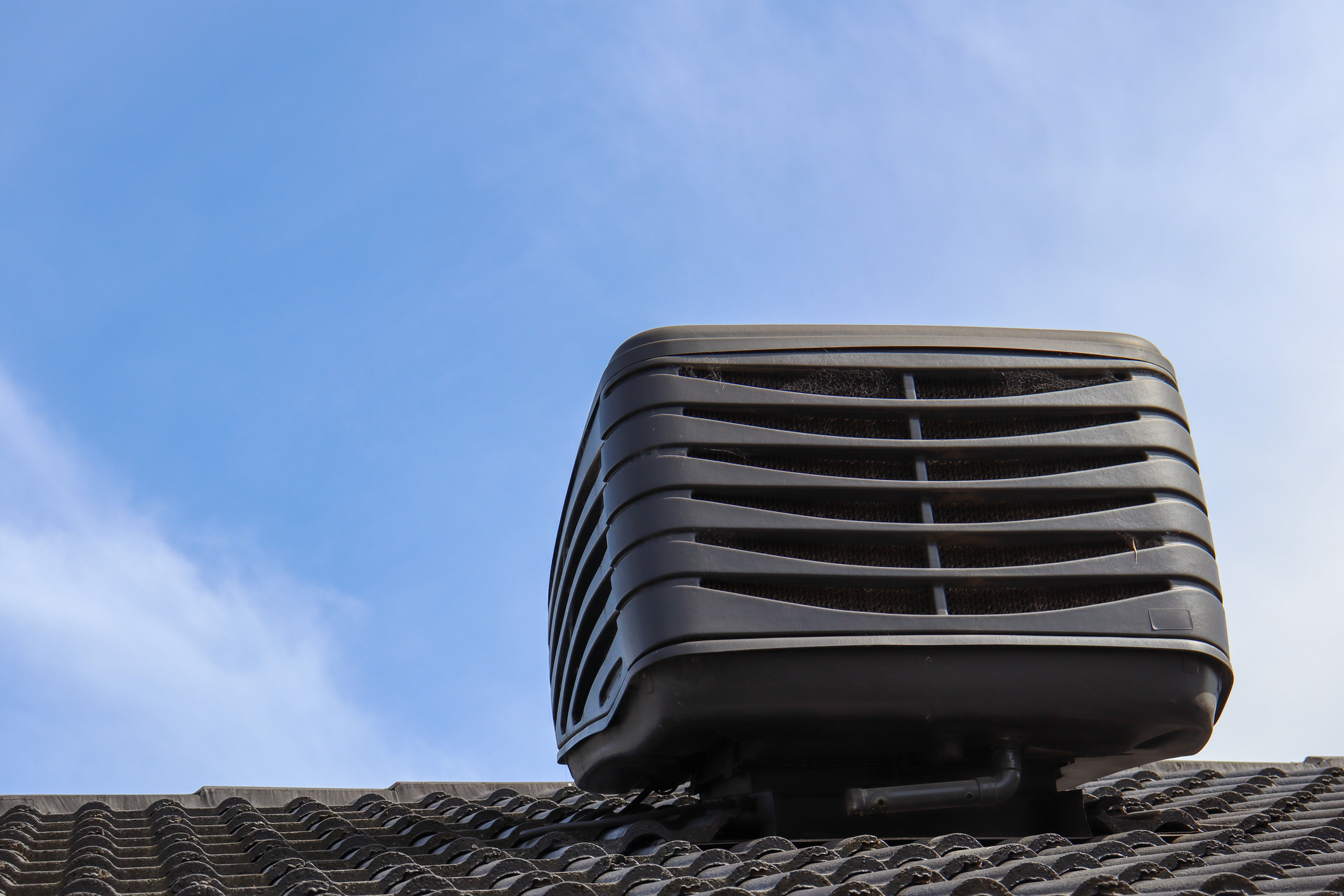
This is one of the most common questions about evaporative cooling in Melton and Bacchus Marsh, and the answer is both straightforward and important: no, you cannot use evaporative cooling effectively with all windows and doors closed. If you’re doing this, the system is working against itself and your home will not cool down regardless of how long it runs. Understanding exactly why helps you get dramatically better results from your system and avoids the frustration of running the cooler all afternoon on a hot summer day with little to show for it.
Evaporative cooling is one of the most cost-effective and energy-efficient ways to cool a home in the western suburbs, but it operates on fundamentally different principles to refrigerative air conditioning. Once you understand those principles, managing the system becomes intuitive and the performance difference between a correctly managed and incorrectly managed evaporative cooler is dramatic.
Why Evaporative Cooling Needs Open Windows
Evaporative cooling works by drawing hot, dry outside air through water-saturated pads, cooling it through evaporation, and pushing the cooled air into the home through ceiling outlets. This is a continuous, one-way airflow system. The key point is that for it to function, the cool air being pushed in must have somewhere to push the warm, humid indoor air out.
The physics of why this fails in a sealed home are straightforward:
- The system adds moisture to the air as it cools it through evaporation
- In a sealed home, that moistened air has nowhere to go and accumulates inside
- As indoor humidity rises, the air’s capacity to absorb additional water vapour decreases
- Less evaporation occurs across the pads as the air becomes more saturated
- Cooling effectiveness drops progressively until the system produces almost no temperature reduction
- The result is a humid, muggy interior that often feels worse than simply opening the house to outside air
This is the fundamental operating difference between evaporative cooling and refrigerative air conditioning. Refrigerative systems recirculate a fixed, sealed volume of indoor air and remove heat from it mechanically. Evaporative systems require a constant fresh air exchange — pushing air through and out of the home in a continuous flow. Trying to run an evaporative cooler the way you’d run a reverse-cycle unit produces exactly the disappointing results many Melton and Bacchus Marsh homeowners experience when they first switch to or inherit an evaporative system.
How Much Should You Open Windows?
Getting the window management right is where evaporative cooling requires more active engagement than refrigerative systems. There is no single universally correct answer — the right window opening depends on your system’s output, your home’s floor plan, the number of outlets, and the outdoor conditions. However, there are clear principles that apply to most Melton and Bacchus Marsh homes:
- Open windows partially, not fully: A fully open window in the room you want cooled allows air to exchange so rapidly that the room temperature barely drops below the outside temperature. Partially open windows slow the exchange and allow the cool air more time to condition the space
- Open windows at the far end of the house: Windows positioned at the end of the house opposite the ceiling outlets give warm air an exit path and create airflow through the whole home rather than short-circuiting out the nearest window
- Cooler rooms get less opening, exhaust areas get more: In rooms you want coolest, open windows only slightly (5 to 10 centimetres) to slow the airflow. In rooms you’re using as exhaust points, open more fully to provide a clear escape for the warm air
- Leave internal doors open: Airflow needs to move through the home. Closed internal doors create dead pockets where warm humid air accumulates and the cooling system can’t reach
- Adjust as conditions change: On hotter, drier days you can open windows more and still achieve good cooling. On milder days, less opening is needed
Most experienced evaporative cooling users develop a feel for this based on their specific home layout. The simple diagnostic rule: if the indoor air feels damp or humid, you need more ventilation to exhaust that moisture. If the air feels fresh but barely cooler than outside, you need less opening to slow the airflow and give the cool air more time to work.
What About Security and Privacy?
Security is the most common concern homeowners raise about leaving windows open. The worry about sleeping with windows open or leaving windows open when going out is completely understandable. There are practical solutions that allow evaporative cooling to function without compromising your home’s security.
Window Restrictors and Security Latches
Window restrictors (also called window limiters or security latches) lock a window in a partially open position — typically 10 to 15 centimetres — while preventing it from being pushed open further from outside. Key points about this approach:
- A 10 to 15 centimetre opening provides meaningful ventilation for evaporative cooling without creating a practical entry point
- Restrictors are inexpensive and can be fitted to most standard window types including aluminium sliders and casements
- They allow overnight use of the cooler with a reasonable security level in most residential situations
- They can be released during the day when someone is home and the home needs more ventilation
Internal Door Management
Using internal doors to control airflow allows you to concentrate cool air in occupied areas while exhausting warm air through less security-sensitive windows. This strategy works as follows:
- Keep bedroom and living area doors open so cool air can flow through from ceiling outlets to the rooms where you need it
- Open windows only in the rooms furthest from where you sleep — a rear bedroom window or a utility area window — so warm air exits through those points rather than street-facing windows
- The fewer external windows that need to be opened, the easier the security management becomes
Overnight Strategy for Melton and Bacchus Marsh Homes
For overnight cooling, a practical approach that works well in most local homes involves these steps:
- Fit window restrictors to bedroom windows and open them to the restricted position (10 to 15 centimetres)
- Leave bedroom doors open to allow airflow through to the rest of the house
- Open one or two rear or side windows more fully to provide an exhaust path for warm humid air
- Set the system to a medium fan speed — not maximum, which can make the room feel draughty without improving cooling significantly
- Lower the fan speed after midnight as outdoor temperatures drop, to avoid the room becoming uncomfortably cool in the early morning hours
What If You Need Cooling With Windows Closed?
If your circumstances genuinely require cooling a fully sealed home — a family member with severe allergies to outdoor air, a property in an area with persistent outdoor air quality problems, or rooms that simply cannot have windows opened — evaporative cooling is the wrong technology for that application. A reverse-cycle split system or ducted refrigerative air conditioning system is what you need. These systems recirculate a sealed volume of indoor air and work effectively without any ventilation requirement.
Many households in Melton and Bacchus Marsh run both systems. The evaporative cooler handles whole-home cooling through the majority of the summer when windows can be managed. A split system handles specific rooms or the occasional days when the home needs to be sealed — extremely humid days, days with bushfire smoke, or situations where security prevents opening windows. The two systems complement each other well and together cover every cooling scenario a local home might face.
Common Mistakes When Using Evaporative Cooling
Beyond the windows-closed issue, there are several other common mistakes that Melton and Bacchus Marsh homeowners make with evaporative cooling systems that significantly reduce performance:
- Waiting too long to start the system: Starting the system after the house is already hot means it’s working to cool a high heat load. Starting it in the early morning before the outdoor temperature peaks gives it the best conditions to work with
- Neglecting annual pad replacement: Cooling pads that are clogged, mineralised, or degraded absorb less water and provide less evaporative cooling. Pads should be inspected and typically replaced annually at the start of the cooling season
- Running on heating mode in summer: Some evaporative units have a winter heating function. Ensure the system is in cooling mode before assessing performance
- Running at maximum fan speed continuously: Higher fan speeds push air through faster, which can prevent it from cooling fully across the pads. A medium-to-high speed often produces cooler delivered air than maximum, particularly in smaller rooms
- Forgetting to flush the system after winter: Water left sitting in the pan over winter stagnates. The system should be flushed and the distribution system checked before the first cooling season use
Conclusion
An evaporative cooling system that’s well-maintained and correctly used is one of the most cost-effective ways to cool a home in this part of Melbourne. The running costs are a fraction of refrigerative air conditioning, the fresh air quality is genuinely better than recirculated indoor air, and on the hot, dry days that characterise most of a local summer, the performance is excellent.
If your system has been serviced recently, the pads are in good condition, you’re managing windows correctly, and you’re still not achieving good results, there may be an underlying performance issue worth investigating. A pump fault, a water distribution problem, a motor running at reduced speed, or a duct connection issue can all reduce performance in ways that aren’t obvious without an assessment from a heating and cooling specialist in Melton.
New Image Heating & Cooling services evaporative cooling systems across Melton and Bacchus Marsh, from annual pre-season services through to fault diagnosis and repairs. If your cooler isn’t delivering the performance your family needs this summer, call 0468 125 098 or submit our online form today. Book before noon for same-day availability. Local technicians, honest advice, no upselling.
Frequently Asked Questions
Can I leave evaporative cooling on overnight with windows closed for security reasons?
Running the system with windows fully sealed overnight will not cool the room effectively. The practical solution is to install window security restrictors — inexpensive fittings that lock windows open to a fixed gap of around 10 to 15 centimetres while preventing them from being opened further from outside. This provides the ventilation evaporative cooling requires while maintaining a meaningful security barrier. Most window types can be fitted with restrictors without modification to the window frame.
Is there any evaporative cooling mode that works with windows closed?
Fan-only mode runs the blower without activating the water pump, so no moisture is added to the air. This mode can be used with windows closed on mild days to circulate air through the home. However, fan-only mode does not cool the air — it simply moves it. You won’t achieve meaningful temperature reduction in a room this way. Cooling mode, which adds evaporated water to the air, cannot work effectively without ventilation and should only ever be used with windows open.
My evaporative cooler worked well in my old house but doesn’t seem to work in my new home. Why?
The most common reason is window management. Newer homes in Melton’s growth estates are often more airtight than older homes, so the system needs deliberate window management to create the ventilation it requires. Try opening windows more actively across different parts of the house and observe whether performance improves. Other possibilities include a system that’s undersized for the new home’s larger floor area, or a home with significant west-facing glass that generates a higher cooling load than the system can overcome on peak days. A service visit can identify which factor is the primary cause.



