Your ducted air conditioning system could be the right size for your home, but if the vents are in the wrong place, some rooms can still feel too hot in summer or too cold in winter. Where the vents are placed is one of the most important parts of a ducted AC installation, yet it’s also one of the most common mistakes.
This blog explains where ducted AC vents should go to help air flow evenly throughout your home, reduce energy use, and keep every room comfortable all year round.
Why Is the Placement of AC Ventilation So Important?
A ducted air conditioning in Melbourne works by drawing air back through the return vents, cooling or heating it, and then sending it back into your home through the supply vents. For the system to work well, air needs to move freely throughout your home.
If the vents are in the wrong place or blocked, airflow is reduced, and the system becomes less efficient. For example:
- A supply vent blowing directly at a wall instead of into the room.
- A return vent blocked by furniture, curtains, or storage.
- Return vents placed where they can’t draw air from the rest of the home.
Poor vent placement can lead to:
- Hot and cold spots throughout the house.
- The system has to work harder to reach the set temperature.
- More wear and tear on the air conditioner.
A well-placed AC ventilation helps air flow evenly through every room, making your home more comfortable and helping your system run more efficiently.
Where to Position Supply Vents
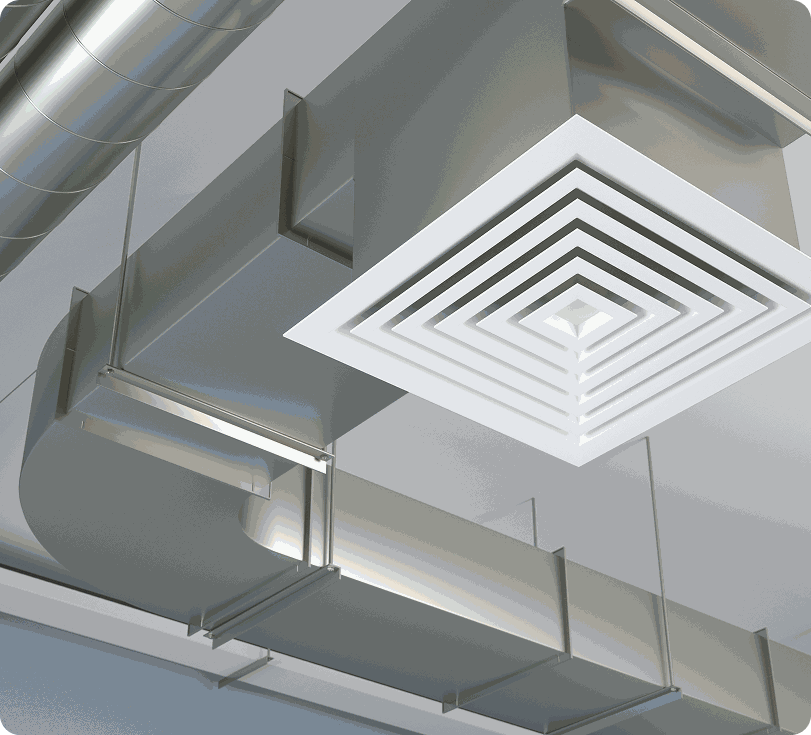
Supply vents are the grilles that blow cooled or heated air into each room. In ducted air conditioning systems, they are installed in the ceiling. Placing them in the right position helps air spread evenly and keeps every room comfortable.
Place vents near the centre of the room
A supply vent near the centre of the ceiling allows air to spread evenly throughout the room. If it’s placed in a corner or directly above large furniture, the airflow can be blocked or directed at a wall instead of circulating around the space.
Avoid placing vents too close to windows
Windows are a major source of heat in summer and heat loss in winter. If a supply vent is too close to a window, the cool or warm air escapes more easily, so the system has to work harder to keep the room at the right temperature. Placing vents on the interior side of the ceiling helps keep the conditioned air where it’s needed.
Match the number of vents to the room size
Large rooms need more than one supply vent. For example, a large open-plan living, dining, and kitchen area is unlikely to be heated or cooled evenly by a single vent. Using multiple vents helps distribute air more evenly across the entire space.
Where to Position Return Vents
While supply vents deliver cooled or heated air into your home, return vents pull that air back into the system so it can be conditioned again. This continuous cycle is what keeps air moving throughout your home and helps maintain an even temperature.
Never block a return vent
A common mistake is placing household items in front of a return vent. Even a partial blockage can reduce the amount of air returning to the system.
When the return vent cannot draw in enough air, the air conditioner struggles to circulate air properly. This limits the amount of conditioned air delivered through the supply vents, making it harder to keep the room comfortable and putting extra strain on the system.
Position return vents to create good airflow
Supply and return vents work best when air has to travel across the room before returning to the system. This allows the cooled or heated air to circulate throughout the space instead of staying in one area.
If the return vent is placed too close to the supply vent, the conditioned air can be pulled straight back into the system before it has spread through the room. Positioning the vents farther apart encourages better air circulation and helps create a more even temperature throughout the space.
Positioning Vents Around Your Home
Bedrooms
In bedrooms, avoid placing supply vents directly above or beside the bed. Position them closer to the doorway so the air travels across the room before reaching the sleeping area. This creates a more comfortable sleeping environment without a constant stream of air blowing directly onto the bed.
Living and Open-Plan Areas
In living and open-plan areas, think about where people spend most of their time before deciding where to place the supply vents. Position them so cooled or heated air reaches seating and dining areas. Spreading the vents across the room instead of grouping them together creates more even airflow throughout the space.
Multi-Storey Homes
In multi-storey homes, the upper floor becomes warmer because heat rises from the lower level. Spread the supply vents across the upstairs so cooled air is delivered evenly to all rooms instead of concentrating airflow in one part of the floor.
Mistakes That Can Reduce Airflow and Comfort
Blocking Vents with Furniture
Even partially covering a supply or return vent restricts airflow. As mentioned before, this makes the air conditioner in Melbourne work harder, reduces efficiency, and can lead to uneven temperatures throughout your home.
Too Few Return Vents in a Large Home
Supply vents can only deliver air effectively if enough air returns to the system. In large homes, too few return vents reduce airflow and make it harder to maintain a consistent temperature. Adjusting the supply vents alone cannot solve this problem.
How Vent Placement Affects Energy Efficiency
Good vent placement helps your air conditioner cool or heat your home more efficiently. When air is distributed evenly, rooms reach the set temperature faster. The system doesn’t have to run as long, which reduces energy use and helps keep your home comfortable.
Poorly placed vents can create hot and cold spots throughout the house. As a result, the air conditioner has to run longer to maintain the set temperature. This uses more energy and puts extra strain on the system.
If your home never seems to reach a comfortable temperature and your energy bills are higher than expected, don’t assume the air conditioner is the problem. The location of your supply and return vents could be affecting how efficiently your system operates.
Conclusion
The position of air conditioning ventilation has a bigger impact than many homeowners realise. A ducted system can struggle to keep your home comfortable if the supply and return vents are poorly placed. Good vent placement improves airflow, creates more even temperatures, and helps your system operate more efficiently.
If you’re installing a new ducted system, vent placement should always be planned by a licensed HVAC technician. If you already have a ducted system and you’re dealing with hot and cold spots, weak airflow, or rooms that never seem to reach the right temperature, it’s worth having the entire system assessed.
At New Image Heating and Cooling, we provide ducted air conditioning services across Melbourne and the western suburbs. If your system isn’t performing as well as it should, our experienced team can inspect your ducted system, identify the cause of the problem, and recommend the most effective solution. To book an inspection, call us on 0468 125 098 or complete our online form.
Why is my ducted air conditioner not cooling some rooms properly?
Uneven temperatures between rooms can happen because of airflow issues, duct problems, incorrect balancing, and the size of the system. A professional inspection can help find out whether the problem is related to the vents, ductwork, or the air conditioner itself.
Can I move my existing air conditioning vents to a better position?
Yes, existing vents can be relocated in some situations, but the process depends on the duct layout, ceiling access, and available space.
Is it okay to close ducted AC vents in rooms I’m not using?
No. Ducted systems are built to move a specific amount of air through the ductwork. Closing vents increases pressure inside the system, which makes the fan work harder. This can lead to problems such as the system freezing up or overheating.
Should I install more vents if my room feels too hot or cold?
Adding more vents is not always the answer. The issue could be caused by incorrect airflow, duct sizing, or an air conditioner that is not suited to the space.