
Ducted air conditioning is one of the most popular whole-home solutions for heating and cooling in Melton and Bacchus Marsh, yet many homeowners run their systems for years without fully understanding how they work. That understanding matters because it helps you use the system more efficiently, spot problems earlier, and make better decisions when it comes time to service or replace.
Here’s a clear, jargon-free explanation of how ducted air conditioning works and why it suits the homes and climate of Melbourne’s west.
The Basic Principle
A common misconception is that air conditioning creates cold air. It doesn’t. What it does is move heat from one place to another. In cooling mode, it extracts heat from inside your home and releases it outside. In heating mode, it works in reverse, extracting heat energy from the outside air and transferring it inside. This reverse-cycle process is why modern ducted systems are such an effective heating and cooling solution, working efficiently even on cold Melbourne winter days.
The efficiency of this heat-transfer process is what makes modern inverter ducted systems significantly cheaper to run than older resistive heating methods like electric strip heaters or portable oil heaters.
The Main Components of a Ducted System
The Indoor Unit
Also called the air handler or fan coil unit, the indoor unit is typically installed in the roof cavity or under the floor in newer homes. It contains an evaporator coil, a blower fan, and the refrigerant circuit components. Warm return air from the home passes through the indoor unit, is cooled (or heated) by the refrigerant coil, and the conditioned air is then blown into the duct system.
The indoor unit also contains the air filter, which traps dust, pollen, and airborne particles before they reach the coil. Keeping this filter clean is the single most important maintenance task for any ducted system owner.
The Outdoor Unit
The outdoor unit, or condenser, sits outside the home and is the most visible part of the system. It houses the compressor, condenser coil, and the fan that blows outside air across the coil. In cooling mode, the condenser expels the heat extracted from inside your home into the outdoor air. In heating mode, it extracts heat energy from the outside air to deliver inside.
The outdoor unit needs adequate clearance on all sides for airflow. Units blocked by vegetation, fencing, or poorly positioned enclosures operate less efficiently, particularly on Melbourne’s peak heat days when the system is working hardest.
The Refrigerant Circuit
Copper refrigerant lines connect the indoor and outdoor units, running through the wall or roof cavity. Refrigerant continuously cycles between the two units, absorbing heat at one end and releasing it at the other. Modern systems use R32 or R410A refrigerant. Older systems may still use R22, which is no longer manufactured and presents challenges when leaks develop in ageing systems.
The Duct System
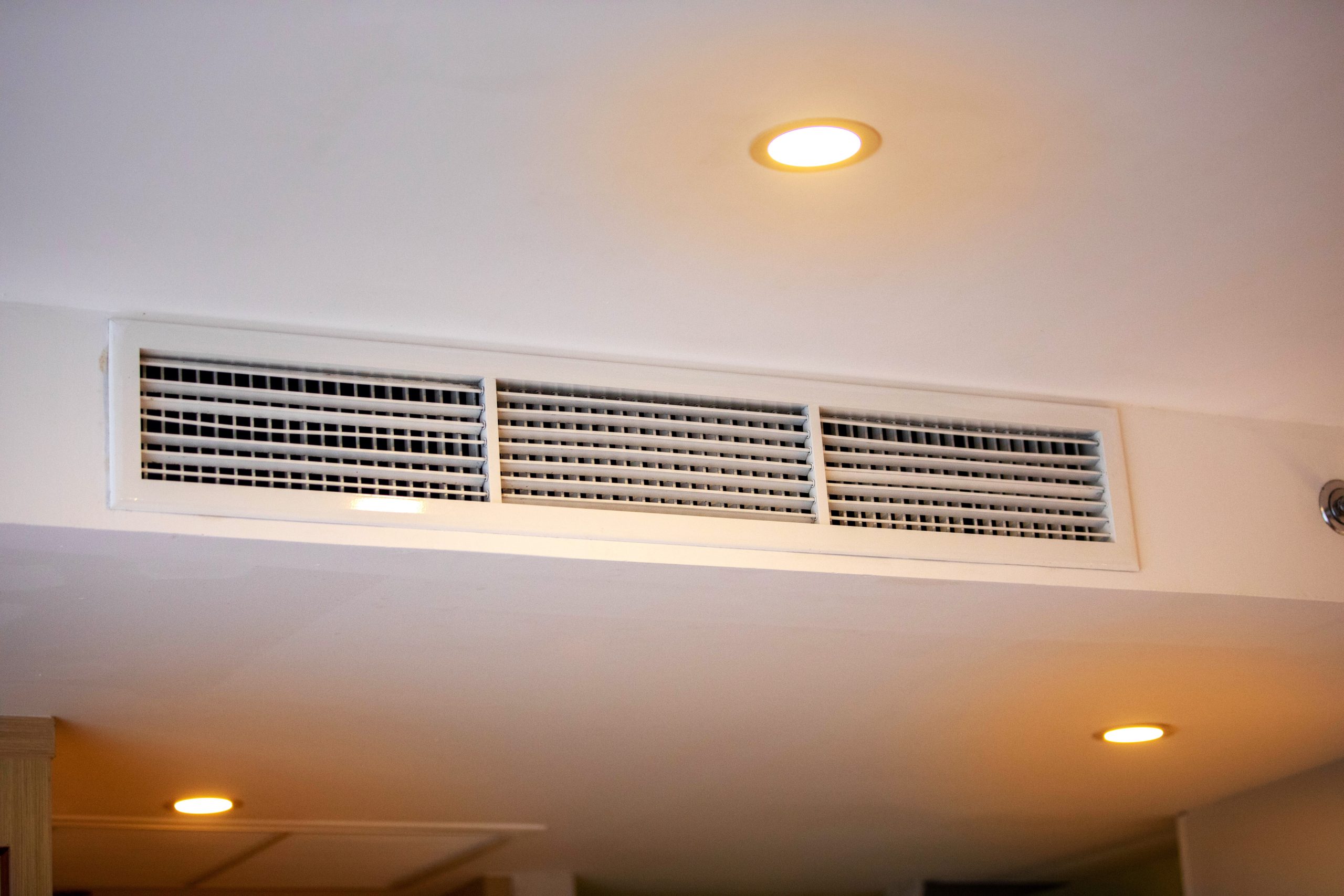
This is what makes a ducted system different from a split system. Conditioned air from the indoor unit travels through a network of insulated ducts, typically running through the roof cavity, to outlet vents in the ceiling of each room. Return air grilles in the ceiling or walls draw room air back to the indoor unit to be reconditioned.
The duct system is invisible when installed correctly, which is one of the main aesthetic advantages of ducted air conditioning over multiple split systems or exposed wall units. The condition of the ductwork has a major impact on system performance. Leaking or poorly insulated ducts waste a significant proportion of the conditioned air before it reaches the rooms.
The Thermostat and Controller
The wall controller or thermostat is where the homeowner interacts with the system. Modern ducted systems typically include programmable or smart controllers that allow scheduling, zone control, and remote operation via a smartphone app. The thermostat measures the temperature in its location and uses that reading to control the entire system.
How Zoning Works in Ducted Systems
One of the most useful features of modern ducted systems is zoning. The home is divided into zones, typically groups of rooms, each with its own motorised damper inside the ductwork. When a zone is switched off, its damper closes and no conditioned air is delivered to those rooms. This allows you to heat or cool only the areas you’re using, reducing energy consumption compared to conditioning the entire home simultaneously.
In Melton and West Melbourne homes, where families often occupy different parts of the house at different times of day, intelligent zoning can make a meaningful difference to running costs. Bedrooms don’t need to be cooled during the day. The living area doesn’t need to be cooled overnight. Zoning handles this automatically once set up correctly.
Why Ducted Air Conditioning Suits West Melbourne Homes
Melbourne’s western suburbs experience some of the city’s most extreme temperature ranges, with summer days regularly pushing past 38 to 42 degrees and winter nights dropping well below 10 degrees.
For newer homes with high ceilings, open-plan living areas, and multiple bedrooms, ducted systems provide consistent heating and cooling in Bacchus Marsh across the entire floor plan in a way that individual split systems cannot match economically.
Conclusion
Understanding how your ducted system works is the first step to getting the most out of it. Whether you’re considering installation, troubleshooting a performance issue, or planning your first service, New Image Heating & Cooling provides expert ducted air conditioning service across West Melbourne. Call us on 0468 125 098. Book before noon for guaranteed same-day service.
Frequently Asked Questions
How long does a ducted air conditioning system last?
A well-maintained ducted system typically lasts 15 to 20 years. Systems that are serviced annually, have filters cleaned regularly, and have ductwork maintained in good condition consistently reach the top of that range.
How is ducted air conditioning installed in an existing home?
Installation involves positioning the indoor unit in the roof cavity, running insulated ductwork to each room, installing the outdoor condenser unit, and connecting the refrigerant lines and electrical supply. In most existing homes, installation takes one to two days depending on the number of zones and the complexity of the roof layout.



