
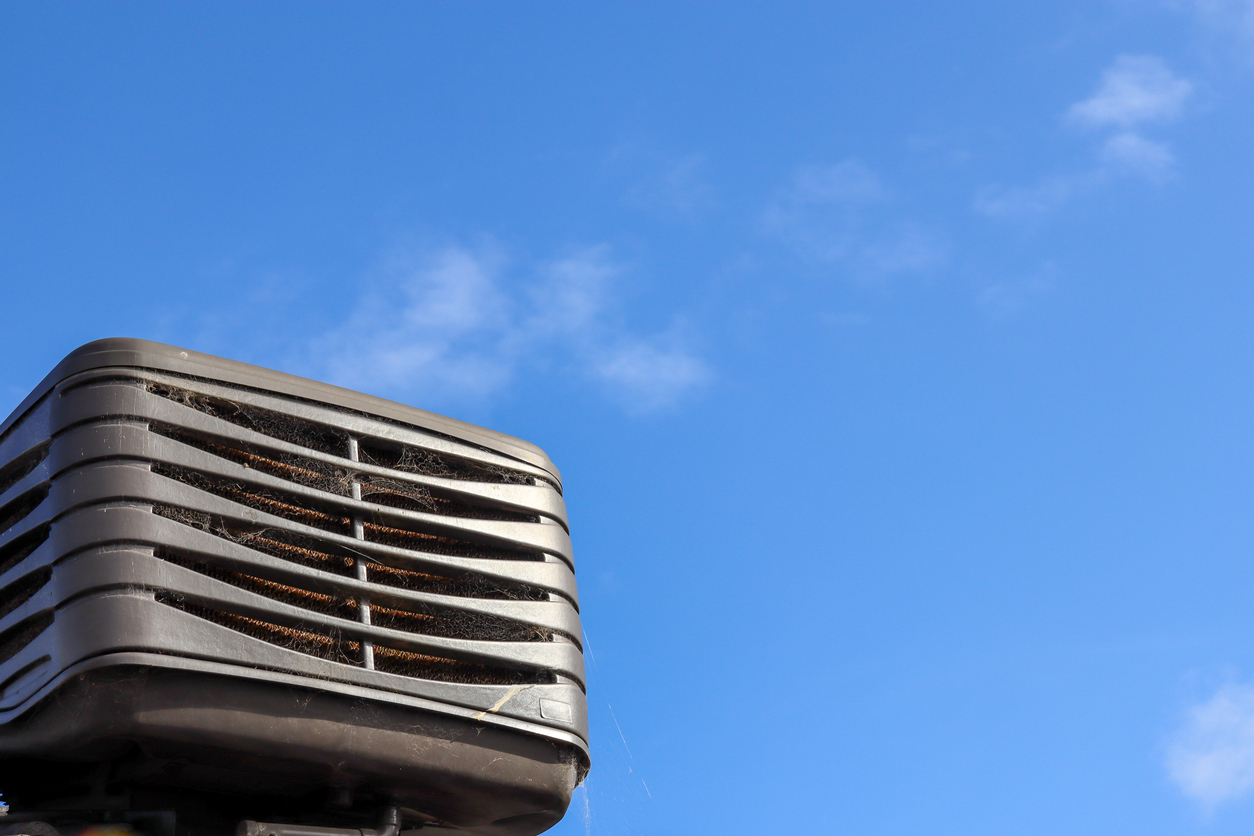
Evaporative cooling Melton is one of the most energy-efficient ways to cool a home in dry summer climate, but it does use water, and for many households, understanding exactly how much is an important question. Whether you are thinking about the impact on your water bill, wondering whether your system is using more than it should, or simply curious about how the technology works, this guide gives you the full picture.
The honest answer is that water usage varies considerably from system to system and day to day. But there are reliable benchmarks, clear factors that drive consumption up or down, and practical steps you can take to keep usage under control without sacrificing the cooling your home needs on a hot Melton afternoon.
How Does an Evaporative Cooler Use Water for Cooling?
To understand water consumption, it helps to know how the cooling process works. An evaporative cooler draws warm outside air through a set of water-saturated pads. As that warm air contacts the wet pad surface, water molecules evaporate and absorb heat energy from the air — dropping the air temperature before it enters your home. This is the same principle that makes stepping out of a swimming pool feel cold on a windy day.
The water lost through evaporation is the primary source of consumption. On top of that, most modern evaporative coolers also perform a bleed-off or dump cycle. This involves releasing a portion of the reservoir water periodically and replacing it with fresh water. This process prevents mineral scale from concentrating in the reservoir and on the cooling pads — a significant issue in Melton where the water supply carries moderate mineral content.
How Much Water Does an Evaporative Cooler Use?
Daily water consumption depends on the size of the unit, the settings in use, and the conditions outside. Here are realistic figures for typical Australian residential evaporative coolers:
Small Units (suitable for 1-2 rooms)
These compact units are typically portable or window-mounted, covering smaller living spaces.
- Evaporative water loss: Approximately 4 to 10 litres per hour on high fan speed
- Daily usage (8 hours of operation): Roughly 32 to 80 litres per day
- Bleed-off water: Adds a further 20 to 40% on top of evaporative loss, depending on the system’s bleed-off rate
Medium Ducted Units (suitable for 3-4 bedroom homes)
The most common configuration for Melton homes — a rooftop ducted unit servicing the whole house.
- Evaporative water loss: Approximately 15 to 25 litres per hour on high speed
- Daily usage (8 hours of operation): Roughly 120 to 200 litres per day
- With bleed-off included: Total daily consumption can reach 150 to 280 litres on a hot day
Large Ducted Units (suitable for larger homes or commercial spaces)
Higher-capacity units for larger floor plans or properties with high ceilings.
- Evaporative water loss: Approximately 25 to 35 litres per hour
- Daily usage (8 hours of operation): 200 to 280 litres from evaporation alone
- Total including bleed-off: Can reach 300 to 400 litres on a very hot, dry day
To put these figures in perspective, a standard top-loader washing machine uses around 130 to 180 litres per cycle. Running a mid-sized evaporative cooler for a full day uses roughly the same amount of water as one to two loads of washing.
What Factors Affect How Much Water Your System Uses?
Outside Temperature and Humidity
Evaporative cooling works by using the energy required to evaporate water. On hotter and drier days, water evaporates faster and the cooling effect is greater — but more water is consumed in the process.
- On a 40-degree day with low humidity, your system will use significantly more water than on a 28-degree day
- High humidity reduces evaporation efficiency, meaning the system runs longer to achieve the same result — also increasing total water use
- Melton’s inland location means it tends to experience lower humidity than coastal Melbourne, which is actually ideal for evaporative cooling efficiency
Fan Speed Setting
Higher fan speeds push more air through the cooling pads, increasing the rate of evaporation and therefore water consumption.
- Running on low speed can reduce water consumption by 30 to 50% compared to high speed, with a corresponding reduction in cooling output
- For maximum efficiency, use the lowest fan speed that still achieves your target comfort level
- Many modern controllers allow you to set a temperature target and let the system automatically manage fan speed to meet it
Bleed-Off Rate
The bleed-off cycle flushes concentrated mineral-laden water from the reservoir to protect the pads and system components. The rate at which this happens affects total water use significantly.
- Older systems or incorrectly calibrated systems may bleed off more than necessary, wasting water
- A well-maintained and correctly set system will bleed off only as much as needed to keep the water quality within acceptable limits
- Water hardness in your local supply affects how frequently bleed-off needs to occur — harder water requires more frequent flushing
Condition of the Cooling Pads
Pads that are clogged with mineral scale or have deteriorated do not absorb and distribute water evenly. This reduces cooling efficiency and can cause the pump to work harder and the system to run longer.
- Fresh, clean pads maximise evaporation efficiency, meaning your home cools faster and the system can be run for shorter periods to maintain comfort
- Old or scaled pads reduce efficiency, meaning the system runs longer and uses more water for the same result
- Replacing pads at the start of each season is one of the most effective ways to keep water consumption in check
How Long the System Runs Each Day
This is the most obvious factor but worth stating clearly: the longer your system runs, the more water it uses. Operating strategy matters.
- Pre-cooling your home in the early morning before the heat builds can allow you to turn the system off or down to low speed during the hottest part of the day
- Closing windows progressively as outdoor temperatures rise traps the cool air inside and reduces how hard the system needs to work
- Using the system on a timer or with smart controls prevents it from running unnecessarily overnight or when the home is unoccupied
Is Evaporative Cooling Water-Efficient Compared to Alternatives?
A common question from Melton homeowners is whether the water used by an evaporative cooler is justified when compared to refrigerative air conditioning. The comparison is straightforward:
- Refrigerative air conditioning uses zero water but consumes significantly more electricity — a ducted reverse-cycle system can use 3 to 6 kilowatts or more per hour of operation
- Evaporative cooling uses water but consumes far less electricity — typically 0.5 to 1.5 kilowatts per hour for a whole-home ducted system.
In areas like Melton where dry summer heat is common and water prices are moderate, evaporative cooling typically delivers a lower total running cost across the season when both water and electricity costs are considered. Evaporative cooling also continuously replaces indoor air with fresh outside air, whereas refrigerative systems recirculate the same air, a comfort and air quality advantage many households prefer
How to Reduce Your Evaporative Cooler’s Water Use
If you want to lower consumption without compromising comfort, these are the most effective steps:
- Service the unit annually: Clean pads, a calibrated bleed-off valve, and a well-maintained pump all contribute to a more water-efficient system
- Replace pads each season: Fresh pads absorb water properly and cool air more efficiently, reducing the run time needed
- Use the lowest effective fan speed: Slower fan speeds use less water while still delivering adequate cooling in many conditions
- Pre-cool in the morning: Run the system on high in the cooler morning hours to bring the home temperature down, then reduce to low or medium speed during the hottest part of the day
- Keep windows appropriately open: Evaporative coolers need airflow to work — but too many windows open means cooled air escapes before it can have an effect. Aim for a small opening in each zone where you want cooling
- Check the bleed-off valve setting: Have a heating and cooling specialist Melton verify the bleed-off rate is calibrated correctly for your local water supply — an over-active bleed-off is one of the most common sources of unnecessary water wastage
Frequently Asked Questions
Why does my system seem to use more water some days than others?
Daily variation in water consumption is normal and primarily driven by outside temperature and humidity. On a 40-degree day, your system will evaporate water much faster than on a mild 28-degree day. Wind also plays a role — higher wind speeds increase evaporation from the cooling pads.
What is the bleed-off function and why does it use extra water?
The bleed-off function drains a portion of the water in the reservoir and replaces it with fresh water on a regular cycle. This prevents dissolved minerals from concentrating in the reservoir water, which would otherwise cause rapid scale buildup on the pads and pump. Without bleed-off, pads and pumps deteriorate much faster. It is a necessary function, but the rate should be calibrated correctly to avoid wasting more water than is needed.
Is it normal for water to drip from my evaporative cooler?
A small amount of water dripping from the unit during operation can be normal, particularly during the bleed-off cycle. However, persistent or heavy dripping, pooling water on the roof, or water dripping through the ceiling are not normal and indicate a fault — typically a blocked drain, an overflowing reservoir due to a faulty float valve, or a cracked tray. Have these inspected promptly.
Conclusion
Understanding your system’s water consumption puts you in a much stronger position to manage your running costs and keep the unit performing at its best. For Melton households, evaporative cooling remains one of the smartest choices for summer comfort — it suits the local climate, costs less to run than refrigerative alternatives in most conditions, and keeps fresh air circulating through your home all day.
If your evaporative cooler seems to be using more water than it should, or if you have not had a service in the last twelve months, the team at New Image Heating & Cooling can help. Call us at 0468 125 098 or submit our online form. We service evaporative cooling systems across Melton and western Melbourne, and we are happy to assess your system’s efficiency, check your bleed-off settings, and replace pads and consumables to get your unit running as efficiently as possible heading into summer. Get in touch today to book your pre-season service.



