
Ducted air conditioning is one of the most significant investments you make in your home’s comfort. The difference between a system that delivers reliable performance for 20 years and one that struggles at 10 often comes down not to the brand or the original installation, but to maintenance. Consistent, appropriate maintenance at the right intervals extends system life, lowers running costs, and prevents the kind of mid-summer breakdowns that happen at the worst possible time.
For homeowners who rely on ducted systems in Melton and Bacchus Marsh through long, hot summers and cold winters, this guide covers exactly what maintenance looks like, what you can do yourself, what requires a licensed technician, and how often each task should happen.
Why Ducted System Maintenance Matters More Than You Think
Most homeowners understand that cars need regular servicing. Ducted air conditioning systems work on the same principle: moving parts wear, surfaces accumulate contamination, and small issues develop into large ones if left unaddressed. The difference is that a failing car announces itself clearly, while a ducted system can lose 20 to 30 percent of its efficiency before anyone notices the problem, paying the cost in higher electricity bills rather than obvious warning signs.
In Melton and Bacchus Marsh, where newer growth estates generate above-average dust loads and systems run hard through extended summer heat, the maintenance burden is higher than in more established, lower-dust suburban areas. Filters clog faster, outdoor units accumulate more debris, and systems that are not kept up deteriorate faster than the manufacturer’s service schedule assumes.
What Homeowners Can Do Themselves
1. Clean the Return Air Filter Every 4 to 6 Weeks During Summer
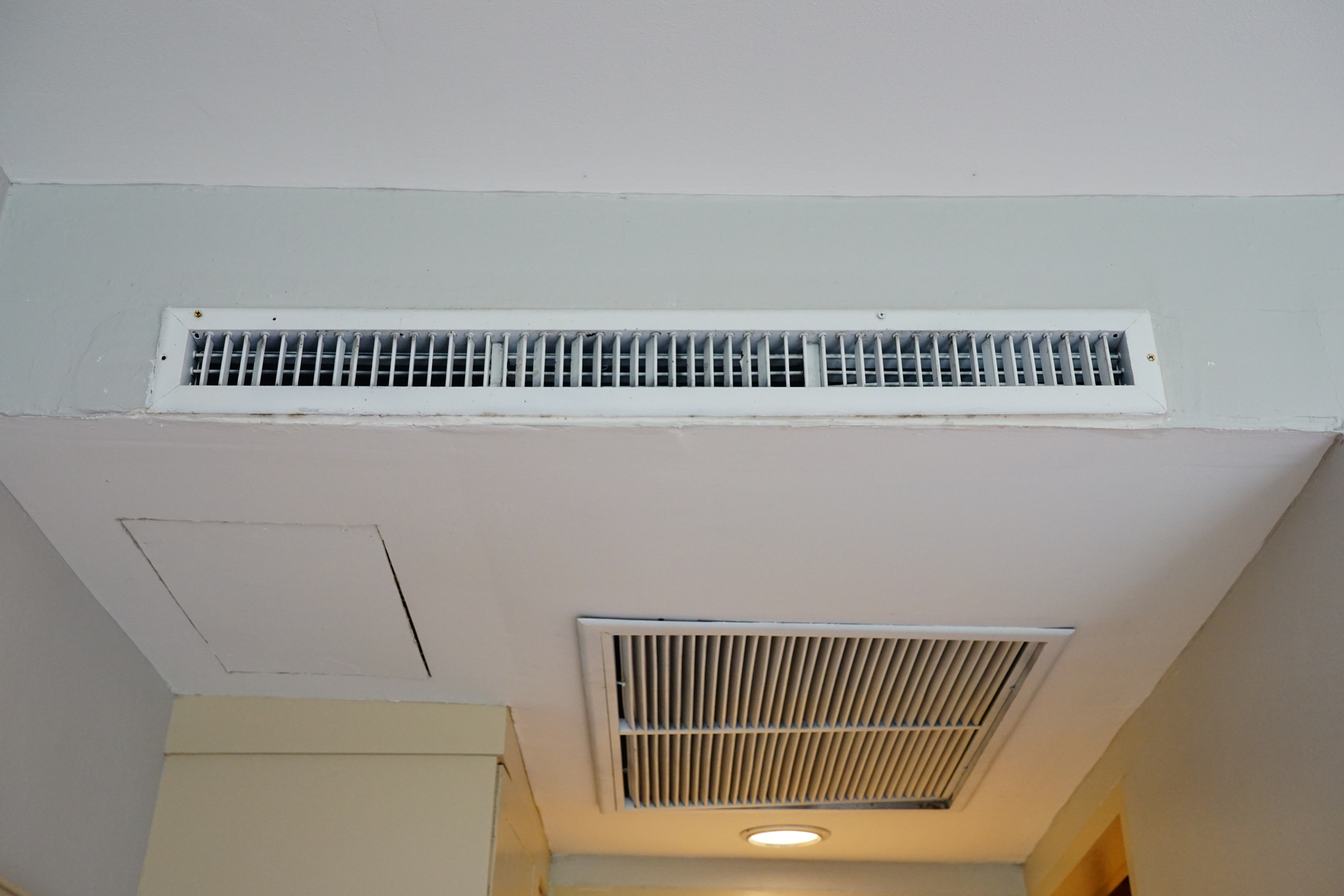
This is the single most impactful maintenance task a homeowner can do, and it requires no tools and takes about ten minutes. The return air filter sits behind the large grille, typically in the hallway ceiling or on a wall. Slide or unclip it out, rinse it under running water from the back face outward, and allow it to dry completely before reinstalling.
- Why it matters so much: A clogged filter restricts airflow through the entire system, reduces efficiency, increases electricity costs, can cause the indoor coil to freeze over, and accelerates blower motor wear. Each of these outcomes costs more to fix than the ten minutes it takes to clean the filter
- Frequency in Melton and Bacchus Marsh: The standard recommendation of every three months is insufficient during heavy summer use in these areas. Construction activity and open paddocks contribute higher-than-average dust and particle loads. Filters in Melton can reach the point of significant restriction within four to six weeks. Check monthly during summer; every six to eight weeks during milder months
- With pets: Pet dander and hair dramatically accelerate filter clogging. Households with indoor pets should check the filter every three to four weeks regardless of season
- What not to do: Never reinstall a wet filter. A wet filter restricts airflow even more than a dirty one and can introduce moisture issues into the return air system. Allow it to dry fully before reinstalling, which takes one to two hours depending on conditions
2. Keep the Outdoor Condenser Unit Clear
The outdoor condenser unit needs clear space around it to draw in and discharge air efficiently. Restricted airflow at the outdoor unit forces the compressor to work harder to achieve the same cooling output, increasing electricity consumption and wear on the most expensive component in the system.
- Clearance required: At least one metre of clear space on all sides and two metres above the unit. Check this at the start of each season and periodically through summer as vegetation grows
- What to remove: Leaves, grass clippings, garden debris, and any objects stored near the unit. Trim back vegetation that has grown close during the off-season
- Cleaning the condenser fins: Gently rinse the condenser fins with a garden hose from a distance to remove surface dust and debris. Never use a pressure washer, which bends the delicate aluminium fins and reduces airflow permanently
- Shade structures: Screens and shade structures built around outdoor units to improve aesthetics regularly cause overheating by restricting airflow. If you have a screen or enclosure around your outdoor unit, check that it allows genuine free air movement on all sides, not just decorative openings
3. Check and Open All Vents at the Start of Each Season
Before the first hot day of summer, walk through every room in the house and check the ceiling vents. This takes five minutes and prevents one of the most common causes of rooms that do not cool properly.
- What to check: All vents are fully open, no furniture has been moved over winter to sit under a ceiling vent blocking airflow, no items have been stored in bedrooms or other rooms that obstruct a vent, and zone settings on the controller are correctly set for all areas you want cooled
- Floor vents: If your ducted system has floor-level vents rather than ceiling vents, check that rugs and furniture have not been repositioned over them during winter. A rug covering a floor vent eliminates cooling to that zone entirely
- Why this matters: Blocked or closed vents do not just mean one room stays warm. They also redirect airflow back through the system, increasing static pressure and reducing performance system-wide. The effect is felt in multiple rooms, not just the one with the blocked vent
4. Run a Pre-Season Test in October
Do not wait for the first 40-degree day to discover a problem. Run the system in cooling mode for 30 to 45 minutes in October, before peak summer. This simple step identifies faults while there is still time to book a technician without urgency.
- What to check during the test: All zones are delivering airflow, the air from the vents feels genuinely cool within 15 minutes of starting, the system does not make any unusual noises during startup or operation, the controller is responding correctly to temperature settings, and no error codes appear on the display
- Why October matters: By mid-December, technician bookings fill up across Melton and Bacchus Marsh. A fault discovered in early October can typically be attended to within a few days. The same fault discovered on 20 December may mean waiting a week or more for a technician
- Pre-heating season test: Apply the same logic before winter. Run the heating mode for 20 to 30 minutes in late March or early April to confirm the system is switching correctly to heating and delivering warm air to all zones
5. Watch Your Electricity Bills
An unexplained increase in electricity costs during a period of similar usage and similar weather is one of the clearest signals of reduced system efficiency. When a ducted system has to work harder and run longer to achieve the same outcome, it shows up directly in the electricity bill before it shows up in any obvious performance failure.
- Common causes of efficiency loss: Dirty evaporator or condenser coils, low refrigerant charge, duct leaks losing conditioned air into the ceiling cavity, a partially failing blower motor, or zone dampers that are stuck in the open position in zones that should be off
- What to do: If bills have increased materially without a clear change in usage or weather, book a professional service. A technician can identify which component is causing the efficiency loss. Addressing it typically recovers the wasted energy spend within one season
What Requires a Licensed Technician
1. Annual Professional Service
A thorough professional service once a year covers everything a homeowner cannot safely or practically do themselves. The ideal timing for this service is September or October, before the cooling season begins, so any parts needed can be sourced and fitted before the peak demand period.
- Evaporator coil cleaning: Removes fine particle build-up that accumulates behind the filter over months and years of operation. A dirty coil transfers heat less efficiently, causes the system to run colder than designed, and can lead to freezing. Filter cleaning reduces but does not eliminate this build-up
- Condenser coil inspection and cleaning: The outdoor coil accumulates dust, grass seeds, and airborne debris on its fin surface. A technician cleans this properly with appropriate equipment and checks fin condition
- Refrigerant pressure check: Confirms the refrigerant charge is at the correct level. Low refrigerant means a leak that must be found and repaired before recharging. This cannot be checked or addressed by a homeowner
- Electrical connections and component inspection: Loose electrical connections cause component failures over time. A technician tightens connections, checks contactors and capacitors, and identifies components showing early signs of wear
- Blower motor inspection: Checks motor speed, current draw, and bearing condition. Identifies a motor running below rated performance before it fails completely
- Zone damper operation check: Tests each motorised damper to confirm it opens and closes correctly in response to zone controller commands. A stuck-open or stuck-closed damper causes significant performance problems in the affected zone and downstream zones
- Ductwork condition inspection: Checks accessible duct sections for tears, disconnections, and crushing damage. Duct leaks are one of the most common causes of rooms that do not cool properly
- Condensate drain flush: Clears the condensate drain line to prevent blockages that cause water to overflow into the ceiling or indoor unit housing
- Full operational test under load: Runs the system in cooling mode and verifies performance across all zones against the thermostat setpoint
2. Ductwork Inspection Every 5 to 7 Years
Flexible ductwork has a finite lifespan. In most Australian residential installations, flexible duct is rated for 15 to 20 years of service under normal conditions, but practical experience shows that performance degradation through small tears and joint failures begins well before full end-of-life. A periodic duct inspection, particularly in systems over eight to ten years old, identifies developing issues before they become significant performance problems.
- What duct inspections look for: Tears and perforations in flexible duct material, disconnected joints at branch takeoffs or vent connections, crushed sections from other trades working in the roof space, evidence of pest damage, and sections where insulation wrap has deteriorated
- When to bring this forward: If any other trade has worked in your roof cavity since the ducted system was installed, such as solar panel installers, electricians, pest inspectors, or antenna technicians, a duct inspection is worthwhile regardless of system age. Ductwork is frequently disturbed accidentally during roof access work
- Cost versus benefit: Sealing minor duct leaks is inexpensive and delivers immediate performance and efficiency improvements. Replacing sections of severely degraded flex duct costs more but is still significantly cheaper than the ongoing energy waste and performance loss from leaving it
3. Refrigerant Leak Detection and Recharge
Refrigerant does not evaporate or get consumed in normal operation. If a ducted system needs a refrigerant top-up, there is a leak somewhere in the refrigerant circuit that must be found and repaired. A technician uses leak detection equipment to identify the source, repairs the leak, and then recharges the system to the correct specification.
- Why you cannot defer this: Running a system with low refrigerant causes the compressor to operate outside its designed conditions, which shortens compressor life. The compressor is the most expensive component in a ducted system; protecting it is always worth the cost of a refrigerant leak repair
- Signs of low refrigerant: Reduced cooling performance that worsens gradually over time, ice forming on the indoor unit or refrigerant lines, the system running continuously without reaching the set temperature, or higher electricity costs for the same output
- This is not a homeowner task: Handling refrigerant requires an ARCtick licence in Australia. This is a legal requirement, not just a precaution
4. Zone Damper and Controller Servicing
Motorised zone dampers and zone controllers are electrical and mechanical components with a finite operational lifespan. Unlike the compressor or fan motor, they tend to fail gradually, causing intermittent zone issues before failing completely. A technician can test each damper during a service call to confirm it is opening and closing correctly, and verify that the zone controller is reading temperatures accurately and sending correct signals to each damper.
- Signs of damper issues: A zone that consistently fails to cool or heat to the set temperature, a zone that cannot be turned off with airflow continuing even when the controller shows it as inactive, or temperature readings on the controller that do not match what you feel in the room
- Repair versus replacement: Damper motor replacement is typically straightforward and relatively inexpensive. Full zone controller replacement is more involved but still significantly cheaper than the compounding performance losses from a faulty zone system running unchecked for a full season
A Maintenance Schedule for Homeowners
Here is a practical maintenance calendar to keep your ducted system in reliable condition year-round.
- Every 4 to 6 weeks during summer: Clean the return air filter
- Every 6 to 8 weeks during milder months: Clean the return air filter
- Start of each season (October and April): Pre-season operational test, check all vents are open and unobstructed, check outdoor unit clearance
- Once a year (September or October): Full professional service by a licensed technician
- Every 5 to 7 years (or after roof access by other trades): Full duct inspection
- As required: Refrigerant leak check if performance has declined, zone damper testing if zone issues develop
Conclusion
Consistent maintenance is the most cost-effective decision you can make for a ducted air conditioning system. The cost of a professional annual service is a fraction of the cost of a single major repair, and a fraction again of a premature system replacement. Homeowners who maintain their systems properly get an extra five to ten years of reliable service life from their ducted systems compared to those who do not.
New Image Heating and Cooling Melton provides thorough, honest ducted air conditioning servicing. We tell you what the system needs, what can wait, and what is genuinely urgent. No overselling, no shortcuts, and no hidden charges. Call 0468 125 098 or submit our online form to book your pre-summer service. Book before noon for guaranteed same-day service availability.
Frequently Asked Questions
What maintenance can I do on my ducted air conditioner myself?
Homeowners can clean the return air filter every four to six weeks during summer, keep the outdoor unit clear of debris and vegetation, check all vents are open and unobstructed at the start of each season, and run a pre-season test in October and April. All other maintenance tasks, including coil cleaning, refrigerant checks, damper testing, and duct inspection, require a licensed technician.
How do I clean the filter on my ducted air conditioner?
Locate the return air grille, usually in a hallway ceiling or on a wall. Remove the filter by sliding or unclipping it from the grille housing. Rinse it under running water from the back face outward so you are pushing contaminants out the same way they came in, not further into the filter media. Allow it to dry completely before reinstalling. A wet filter restricts airflow more than a dirty one, so do not reinstall it until fully dry.
How often should I have a professional service my ducted system?
Once a year is the minimum for most households. High-use households, those with indoor pets, those in dusty environments like newer estates in Melton and Bacchus Marsh, and systems over ten years old benefit from twice-yearly professional servicing. The pre-summer service in September or October is the most critical. If budget allows only one service per year, that is the one to prioritise.
What is the best time of year to service a ducted air conditioner?
September or October is ideal for the primary pre-summer service. This timing gives the technician access before the cooling season begins, allows time to source and fit any parts identified during the service, and avoids the urgency and longer wait times that come with December and January peak demand. If the system also provides winter heating, an autumn service in March or April is the equivalent for the heating season and is the right time to check heating-specific components.



