
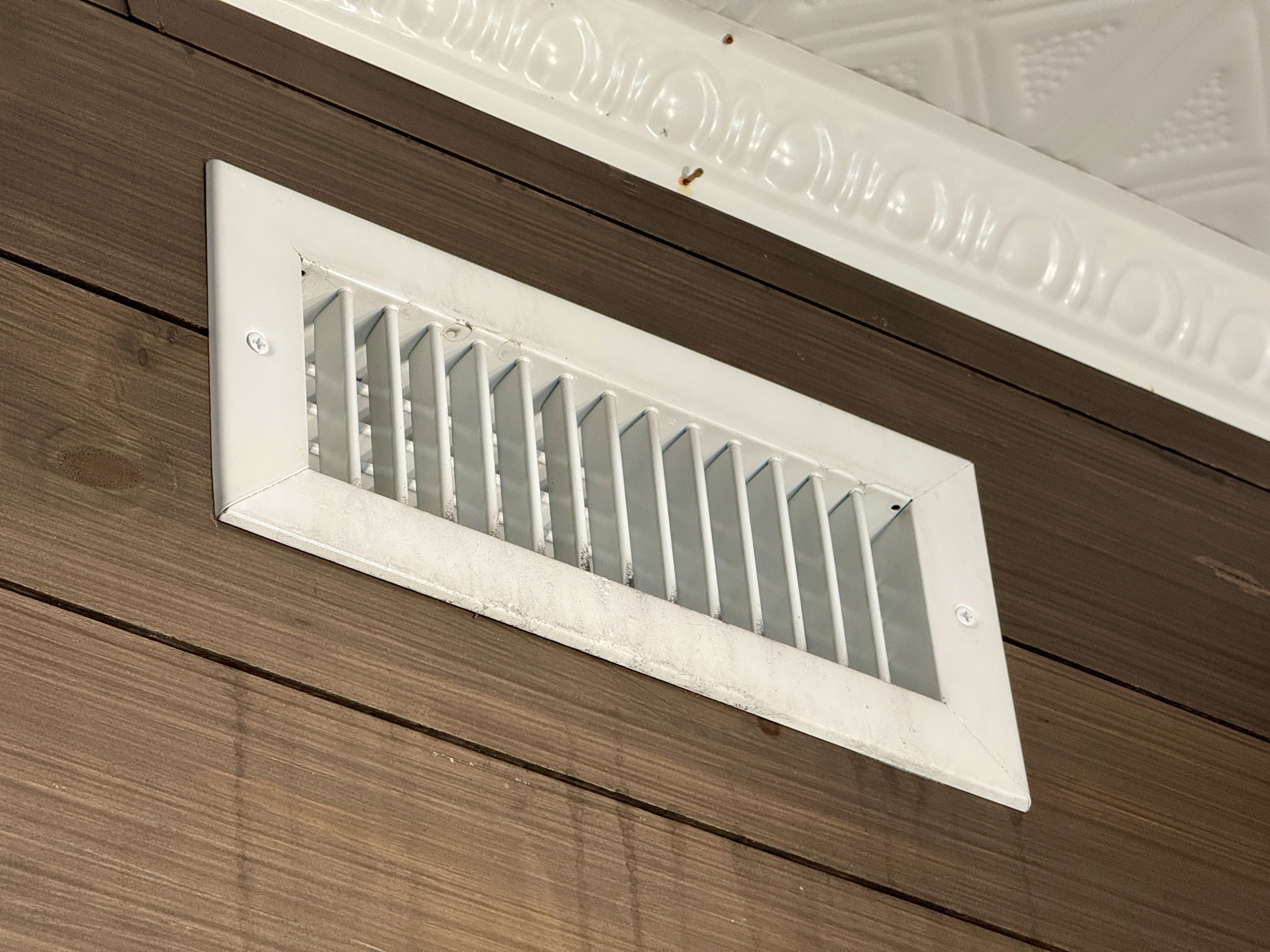
Every ducted gas heating system in Melton and Bacchus Marsh reaches a point where the question changes from “what needs fixing?” to “is this still worth fixing?” For homeowners who have been running the same heating system for a decade or more, getting this decision right matters. Continuing to repair a system that is genuinely past its useful life is expensive. Replacing a system that had several good years left is an unnecessary cost. Neither outcome serves you well.
This guide gives you a practical, factual framework for making the repair-or-replace decision confidently, including what the real signs of end-of-life look like, when repair makes clear sense, what to expect from a new system, and how New Image Heating & Cooling approaches these conversations with Melton and Bacchus Marsh homeowners.
How Long Should a Ducted Gas Heating System Last?
A well-maintained ducted gas heating system in Melbourne’s western suburbs has a realistic lifespan of 18 to 22 years. Systems that have been professionally serviced annually, had filters maintained consistently, and had ductwork inspected and repaired when needed regularly reach the top of that range. Systems that have been run without regular servicing typically require major repairs within 10 to 12 years and often fail completely before 15.
Knowing your system’s service history is the starting point for any replacement decision. A ten-year-old system that has been serviced every year is in a very different position from a ten-year-old system that has not been touched since installation. Age alone is not a reliable indicator of remaining life. Condition and history are.
Clear Signs It Is Time to Replace
1. Heat Exchanger Has Failed or Is Cracked
The heat exchanger is the most critical and most expensive component in a gas ducted heating system. It is the sealed chamber where combustion gases heat the air that circulates through your home, keeping those gases separate from the air you breathe.
- Why this matters most: A cracked heat exchanger is both an end-of-life indicator and a safety issue. A crack can allow combustion gases, including carbon monoxide, to enter the circulated air. Carbon monoxide is colourless and odourless, and exposure at sufficient concentrations is dangerous to health
- The cost reality: Heat exchanger replacement cannot be repaired, only replaced. On a system over ten years old, the part cost plus labour for a heat exchanger replacement typically equals or exceeds the cost of a complete new system installation. In almost every case, replacement is the right outcome financially and practically
- What to do: If a technician finds a cracked heat exchanger, do not continue operating the system. Get an independent assessment if you want confirmation, then move to replacement. This is not a repair to defer
2. Repeated Significant Repairs in a Short Period
A single significant repair on an ageing system is not necessarily a sign of impending failure. Components fail individually for specific reasons, and a single repair on an otherwise sound system is often worth doing. The pattern that signals end-of-life is different: two or more significant repairs within two to three winters.
- Why multiple repairs signal the end: When components fail in a group over a short period, they are usually failing together because they were installed at the same time and have reached end-of-life simultaneously. The system is not experiencing isolated bad luck; it is ageing out
- The forward-looking question: After a second significant repair, a technician should assess which other components are showing wear. If multiple other components are approaching the end of their service life, continuing to repair is likely to mean another significant repair within one to two seasons
- The financial break-even: Keep a simple record of repair costs. Once cumulative repair spending over two to three years approaches the cost of a replacement, you are financially better off having replaced after the first or second repair
3. Significant Structural Deterioration of the Ductwork
The ductwork that distributes heated air through your home has its own lifespan. Flex duct used in most residential installations degrades over time, developing brittleness, tears, and joint failures that reduce how much conditioned air actually reaches the rooms.
- When duct condition triggers the replacement conversation: If duct replacement is required at the same time as significant furnace component repairs, the combined cost often approaches or exceeds the cost of a full system replacement. In these cases, it makes more financial sense to replace everything at once than to piece-repair both the furnace and the ductwork separately
- Signs of significant duct deterioration: Rooms that do not heat evenly despite the furnace running well, multiple rooms receiving weak airflow, visible sagging or damaged sections in accessible roof space, or a history of progressively declining heating performance across multiple rooms
- Getting the full picture: If your furnace has developed a significant fault, ask the technician to also inspect the ductwork condition while they are assessing the system. The combined picture gives you a complete basis for the repair-or-replace decision
4. The System Uses R22 Refrigerant (Reverse-Cycle Ducted Systems)
This applies specifically to homeowners with older reverse-cycle ducted systems rather than gas ducted heating. Systems using R22 refrigerant present a distinct challenge as that refrigerant is no longer manufactured anywhere in the world. The Montreal Protocol phased it out globally due to its ozone-depleting properties.
- The supply situation: R22 is available only from existing stockpiles, which are diminishing year by year. The cost per kilogram has risen dramatically and will continue to do so as supply falls. Recharging an R22 system after a refrigerant leak is increasingly expensive and will become more so
- The trigger point: An R22 system that develops a refrigerant leak is almost always the financial trigger to move to a modern system. The cost of sourcing R22, combined with the repair cost to seal the leak, in a system that will need the same treatment again as it continues to age, rarely makes economic sense against a replacement
- Modern alternatives: Replacement systems use R32 or R410A refrigerant, both of which are available, reasonably priced, and substantially more energy-efficient than R22-era technology
5. Consistently Poor Performance Despite Proper Servicing
A system that has been properly serviced, had ductwork inspected and sealed, and still consistently underperforms on cold days may have a fundamental sizing problem rather than a maintenance issue.
- What undersizing looks like: The system runs continuously on cold days without reaching the set temperature. This pattern has been consistent rather than developing gradually, and it correlates with a renovation or extension that increased the home’s heated floor area after the original system was installed
- Common scenarios in Melton and Bacchus Marsh: Open-plan kitchen and living extensions at the rear of the home, enclosed outdoor entertaining areas that now connect to the living space, additional bedrooms in what was formerly a smaller-footprint house, or garage conversions that join the main living area
- The fix: A correctly sized replacement system solves this permanently. No amount of servicing or duct optimisation resolves a fundamental mismatch between system output and the home’s heating load. A capacity assessment from a technician confirms whether this is the cause before committing to replacement
The 50 Percent Rule
A widely used industry benchmark for the repair-or-replace decision: if the cost of a repair exceeds 50 percent of the cost of a new system installation, replacement is generally the better financial outcome, particularly if the system is more than ten years old. Here is why this benchmark works:
- The logic: A repair that costs more than half the price of a new system is a large expenditure on an ageing system with limited remaining life. If further repairs follow within one to two years, you will have spent close to the full replacement cost without actually getting the long-term reliability and efficiency of a new system
- How to apply it: Ask your technician for a replacement cost estimate alongside any repair quote before committing to a repair. If the repair quote is below 30 percent of replacement cost and the system is otherwise in reasonable condition, repair is almost certainly the right call. If it approaches or exceeds 50 percent on a system over ten years old, replacement deserves serious consideration
- What replacement cost means: The full installed cost of a new system of equivalent capacity and specification, not just the unit cost. Labour, accessories, and ductwork connections are included
When Repair Is Still the Right Answer
Replacement is not always the correct outcome. Repair is the right choice in a number of specific situations, and a technician who gives you an honest assessment will tell you when repair is clearly the better path.
- The system is under ten years old and the fault is an individual component like a thermocouple, capacitor, gas valve, or ignitor. These are normal wear items and replacing them is routine maintenance, not a signal of system-wide decline
- The system has been well maintained with consistent annual servicing and is in good structural condition. A well-serviced eight-year-old system with a failed ignitor is not a replacement candidate; it is a repair candidate
- The repair cost is well under 50 percent of replacement cost and the technician can confirm no other components are showing signs of imminent failure
- The ductwork is in good condition and the problem is isolated to a single mechanical component with no broader system-wide wear pattern
What a New Ducted Heating System Brings
For homeowners who do reach the point where replacement makes sense, understanding what a new system offers helps frame the decision as an investment rather than a cost.
- Improved energy efficiency: Modern ducted gas heating systems are significantly more energy-efficient than systems installed ten or more years ago. Gas heater star ratings and burner technology have improved meaningfully. In a household that uses ducted heating heavily through Melbourne winters, the ongoing gas savings partially offset the capital cost over the system’s life
- Manufacturer’s warranty: A new system comes with a manufacturer’s warranty covering components and labour for the first few years of operation. This provides protection against early component failures that an ageing system cannot offer
- Modern zone control: New systems with smart controllers and motorised zone control allow precise room-by-room management of heating, delivering better comfort and lower running costs than older single-zone or manually zoned systems
- Correctly sized output: A new installation is sized specifically for your current home layout and insulation, not for the floor plan that existed when your original system was installed. This means accurate heating on the coldest days rather than the system struggling to maintain the set temperature
- Reduced maintenance burden: A new system under warranty, with current components and current ductwork, has a significantly lower near-term repair risk than a fifteen-year-old system with ageing components throughout
Conclusion
The repair-or-replace conversation is one of the most important a homeowner can have with a heating technician, and it requires honesty from both sides. A technician who recommends replacement when repair would genuinely serve you well is not acting in your interest. A technician who recommends continued repair when replacement is the financially sound outcome is also not serving you well.
New Image Heating & Cooling provides repair-versus-replace assessments for homeowners with one straightforward approach: if repair makes sense, we say so. If replacement is genuinely the better outcome, we explain clearly why and provide a quote for comparison. We do not push replacement when a repair will serve you well, and we do not continue repairing systems that are costing you more than a replacement would over time.
If your ducted heating system is giving you trouble this winter and you are not sure whether to repair or replace, call us for an honest assessment. We provide upfront quotes for both options so you can make a proper comparison with full information.
Call 0468 125 098 or submit our online form to book your assessment. Book before noon for guaranteed same-day service. With over 491 five-star Google reviews, homeowners trust New Image Heating and Cooling Bacchus Marsh and Melton to give them the straight answer and get the job done right.
Frequently Asked Questions
How do I know if my ducted heating system needs replacing?
The clearest signs are: a cracked heat exchanger, the system needing two or more major repairs within two to three seasons, repeated ignition failures or gas valve faults on a system over twelve years old, heating performance that has declined significantly despite proper servicing, or a repair quote that exceeds 50 percent of what a new system would cost installed. A technician can give you an honest condition assessment to confirm which situation applies to your system.
Is it worth replacing a 15-year-old ducted heating system?
It depends on its condition and service history. A 15-year-old system that has been serviced annually, has no heat exchanger issues, and is operating correctly may have several more reliable years ahead. A 15-year-old system with a cracked heat exchanger, deteriorating ductwork, and a pattern of repeated faults has likely reached the point where replacement is the more economical path. A technician assessment gives you the full picture specific to your system.
Will a new ducted heating system save on gas bills?
Yes, typically. Modern ducted gas heating systems are more energy-efficient than systems installed ten or more years ago. The gas savings depend on how inefficient the old system had become, how heavily the household uses heating through winter, and the efficiency star rating of the new system selected. In high-use households running heating through Melton’s and Bacchus Marsh’s cold winters, the savings can be material and will partially offset the replacement cost over the system’s life.
Can I get a quote for replacement before committing?
Yes. New Image Heating & Cooling provides upfront quotes for both repair and replacement so you can make a proper comparison before committing to either. We assess your current system’s condition honestly and give you both options with clear costs. There is no obligation to proceed with either, and we do not pressure homeowners into replacement when repair is the right answer. Call 0468 125 098 to arrange an assessment in Melton or Bacchus Marsh.
Is it better to replace ducted gas heating with a reverse-cycle ducted system?
It depends on your household’s needs, energy prices, and what you currently have. If you have separate ducted gas heating and ducted evaporative cooling and you are replacing the heating system, moving to a single reverse-cycle ducted system that handles both heating and cooling can simplify maintenance and reduce the number of systems on the roof. If you are happy with your evaporative cooling and your gas heating is the only thing being replaced, like-for-like gas replacement is often the more straightforward and cost-effective choice. A technician can walk through the options and costs specific to your home.



