
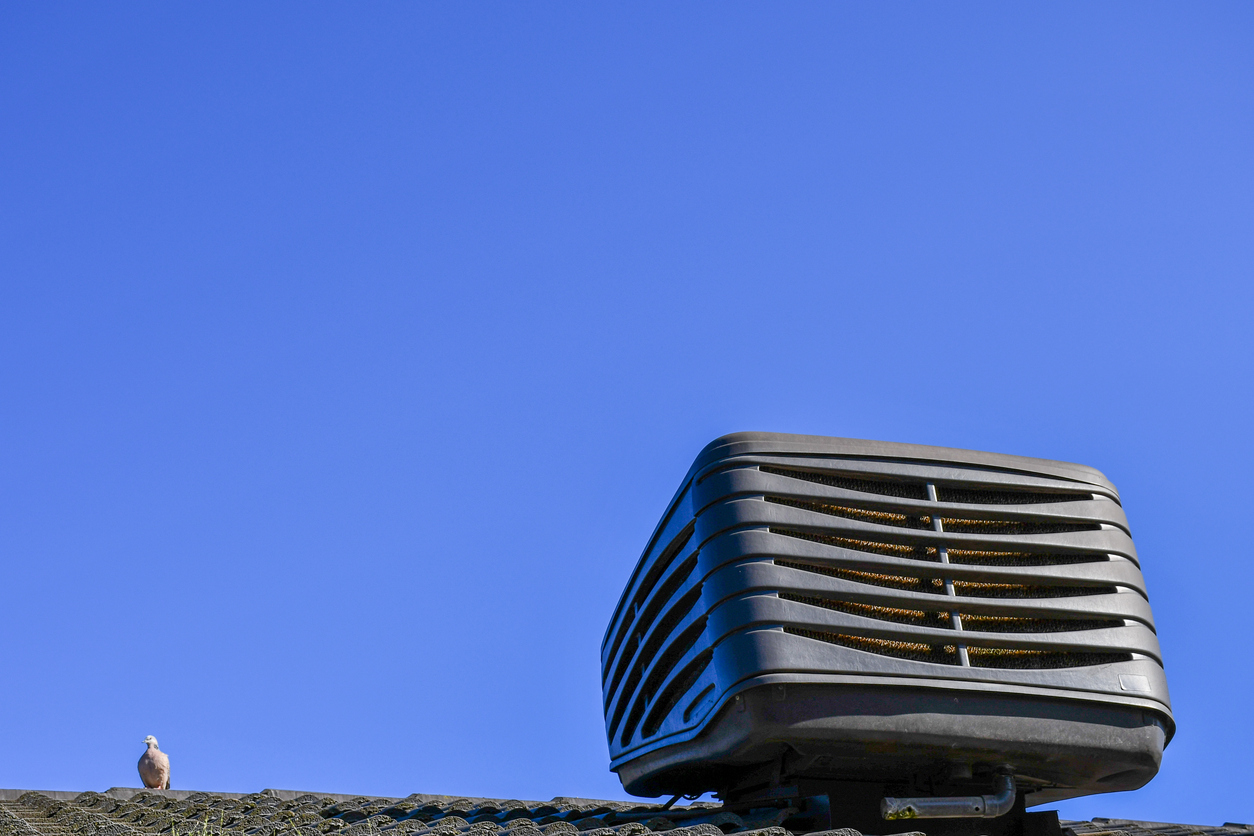
An evaporative cooler Melton running quietly in the background is easy to ignore. It just works, and your home stays comfortable on even the hottest days. But when that familiar hum turns into a rattle, grind, screech, or banging noise, it is hard to ignore and even harder to know what is actually causing it.
The good news is that most evaporative cooler noises have a clear cause, and many of them can be resolved without replacing the unit entirely. In this guide, we walk through the most common reasons an evaporative cooler starts making loud or unusual noises, what each sound typically means, and what you should do about it — particularly if you are heading into another hot Melton summer and need your system performing at its best.
Common Causes of a Loud Evaporative Cooler
1. Worn or Loose Fan Belt
Belt-driven evaporative coolers use a rubber belt to connect the motor to the blower fan. Over time, this belt stretches, cracks, or becomes misaligned. A worn belt is one of the most common causes of loud noise in older evaporative cooler units.
- What it sounds like: A high-pitched squealing or squeaking noise, often most noticeable when the unit first starts up or changes speed.
- What causes it: Belt wear from regular use, exposure to heat, or incorrect tension. A belt that is too loose will slip and squeal; one that is too tight puts excessive strain on the motor bearings.
- What to do: Have a technician inspect and replace the belt. Belt replacement is a straightforward job but requires the unit to be safely powered down and accessed correctly — this is not something to attempt without experience working on rooftop units.
2. Dry or Failing Motor Bearings
The motor that drives your evaporative cooler’s fan contains bearings that allow it to spin smoothly. These bearings require lubrication, and when that lubrication wears out, the metal components grind against each other.
- What it sounds like: A grinding, scraping, or rumbling sound that tends to get louder as the unit runs longer and the bearings heat up.
- What causes it: Lack of lubrication, age, or a bearing that has worn past the point where lubrication can help.
- What to do: Some motors have lubrication ports that allow a technician to oil the bearings without replacing the motor. If the bearing has seized or the motor windings are damaged, the motor will need to be replaced. Ignoring this noise will typically result in a complete motor failure mid-summer.
3. Loose or Unbalanced Blower Wheel
The blower wheel (sometimes called the fan wheel or squirrel cage) is the component that moves air through your system. It sits on the motor shaft and can become loose, accumulate debris, or go out of balance over time.
- What it sounds like: A loud rattling, thumping, or vibrating noise that often pulses rhythmically as the wheel spins. In some cases it sounds like something is knocking against the housing.
- What causes it: Mineral scale and sediment buildup on the wheel blades (very common in Melton’s hard water areas), physical damage to a blade, or the set screw on the shaft coming loose.
- What to do: A technician will remove the blower, clean off any mineral deposits, check each blade for damage, and re-secure the wheel on the shaft. If a blade is cracked or broken, the entire blower wheel should be replaced — an unbalanced wheel puts enormous stress on the motor over time.
4. Debris Inside the Unit
Evaporative coolers sit on rooftops and are exposed to the elements year-round. Leaves, twigs, insects, bird nests, and other debris can find their way inside the unit, especially during spring and autumn.
- What it sounds like: Rattling, clicking, or intermittent banging — often inconsistent because the debris moves around as the fan spins.
- What causes it: Gaps in the unit’s housing, deteriorated weatherstripping, or the unit being left uncovered during the off-season without a proper winter cover fitted.
- What to do: Power the unit down completely and have the debris cleared out. Check the housing for entry points and seal them where possible. Fitting a winter cover when the cooler is not in use is the best prevention.
5. Water Pump Issues
The water pump circulates water from the reservoir up to the distribution system and across the cooling pads. A pump that is struggling, cavitating, or has a blocked inlet will make noise.
- What it sounds like: A gurgling, rattling, or vibrating sound that seems to come from lower in the unit rather than the fan area. Sometimes a high-pitched whine.
- What causes it: Scale and mineral buildup in the pump body or inlet strainer (especially common in Melton where water hardness can be significant), a worn impeller, or air in the system.
- What to do: Clean the pump strainer and descale the pump body. If the pump is vibrating against its mounting, re-secure it or replace the rubber mounts. A pump that is more than a few years old and making noise is often more economical to replace than to repair.
6. Deteriorated or Clogged Cooling Pads
Evaporative cooling pads (also called filters or media) break down over time. As they deteriorate, pieces of the pad material can come loose and enter the airstream, creating noise as they are drawn toward the blower.
- What it sounds like: A soft rattling or rustling noise, sometimes accompanied by reduced airflow and a musty smell.
- What causes it: Pads that have reached end of life, typically after one to two seasons of regular use. Mineral scale from hard water can also cause pads to become rigid and brittle.
- What to do: Replace the cooling pads. This is one of the most cost-effective maintenance jobs for an evaporative cooler and should be done at the start of every cooling season.
7. Loose Panels, Screws, or Ductwork
Vibration from years of operation gradually loosens the hardware holding your unit together. Panels, access doors, screws, and even the ductwork connections can all become loose and start resonating with the motor’s vibration.
- What it sounds like: A persistent rattling or buzzing that changes in pitch as the unit speeds up or slows down. Sometimes most noticeable at certain fan speeds.
- What causes it: Normal vibration over time, thermal expansion and contraction cycling through the seasons, or previous maintenance where panels were not re-secured properly.
- What to do: A technician will check and tighten all accessible hardware, inspect ductwork connections, and fit rubber isolation mounts where needed to dampen vibration transfer into the ceiling and walls.
When Should You Call a Technician?
Not every noise requires an emergency call-out, but some do. Here is a practical guide to help you decide how urgently to act.
- Call immediately: If the noise is a sudden loud bang, the unit stops working, there is a burning smell, or you hear grinding that gets progressively worse — turn the unit off and call a heating and cooling specialist Melton. Continuing to run a unit with a seized bearing or damaged blower can cause complete motor failure and turn a simple repair into an expensive replacement.
- Book soon: If the noise is a steady squeal, rattle, or hum that is new or getting louder, book a service before the peak of summer. In Melton, evaporative cooler technicians become very busy once temperatures climb, and wait times increase significantly in January and February.
- Monitor and book at next service: If the noise is very minor, intermittent, and not affecting cooling performance, it may be something as simple as a loose screw or minor debris. Note it and mention it at your next annual service.
Preventing Noise Problems Before They Start
The most reliable way to keep your evaporative cooler running quietly is through regular annual servicing. A thorough pre-season service covers the areas that most commonly cause noise: pad replacement, pump cleaning, motor lubrication or inspection, belt tension check, blower cleaning, and a full check of all fixings and connections.
- Schedule your service in September or October, before the heat arrives and before technician diaries fill up
- Fit a quality winter cover when the system is not in use to keep debris and pests out
- Flush and drain the water reservoir at the end of each cooling season to prevent scale buildup
- Do not ignore new noises — they rarely resolve themselves and almost always get worse over time
Frequently Asked Questions
Is it safe to keep running my evaporative cooler if it is making a noise?
It depends on the type of noise. Minor rattles from loose panels are generally not dangerous, but grinding, squealing, or banging noises can indicate mechanical failure. Running the unit through a serious fault risks turning a small repair into a full replacement. When in doubt, turn it off and have it inspected.
Why does my evaporative cooler squeal when it first starts up?
Start-up squealing is most commonly caused by a worn or loose fan belt. The belt slips against the pulley when the motor first turns over, producing the squeal. This tends to ease off once the belt warms up and grips better, but it is a sign the belt needs inspection or replacement soon.
How long should an evaporative cooler motor last?
A well-maintained evaporative cooler motor can last 10 to 15 years or more. Motors that run without adequate lubrication, or that are never serviced, often fail within 5 to 7 years. Annual servicing is the single most effective thing you can do to extend motor life.
Can I oil the motor myself to stop a grinding noise?
Rooftop evaporative cooler motors should only be serviced by a qualified technician. Working on a rooftop unit involves electrical isolation, safe roof access, and knowledge of the correct lubrication type and quantity. Using the wrong oil or over-lubricating can damage the motor windings. It is not a DIY job.
My evaporative cooler is new but already making noise, is that normal?
A new unit should run quietly. Some minor operational sound is normal — the hum of the motor and the movement of air through ducts — but rattling, squealing, or grinding on a new or recently installed unit is not. It may indicate an installation issue such as a loose fitting, incorrect belt tension, or an improperly secured blower wheel. Contact your installer to have it assessed.
Conclusion
A noisy evaporative cooler is your system telling you it needs attention. In Melton, where summer temperatures regularly exceed 35 degrees and reliable cooling is not optional, leaving a known fault unaddressed is a risk that rarely pays off. By the time a minor noise turns into a complete breakdown, it is often mid-January, technicians are booked out for weeks, and your household is sweltering through a heatwave without cooling.
At New Image Heating & Cooling, our technicians service evaporative coolers across Melton and the western Melbourne suburbs every day. We diagnose noise problems accurately, recommend only what is actually needed, and carry common replacement parts to get your system running quietly again in a single visit where possible. If your cooler is making a noise you are not sure about, call us at 0468 125 098 or submit our online form to book a service before the summer rush begins.



